Children will die if proposed changes to federal vaccine policy take effect, doctors warned today during a joint press conference with representatives from six leading health organizations.
Experts were responding to a vote by members of the Advisory Committee on Immunization Practices (ACIP)—all handpicked by Health and Human Services (HHS) Secretary Robert F. Kennedy Jr.—to limit the use of hepatitis B vaccines in newborns, in spite of evidence that the shots prevent cancer and save lives.
“Children will acquire hepatitis B and die as a result of these recommendations,” said Aaron M. Milstone, MD, representing the American Academy of Pediatrics (AAP). “My colleagues or I, not a committee member, will be the ones supporting the parents of a dying child and trying to explain how they were let down and lost a child from a preventable infection.”
The ACIP recommended vaccinating all healthy newborns against hepatitis B at birth for 34 years, because mothers can pass the virus to infants during delivery. That recommendation helped to reduce the number of hepatitis B infections in children by 99%.
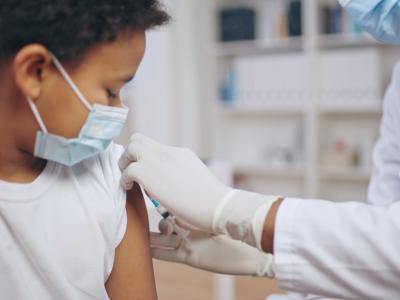
But last week, the ACIP voted to recommend a birth dose of hepatitis B vaccine only for newborns whose mothers test positive for the virus or whose infection status is unknown. Mothers who aren’t infected with hepatitis B should discuss the risks and benefits with their health provider, the group advised. Babies who aren’t vaccinated against hepatitis at birth should wait at least 2 months for their first dose, the committee decided.
Experts note that blood tests aren’t always accurate, producing “false negative” results about 5% of the time. About 90% of infants exposed to hepatitis B at birth develop a chronic, incurable infection that can lead to liver failure, liver cancer, and early death.
Babies and children also can be exposed after birth by family members.
Research has shown that postponing an infected baby’s first dose of hepatitis vaccine by 2 months could could cause at least 1,400 preventable hepatitis B infections among children, 300 additional cases of liver cancer, 480 preventable deaths, and over $222 million in excess health care costs a year.
Children will acquire hepatitis B and die as a result of these recommendations.
The comments at the press briefing reaffirmed that the mainstream medical community resoundingly supports the universal birth dose of hepatitis B vaccine. Milstone said the advice given by the Trump administration and its appointees represent “fringe views” endorsed by a small sliver of the population.
In addition to the AAP, speakers today included representatives from the Infectious Diseases Society of America; the American College of Obstetricians and Gynecologists; the American College of Physicians; and the Center for Infectious Disease Research and Policy, which publishes CIDRAP News.
More vaccine changes likely
The vote on hepatitis vaccines is part of a broad assault on vaccine access, said CIDRAP Director Michael T. Osterholm, PhD, MPH, who leads the Vaccine Integrity Project, which aims to safeguard vaccine use.
That assault has picked up speed in recent weeks. Other actions that threaten vaccine access:
- The FDA plans to scrutinize the safety of recently approved immunizations that protect infants from respiratory syncytial virus (RSV), the leading cause of hospitalizations for babies in the first year of life, according to Reuters.
- President Trump issued a memo Friday calling on Kennedy, who has promoted conspiracy theories about vaccines and falsely linked them to autism, to revisit the childhood vaccination schedule so that it “aligns” with immunization practices in other countries.
- The top vaccine regulator at the Food and Drug Administration has proposed sweeping new standards for testing vaccines which, experts say, would make it impossible to bring new vaccines to market or even make annual updates to flu shots.
- Kennedy directed the Centers for Disease Control and Prevention (CDC) to revise its website and deleted the phrase “vaccines do not cause autism.”
In addition, Osterholm said the ACIP appears poised to stop recommending vaccines that use tiny amounts of aluminum salts, which stimulate a stronger immune system response. Multiple studies have found that including aluminum in vaccines is safe, including a recent Danish study of 1.2 million children published in Annals of Internal Medicine. Kennedy called for the study to be retracted.
“If the political appointees running our health agencies and communities are going to ignore data and evidence, we must absolutely ignore them,” said Osterholm.
Many health providers tell CIDRAP News that they will follow vaccination guidance from the AAP, not ACIP.
An HHS spokesman, Andrew Nixon, dismissed the medical community’s criticism.
“ACIP reviews the full body of evidence and issues recommendations grounded in data and sound judgment to protect America’s children,” Nixon said. “HHS agencies remain committed to transparency and accountability after the failed politics of the pandemic contributed to historic declines in public trust. We are rebuilding that trust through transparency and reaffirming that individuals and parents make decisions based on what is best for their them.”
Although ACIP makes vaccine recommendations, the acting director of the CDC, Jim O’Neill, MBA, needs to approve them.