As the US Centers for Disease Control and Prevention (CDC) warns of a nationwide increase in animal rabies cases and human exposures, the US Department of Agriculture (USDA) has announced it is about to conduct its annual airdrop of millions of fishmeal-coated sachets of rabies vaccine over the Southeast to immunize wildlife against the deadly disease.
Last week, the CDC issued a Health Alert Network advisory after observing a 17% increase in questions about human exposures to rabid or possibly rabid animals in July and August over the same period in 2025.
“During this time frame, CDC also received reports from at least eight state health departments of increased rabies PEP [post-exposure prophylaxis] use, PEP administration errors, or both,” the CDC said. PEP consists of administration of two human rabies immunoglobulin (antibody) doses and a four-dose vaccine series. Each course costs up to $14,000.
“According to weekly pharmacy data as of September 2, 2026, utilization for the two rabies vaccines and the two rabies immunoglobulins licensed in the United States has increased by an estimated 33% and 76%, respectively, compared with the same time period last year,” it added.
As of September 2, 2026, utilization for the two rabies vaccines and the two rabies immunoglobulins licensed in the United States has increased by an estimated 33% and 76%, respectively, compared with the same time period last year.
As part of an ongoing program, the USDA is distributing oral rabies vaccine sachets via airplane, helicopter, and motor vehicle over parts of Alabama, Georgia, North Carolina, Tennessee, Virginia, and West Virginia in October to counter the spread of raccoon rabies.
Raccoons are the main rabies transmitter in the region. Each year, the USDA distributes about 6.5 million vaccine sachets in targeted areas. The distribution has been successful in targeting canine rabies in coyotes and a variant of the disease in gray foxes. Officials said they plan to move the raccoon vaccine distribution area east as rabies is eliminated locally and regionally.
The case for proper protection
Each year from 2016 to 2025, Minnesota tests more than 21,000 animals for rabies, with only small fractions testing positive, except for skunks, about half of which either test positive or are untestable.
Yesterday, the Minnesota Board of Animal Health confirmed that a cow in Brown County tested positive for rabies last week, leading to the quarantine of 13 cows and PEP recommendations for nine people.
The heifer’s owner noticed the cow lying flat with its head down, the board said in a news release. After a vet visited that same day, the owner gave the animal oral medication with bare hands.
The next day, another vet visited and also administered the oral drug without wearing gloves. A day later, a third vet euthanized the cow after observing that the animal had uncoordinated hind legs and a high fever and was high-stepping, vocalizing, and salivating excessively.
Less than 15% of rabid animal cases reported annually in Minnesota occur in domestic species; the most common being cattle, cats, and dogs.
In addition to the quarantine of 13 cows, two unvaccinated barn cats with likely exposure were euthanized, and more than 40 cattle, a vaccinated horse, and three unvaccinated dogs are under observation.
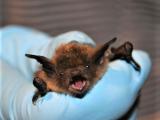
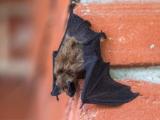
“Less than 15% of rabid animal cases reported annually in Minnesota occur in domestic species; the most common being cattle, cats, and dogs,” the release said, noting that rabies vaccines are available for cats, dogs, ferrets, cattle, horses, and sheep. “Skunks and bats are the natural carriers of rabies in Minnesota.”
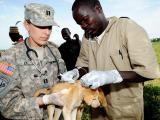
Given the severity of rabies, the board urged the use of personal protective equipment such as gloves and eye protection when interacting with animals that could have rabies.
An unusual request from health officials
In an unrelated case, last week, the Minnesota Department of Health (MDH) asked customers of ASAP Wildlife Services MN who had bats or other mammals submitted for rabies testing since September 2025 to let them know.
“Officials believe ASAP Wildlife Services MN operates in the Twin Cities metro area and has not consistently submitted animals for rabies testing,” the MDH said in a news release. “At least one customer has been told of negative results from a laboratory that does not perform animal rabies testing.”
The company has not responded to MDH requests for information.
Each year in the United States, roughly 1.4 million people seek medical care after animal contact and undergo rabies evaluation, and about 100,000 receive rabies PEP, the CDC said.