One afternoon in 2017, Linda Kauss set off for her daily walk and jog through her Great Falls, Virginia, neighborhood. As she passed the fields and woods that dot the enclave’s horse farms, she noticed a fox. It seemed odd to Kauss, because the animals often emerge only in the evening to hunt. Suddenly, she felt a jolt of pain.
“A fox had come up behind me and took a bite right out of the back of my leg, and then he just couldn’t stop,” Kauss, 80, told CIDRAP News. “He was crazed. He just attacked me over and over and over, and he could get his teeth in around my skin and hang on, and I couldn’t beat him off.”
With chunks of flesh hanging from her and blood pouring from her wounds, she realized she needed help. With the fox clinging to her as it continued its attack, Kauss trudged to a neighbor’s house for help. When she rang the doorbell, it startled the fox, which ran away.
“I was a bloody, bloody mess,” she recalled.
A rabid fox, painful injections
Her neighbor called Kauss’ husband and 911. An ambulance rushed her to a trauma center, where she stayed for 10 days. She underwent three blood transfusions and rabies post-exposure prophylaxis (PEP), which included injections of rabies immunoglobulin (antibodies) in seven of the 16 wounds on her legs and hand to prevent rabies.
“It was just horrible,” she said. “It was so painful. Even thinking about it now, it’s upsetting.”
Soon after Kauss’s encounter, a neighbor saw the fox trying to attack his dog and knocked it out with a piece of firewood. Testing confirmed the fox had rabies.
“They said he wouldn’t even have lived another six hours, he was in such bad shape,” Kauss said. “I couldn’t be angry at all at the fox, because he had no clue. He didn’t know what he was doing.”
While rabies exposures like Kauss’s remain rare, in early September, the US Centers for Disease Control and Prevention (CDC) released a Health Alert Network advisory “in response to recent reports of increases in human exposures to rabid and possibly rabid animals.”
Currently, we hypothesize that we are seeing an increase in bat-human contact along with increased public awareness to notify public health when a potential rabies exposure has occurred.
Ryan Wallace, DVM, MPH
Stories about human contact with rabid animals have certainly made the news in 2026. This summer, almost 300 people encountered rabid baby goats at a traveling petting zoo in North Carolina, and in September, a rabid beaver attacked a 13-year-old Maryland boy. An otter grabbed, bit, and tried pulling a woman swimming in Lake Tahoe underwater.
“Rabies exposures tend to rise in the summer and fall season, as more wildlife and people are active and encountering each other. Part of the increase is driven by this predictable seasonal rabies activity pattern,” Ryan Wallace, DVM, MPH, from the CDC’s Poxvirus and Rabies Branch, said. “The larger increases that have been reported regionally are not fully understood yet.”
High-profile cases lead to more awareness
When Linda Kauss saw a fox in the daytime in her neighborhood, she thought it was odd. In hindsight, it was a sign it had rabies. Lesley~B/ Flickr cc
Every year, about 100,000 Americans receive PEP after an encounter with an animal that either has confirmed rabies or an unknown rabies status, per the CDC. PEP works remarkably well, and fewer than 10 people die of rabies annually in the United States. Rabies spreads when saliva from an infected animal enters the bloodstream of a person or animal, most often through a bite.
While the CDC issued a warning about increasing rabies exposures, it’s not clear if that means more animals have rabies.
“What has increased are human reports of exposure,” said Meghan Davis, DVM, PhD, MPH, Bloomberg Centennial Professor at Johns Hopkins School of Public Health. “If we try to break that down, there are two potential reasons. One could be that there are more exposures that are happening, and that could be driven by local or larger increases [in exposures]. It’s also possible that people are more sensitized.”
As people hear about rabid beavers or baby goats, they’re more aware of their own encounters with wildlife, and they’re more likely to report their experience or seek care.
“There have been a few slightly high-profile cases,” Davis said. “Until we get the data from the individual municipalities, usually aggregated at the state level, it’s going to be hard to tell if we are also seeing increases in the number of animals being tested and the number of animals testing positive for rabies.”
Wallace agrees. “CDC’s Rabies Program is the National Rabies Surveillance System and receives animal and human rabies data from all state health departments. The answer to what is driving this increase may be held within this data; however, it could be several months before that data is available to analyze and interpret,” he said.
But he adds, “Currently, we hypothesize that we are seeing an increase in bat-human contact along with increased public awareness to notify public health when a potential rabies exposure has occurred.”
The problem with bats
A month ago, a doctor in Virginia woke up with something in her mouth. When she grabbed what she thought was a small mouse, she realized it was a bat. She and her husband began PEP, though the bat eventually tested negative for rabies.
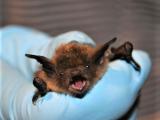
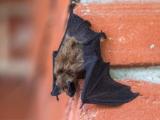
Bats are a common culprit when it comes to rabies exposures.
“In the United States, bats are the most reported animals with rabies,” Wallace said. “Most people in the US who die of rabies were exposed to a rabid bat. Not all bats carry rabies, but it is important to avoid touching bats.”
It’s possible that there are more bat exposures this summer, thanks to this year’s super El Nino.
“We’ve seen this kind of shift in weather patterns that has impacted other viruses—like earlier this year with hantavirus,” said Emily Smith, PhD, MPH, a researcher at the University of Minnesota’s Center for Infectious Disease Research and Policy, which publishes CIDRAP News.
“That led people to do additional investigations on the origin of that and how El Nino has impacted changes in the rat population, which impacted human spillover.”
A similar pattern could be emerging with bats, too. “Whenever you have a giant weather event like El Nino, there are droughts associated with it,” Smith said. “Those droughts can dry up the food sources for bats.”
Those hungry bats then migrate to urban, suburban, and farm land to find food. “Bats are more likely to come into contact with humans and domestic animals whenever they’re searching for these new food sources,” Smith explained. “Rabies is endemic in the bat population.”
The other problem with bats? Their teeth are so small that people might not be aware they’ve been bitten. “With larger mammals, for example a fox, you know when you’ve been bitten,” Davis said. “You’re quite aware. [Bats] generally, they have these teeny tiny teeth, and you don’t always recognize an exposure.”
You don’t play around with rabies.
Meghan Davis, DVM, PhD, MPH
This is why anyone who sees a bat in their home should either call their state health department—many have epidemiologists on staff who can determine if rabies PEP is needed—or visit an emergency room—even if they don’t think they’ve been bitten.
“You don’t play around with rabies,” Smith said. “If someone gets infected and doesn’t get the shots, it’s nearly 100% fatal.”
Post-exposure prophylaxis
After a long recovery, Linda Kauss returned to walking in her neighborhood. Courtesy Linda Kauss
People who have been bitten by a potentially rabid animal first receive rabies immunoglobulin. As with Kauss, it might need to be injected directly into the wound.
“If you have a complex wound, then yes, you’re going to have more infiltration,” Davis said. “If you have a less complex wound, it may be more simple.”
After the wound is treated and the immunoglobulin injected, people typically receive a series of four vaccines if they’ve never been vaccinated for rabies before. “The protocol that’s used may vary a little bit based on your particular health history,” Davis said.
Some people—such as vets, zoo employees, animal control officers, and researchers who work with wildlife—are vaccinated for rabies. Vaccinated people might need fewer shots of the vaccine following an exposure.
While people who work with animals can receive vaccination, it’s not offered to the general population because the risk of rabies in the United States remains low. Yet, if people are possibly exposed to rabies, it is important to receive the immunoglobulin and vaccines as soon as possible to stop the virus from reproducing.
“The virus will have to replicate locally, and then it has to find a nerve and go up that nerve and then ascend within the central nervous system to the brain,” Davis said. “Bites to the face would be of much higher concern and need much faster action than bites to the extremities. But anyone exposed should immediately seek medical attention.”
Different types of rabies
The fox who attacked Kauss had “furious” rabies. It’s the type of rabies people commonly think of, with foaming at the mouth and aggression.
“It literally alters the behavior of the animal,” Davis said. “This would be nocturnal animals being very active and aggressive during the day, showing signs of disorientation. They’re not moving correctly.”
The “dumb” type of rabies looks different. Cats and farm animals often have this type. “They’re hiding. They’re not interacting,” Davis said. “You may, in both cases, see this hypersalivation, and that’s usually because it’s difficult to swallow. Humans report hydrophobia, meaning they refuse water because, again, that swallowing mechanism is affected.”
Still walking, now with a stick
Despite the fox attack, Kauss never stopped walking through her neighborhood. After her hospital stay, several skin graft surgeries, and a long recovery process, she laced up her shoes and started walking again. But now she takes a walking stick with a knobby handle that her husband gave her—just in case.
“I am very close to nature, which I always loved,” she said. “I love to see the foxes as long as they’re out looking for other victims and not me.”