In this Issue
- New from CIDRAP-ASP: Antimicrobial resistance (AMR) journalism and our July quiz
- Global news and reports on a cholera control dashboard, guidance for countries planning to introduce newer antibiotics, AMR and LGBTQIA+ health, development of a rapid diagnostic test for neonatal sepsis, AMR and long-term lung conditions, community-based AMR surveillance in LMICs, a rap about tuberculosis research, and perspectives on shorter durations of antibiotic therapy
- Regional AMR news and projects from the African region, Ecuador, Ethiopia, the European region, Ghana, India, Nigeria, Trinidad and Tobago, Uganda, and the United States
- One Health updates on surveillance of livestock antibiotic use in India, UK-based surveillance for foodborne pathogens and AMR, agricultural antibiotic use training in Vietnam, and a call for research on AMR in agricultural and companion animals
|
|
|
|
|
|
Fecal Transplant for C diff
Take our July quiz to test your knowledge on the optimal use and effectiveness of fecal microbiota transplant for Clostridioides difficile infections.
|
|
|
Global AMR News and Tools
 Cholera control website. The Global Task Force on Cholera Control launched a website that provides information, tools, and guidance on cholera control and elimination, including dashboards and maps of disease trends and oral vaccine campaigns. Learn more. Country guidance for new antibiotics. The World Health Organization (WHO) published operational guidance for the introduction and appropriate use of antibiotics, particularly Watch and Reserve antibiotics used to treat multidrug-resistant organisms, in countries planning to increase access to newer medications. Learn more. AMR and LGBTQIA+ health. In a post for the London School of Hygiene & Tropical Medicine AMR Centre, Brandon Hill describes the need for AMR research to more strongly and thoughtfully incorporate LGBTQIA+ people and data on social determinants of health. Learn more. Rapid diagnostic development for neonatal sepsis. The Center for Global Development published a series of blog posts about the development of an advance market commitment for a rapid diagnostic test for neonatal sepsis. Learn more. AMR and long-term lung conditions. The European Lung Foundation summarizes the results of a recent survey in which people from 57 countries, many of whom have long-term lung conditions, described their experience with and awareness of AMR. Learn more. Community-based AMR surveillance in LMICs. In a South Centre research paper, Afreenish Amir, MBBS, PhD, MPH, MPhil, describes the importance of considering countries' capacities and systems when implementing community-based AMR surveillance programs in low- and middle-income regions. Learn more. TB research rap. The Institut Pasteur profiles the work of Yaëlle Wormser, MSc, in developing a rap—"Tuberkiller"—about her research to better understand the molecular mechanisms of tuberculosis. Learn more. Shorter antibiotic course durations. On Medscape, Matías A. Loewy, BPharm, summarizes highlights from a talk given by Brad Spellberg, MD, at the 2025 Argentine Society of Infectious Diseases Congress about practical and patient-centered considerations for shortening antibiotic course durations for some conditions. Learn more. |
|
Regional AMR Case Studies
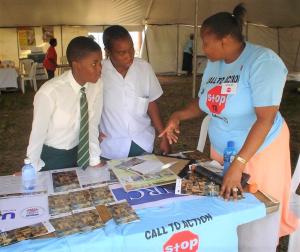 African region. The WHO Regional Office for Africa published a brief on the role of civil society organizations and community-led action in addressing AMR. Learn more. Ecuador. ReAct describes a festival in Ecuador at which children were introduced to the interrelationships between health, water, food, and AMR via play, art, and games. Learn more. Ethiopia. Project HOPE, in partnership with USAID, launched a 5-year initiative to strengthen Ethiopia's ability to respond to zoonotic diseases, AMR, and emerging infections with a One Health and multisectoral approach. Learn more. European region. Médecins Sans Frontières published a technical brief that includes recommendations for regulatory and policy pathways to ensuring access to safe, essential, and timely tuberculosis medicines in the European Union and European Economic Area. Learn more. European region. The Quadripartite Joint Secretariat on AMR published a report on an event hosted by the European Parliament to discuss the One Health approach to AMR and the issues most relevant to European policymakers. Learn more. Ghana. The DxAMR collaborative project, based at the University of Ghana, officially launched with the goal of increasing access to effective diagnostics to address AMR, particularly in low- and middle-income countries. Learn more. India. In a post for Superheroes Against Superbugs, Somdatta Karak, PhD, MSc, speaks with four medical students or interns in India about their knowledge of antibiotic use and awareness of AMR. Learn more. Nigeria. In news for the Partnership for Supply Chain Management, Sinette Goosen details the Resiliency of Azithromycin for Children (REACH) initiative's first delivery of the antibiotic to Nigeria to prevent trachoma and child mortality attributed to other bacterial infections. Learn more. Trinidad and Tobago. The Pan American Health Organization published a story about a drug-resistant urinary tract infection in a woman from Trinidad and Tobago who was receiving cancer treatment. Learn more. Uganda. On the Nile Post, Henry Mugenyi describes two pediatricians' concerns about difficult-to-treat infections in children in Uganda, a trend they attribute to over-the-counter antibiotic availability and self-medication. Learn more. United States. The Infectious Diseases Society of America published its first of set guidelines for the treatment and management of complicated urinary tract infections (UTI), providing a clinically relevant classification of uncomplicated and complicated UTI and guidance for empirical antibiotic choice, timing of intravenous-to-oral switch, and duration of therapy. Learn more. United States. In American Family Physician, Dan Merenstein, MD, argues that family physicians should collect data and develop guidelines for the treatment of acute rhinosinusitis, given diagnostic uncertainty, potential harms caused by antibiotic overprescribing, and the low evidence supporting national guidelines. Learn more. |
|
AMR, Agriculture, and the Environment
 Livestock antibiotic sales surveillance in India. On Down to Earth, Neeraj Kumar, MA, details a recent directive issued by India's Central Drugs Standard Control Organisation to collect and monitor data related to the production, import, and sale of antibiotics for use in livestock. Learn more. UK-based surveillance for foodborne pathogens and AMR. The UK Food Standards Agency and Rand Europe published the final evaluation report on the PATH-SAFE (pathogen surveillance in agriculture, food, and environment) program that aimed to improve surveillance for foodborne pathogens and AMR in the United Kingdom, noting that more work to build government collaboration and investment must be done to ensure the sustainability of One Health surveillance. Learn more. Agricultural antimicrobial use in Vietnam. The Food and Agriculture Organization of the United Nations describes the launch of the Farmer School Community in Vietnam, an initiative to improve farming practices and collect data on agricultural antimicrobial use on chicken farms. Learn more. Call for research on AMR in animals. npj Veterinary Sciences has an open call for research on AMR in agricultural and companion animals. The submission deadline is Mar 11, 2026. Learn more. |
|
|
|
|