Feb 17, 2005 (CIDRAP News) – A Food and Drug Administration (FDA) advisory committee voted yesterday to add the new A/California strain to next season's influenza vaccine, amid doubts about the nation's ability to acquire an adequate supply.
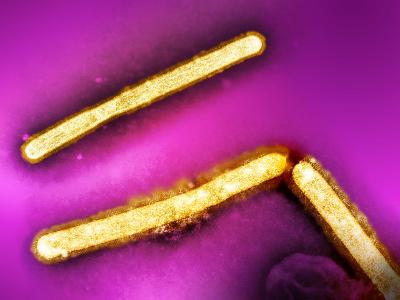
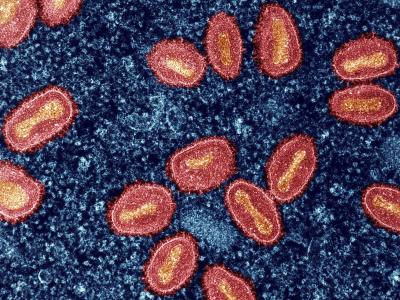
The advisory committee decided to accept the World Health Organization's (WHO's) recent recommendation to include the strain called A/California/7/2004(H3N2) in the vaccine, according to reports from Reuters and USA Today. It will replace the A/Fujian strain in the current vaccine.
Reports said the FDA's Vaccines and Related Biological Products Advisory Committee followed the WHO's advice to keep the other two strains the same as in this year's vaccine: A/New Caledonia/20/99(H1N1) and B/Shanghai/361/2002.
The California strain emerged last September in Santa Clara County and was first identified as a new strain last month, according to previous reports. The Centers for Disease Control and Prevention (CDC) reported recently that the strain accounted for about 19% of flu virus isolates that the agency has analyzed since last October.
In a Reuters report, CDC flu expert Dr. Nancy Cox was quoted as saying that the new strain is already infecting people around the world. She said H3N2 viruses generally cause more severe flu seasons than other viral strains do.
USA Today quoted one committee member, Arnold Monto of the University of Michigan, as saying it's "very hard to predict" whether next season's vaccine supply will be adequate. He said the committee would discuss supply questions in a closed session today.
Sanofi Pasteur, formerly Aventis Pasteur, said it expects to make about 60 million doses of flu vaccine for next season, according to USA Today and Reuters. MedImmune said it would make 3 million doses of its intranasal vaccine, FluMist.
It remains unclear whether Chiron Corp. will solve the problems at its Liverpool, England, plant in time to make vaccine for next fall, according to reports this week. The United States lost 50 million doses, about half of its expected supply, last October when contamination problems forced cancellation of all of Chiron's vaccine deliveries.
An FDA official told a congressional committee last week that Chiron will largely determine whether the nation will have enough vaccine next season. In prepared testimony, Jesse L. Goodman, director of the FDA Center for Biologics Evaluation and Research, said Chiron's ability to solve its manufacturing problems is "the single most important factor that will determine the adequacy of the U.S. influenza vaccine supply for the coming year."
Chiron is making "extensive improvements" that must satisfy both the FDA and British regulators, Goodman said. The FDA will conduct a thorough inspection of the Chiron plant in the spring when all major phases of vaccine manufacturing are under way, he added. He said it is too early to predict the outcome, but "Chiron appears to be making progress."
See also:
Feb 14 CIDRAP News story "WHO picks new California strain for flu vaccine"
http://www.cidrap.umn.edu/cidrap/content/influenza/general/news/feb1405vaccine.html