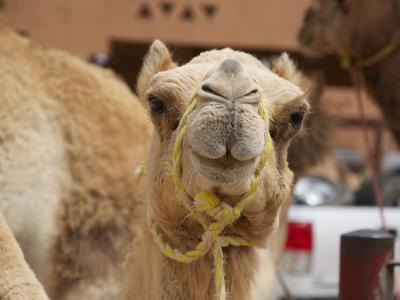
In another development, the WHO shared details of 6 Saudi cases reported earlier this month, including 2 involving contact with camels or raw camel milk.
In a MERS-CoV situation report today, the World Health Organization (WHO) said there are 58% fewer cases reported in September and October of this year compared with the same period last year.
The Saudi Arabian Ministry of Health (MOH) reported a new case of MERS-CoV yesterday. The patient is in critical condition.
A 59-year-old Saudi woman from Najran had symptoms of MERS-CoV (Middle East respiratory syndrome coronavirus) before being admitted to a hospital. The MOH listed her source of infection as primary, meaning she did not contract the virus from another person.
Today the Saudi Arabian Ministry of Health (MOH) said the country has three new cases of MERS-CoV. Two of the cases are linked to camel exposure, one of the most common risk factors for the respiratory illness.
The Saudi Arabia Ministry of Health (MOH) said today there were two new cases of MERS-CoV in that country, one linked to camel exposure.
The Saudi Arabia Ministry of Health (MOH) reported two new cases of MERS-CoV today and over the weekend.
On Nov 12, the MOH said a 51-year-old Saudi man from Tabuk was diagnosed as having Middle East respiratory syndrome coronavirus (MERS-CoV). He is currently in critical condition. Health officials said the man had direct contact with camels, a known risk factor for MERS.
The WHO's update on 13 cases reported from Saudi Arabia also includes a pair of household contacts and some cases with camel exposure.
Medimmune scientists have been investigating what's behind the decreased FluMist effectiveness that prompted US vaccine advisors to recommend against it this year, and today they reported that reduced fitness of H1N1 vaccine virus strains are the likely culprit.
A study published Monday in Nature Ecology and Evolution suggests plasmids may play more of a role in spreading and facilitating antibiotic resistance than previously thought.
Two papers published last week in The Lancet Infectious Diseases describe the identification of molecular markers associated with drug resistance in Plasmodium falciparum malaria.