December 4, 2025
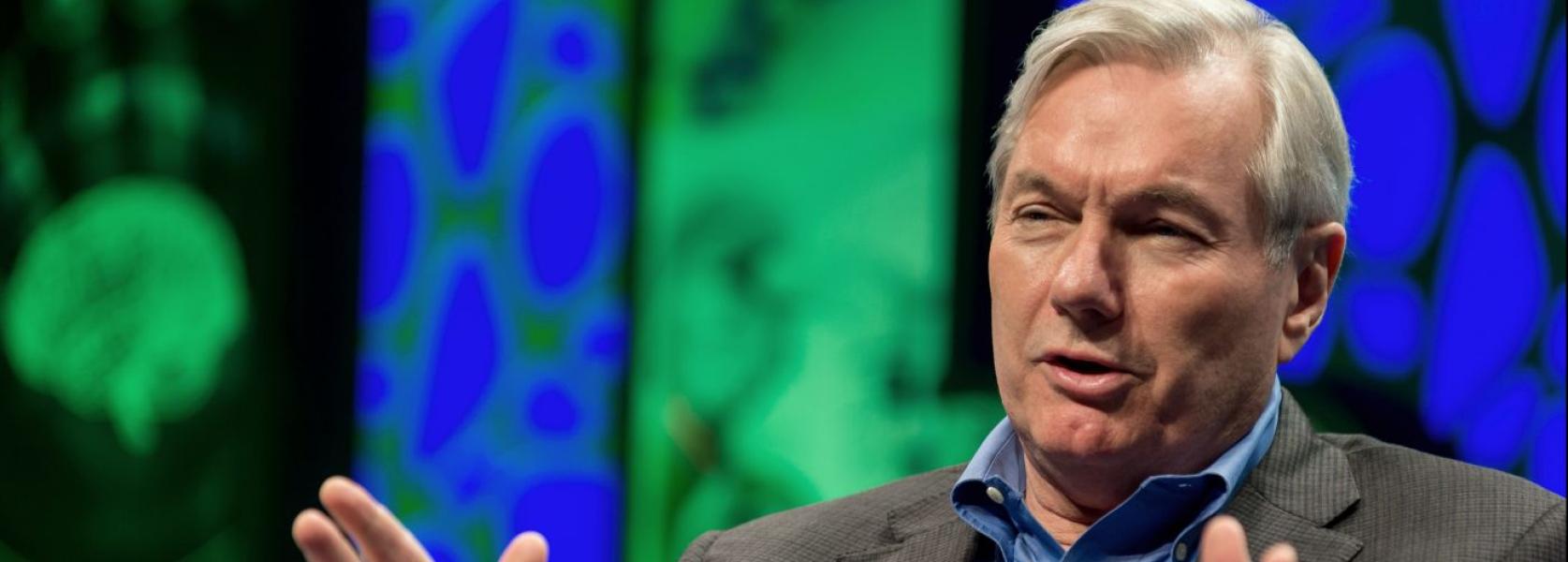
In "Fork in the Road" Dr. Osterholm and Chris Dall discuss the changes to the CDC's vaccines and autism page and this week's meeting of the CDC's Advisory Committee on Immunization Practices. Dr. Osterholm also covers the recent infant botulism outbreak and Chris answers an ID Query about possible C. difficile vaccines.
New review finds no evidence to support delaying universal hepatitis B birth-dose vaccination
Resources for vaccine and public health advocacy:
Learn more about the Vaccine Integrity Project
Loading player ...
See full transcript
Chris Dall: Hello and welcome to the Osterholm update, a podcast on Covid 19 and other infectious diseases with Doctor Michael Osterholm. Doctor Osterholm is an internationally recognized medical detective and director of the center for Infectious Disease Research and Policy, or Cidrap, at the University of Minnesota. In this podcast, Doctor Osterholm draws on nearly 50 years of experience investigating infectious disease outbreaks to provide straight talk on the latest infectious disease and public health threats. I'm Chris Dahl, reporter for Cidrap news, and I'm your host for these conversations. Welcome back, everyone, to another episode of the Osterholm Update podcast. Over the last several months, this podcast has dedicated a fair amount of airtime to detailing the efforts by Health and Human Services Secretary Robert F Kennedy, Jr to undermine public confidence in vaccines. We've been very clear from the very early days of Kennedy's tenure about where this all may be headed and why these efforts are so dangerous. But we were still unprepared for what happened on November 19th, when the language on the centers for Disease Control and Prevention website page on autism and vaccines was altered. The page that once said vaccines do not cause autism in bold at the top now leads with, quote, the claim vaccines do not cause autism is not an evidence based claim because studies have not ruled out the possibility that infant vaccines cause autism.
Chris Dall: It was a stunning move from Kennedy, who would later tell The New York Times that he told the CDC to make the change, despite a promise during his confirmation process not to do so. And it's a signal that he appears to feel emboldened in his efforts to undermine vaccines. The change to the CDC website is among the many topics we'll be covering on this episode of the Osterholm update. We'll also discuss the upcoming meeting of the CDC Advisory Committee on Immunization Practices and changes that could be ahead for the childhood immunization schedule. Summarize the Vaccine Integrity Project's review of decades of data on the birth dose of the hepatitis B vaccine. Examine a controversial FDA memo on Covid vaccines. Bring you updates on the measles and infant botulism outbreaks, look at the latest respiratory virus data and provide an update on H5n1 avian flu. We'll also answer an ID query on C difficile vaccines and bring you the latest installment of This Week in Public Health history. But before we get started, as always, we will begin with Doctor Osterholm's opening comments and dedication. Thanks, Chris.
Dr. Osterholm: And welcome back to all the podcast family members. We're so very fortunate to have you join us again today. And I also want to thank those who might be joining for the first time. Hopefully, we're going to provide you with the kind of information you need and are looking for. This podcast is a bit unusual in that it covers a lot of different topic areas, some directly related to our everyday lives and infectious diseases, and some just related to our everyday lives. Before I begin though, I just want to note that this is likely to be one of the most difficult podcasts I've been involved with in the almost 200 ones that we've recorded. You're going to hear today about things happening in the public health world that are way beyond distressing. And I'll share with you why I think that's the case. And I'll also share with you, in a sense, what we can and must do about it. I refuse to accept the idea that there's not something we can do to respond to this challenge that we have right now, and it's in that light that we picked our dedication for today, too. This is something very near and dear to my heart and my 50 years of public health practice. I have been involved with higher education all those 50 years, either in the first three years as a student, then as a student and a teacher, and then as a professor. I have had the good fortune of mentoring many, many, many individuals through their graduate degrees, including almost 20 PhD students. It's with that background, let me just say that our opening dedication today comes from a listener who suggests we dedicate an episode to the students who are currently studying public health or are enrolled in health professional programs.
Dr. Osterholm: These students are certainly worthy of a dedication, given the courage it takes to continue to pursue a career in a field that has faced so much hardship and uncertainty recently. Stepping into the health professions today means stepping into that uncertainty. That field has shifted beneath our feet politically, financially and culturally, and all in a very short period of time. Public health, in particular, has been scrutinized, misunderstood and undervalued. And you're choosing to enter anyway. You're choosing service and impact and that is worth recognition. This dedication also comes at a moment when the US Department of Education has just moved to eliminate several other public health degrees, including nursing, physical therapy, audiology and physician assistant programs from the federal list of professional programs. A classification change may sound like it's just a technicality, but it lands a huge punch. Which degrees count as professional and nonprofessional is being proposed as a determining factor in how much financial support students can receive. Students enrolled in a professional degree program can take out up to $200,000 in federal student loans in their lifetime, while nonprofessional students are capped at a lifetime limit of 100,000. This rule was drafted by an administration advisory committee in November, and is slated to be formally proposed in early In 26. We know these education programs are expensive. In the past decade, the cost of undergraduate tuition in public universities has gone up by almost 30%, and the average annual cost of graduate school tuition is nearly five times that it was three decades ago, according to University Herald.
Dr. Osterholm: Given students the option of taking out loans to finance their education allows students whose families can't pay these large sums of out of pocket money to access education and training that prepares them for these very valuable careers. Not to mention, many of these fields whose degrees are no longer considered professional are facing national worker shortages. This policy would make it harder for hard working individuals to manage debt when attending graduate school, and lead to even greater shortages of these medical professionals. What are they thinking? As we recognize these students and the challenges they face, were also reminded of why their commitment matters. The future of our health systems depend on people who are willing to learn, to lead and to serve, even when the path is uncertain and the support systems aren't keeping pace with reality. So to those who are pursuing public health and other health professional degrees, your dedication is not only admirable, it is essential. You are stepping into fields that need your passion, your perspective, and your perseverance. And while the policies and structures around you may shift, the value of the work you're preparing to do remains unwavering. And I know after 50 years of being on the front line of professional education, now more than ever, we need you and the kind of individuals that can help fix this ship that so many in my generation have watched get broken. Well, after that, I don't know if anything's going to lift you up. And I don't know if this light one today is surely in the position to do that.
Dr. Osterholm: I'm here to report. Unfortunately, on December 4th here in Minneapolis. Sunrise is at 7:34 a.m.. Sunsets at 434. That's only eight hours, 57 minutes and 21 seconds of sunlight. And for those who are familiar with twilight and so forth, the different stages, when it gets dark, it gets dark a lot faster now than it did six months ago. But on one hand, we're about at the bottom. December 21st, which is just a few weeks away, will actually be the shortest day of the year when the sun rises at that time will be at 748 and the sun set at 430 for eight hours and 46 minutes and 12 seconds. We're literally just a little over a minute away from the shortest day of the year. And then guess what? It starts to change. Then we are on the upside of something very special. Now to our dear friends at the Accidental Belgian Beer House on Vulcan Lane in Auckland today. Your sun rises at 5:54 a.m., your sun set. It's 827. Wow. A whopping 14 hours, 32 minutes and 29 seconds of sunlight, and you'll continue to increase slightly for the next couple of weeks when on December 21st, you will hit your maximum sunlight with sunrise at 558 in the morning, sunset at 839. That'll be 14 hours, 41 minutes and 37 seconds of sunlight. And then you will begin to see those days grow darker. Not right away, but they're going to start doing that. So for those who are suffering right now through the darkness of the Northern hemisphere, we're going to turn this thing around soon.
Chris Dall: Mike, I first heard the news about the changes to the CDC's vaccine and Autism page when you emailed Cidrap staff with a link to the page and a one word comment. Terrible. Can you talk about why this sudden reversal is so significant and how damaging it is to the reputation of the CDC.
Dr. Osterholm: Well, first, let me put this entire situation into context, at least from my own personal perspective. Nothing surprises me right now. When we had this discussion a year ago after the election, and you heard me at that time lament about the fact of what might happen. I realized there were many of you who thought of me as just. There goes Mike again. Bad news. Mike. And, you know, I understood that. I accepted that, but I had this terrible, terrible feeling deep in my heart that it was all going to turn out to be true in the worst way possible. And so when I wrote the single word terrible, when I commented on how the CDC website had been changed, it was almost a word of I accept it, I understand it, it's going to happen. It was expected to happen and it's going to happen even more. There are other issues which I'll mention in a moment, that are yet to be what I would call the most tragic moments in public health in a century. But Chris, let me address specifically the point that you just raised. I'm sure many of you are aware of this, but two weeks ago, not long after our last podcast aired, the CDC updated their website that previously provided information to people seeking to understand possible links between autism and childhood vaccines. What was previously a scientifically accurate source of information on the page now starts with the sentence, and I quote the claim vaccines do not cause autism is not an evidence based claim, because studies have not ruled out the possibility that vaccines cause autism, unquote.
Dr. Osterholm: Chris, my one word comment terrible, barely scratches the surface of how truly damaging this is, not just to the reputation of CDC, but to the community of those who live in the autism spectrum and have never asked to be part of this pseudoscience campaign. It's important to understand that the messages coming out of HHS today about vaccines are causing a great deal of doubt, particularly in young parents who are wondering, well, if the government is telling me that there are all these issues or problems, why would I want to even risk getting my child vaccinated? I'll just wait. Well, the problem with that is the other side of that issue is, of course, the risk of infection, life threatening infection. To put all of this in context. Two of our reporters at Cidrap, Liz Szabo and Lainie Bergeson, wrote a really fabulous piece on this issue that was published on our website, which we will link to in our podcast show notes. I don't want to waste my breath. Continue to debunk this myth around autism and vaccines. That truly feels like a cockroach that just can't be killed. So instead, I'll focus on two other takeaways. Who holds the burden of proof for misinformation and the impact of politically supported anti-science? This new CDC page is somewhat clever in the way that it tries to paint this controversy as a failure of science and evidence, but it is not only impossible for researchers to prove a negative, it is a waste of time and energy to draw up large, rigorous, potentially unethical studies that are meant to chase down every little whim of the anti-vaccine community.
Dr. Osterholm: It is incredibly easy to toss out bogus claims like driving a blue car causes high blood pressure, or drinking Coca-Cola causes autism. Anyone can put this kind of information out, acting as if somehow we did not look at all the possibility. The burden of proving these claims to be true or false should be honor those making those ridiculous statements, not the hard working scientists and public health experts who are working to solve real problems. We do take every possibility Seriously. But before we actually act on it, we want some evidence. There's a signal. There was, in fact, a signal for autism and thimerosal. And by signal, I mean there was at least some evidence that maybe these could be related. In each instance, the public health community did extensive studies, and studies did not demonstrate any evidence that, in fact, autism and vaccines were related. So let me just say you can never prove a negative. You just can't. I can't tell you for certain that, for example, eating a piece of Halloween candy doesn't put you at increased risk for autism. But in fact, are there any signals that would suggest that's a possibility? No. And that's how we have to proceed. I can say clearly that there are any number of possible avenues that someone could suggest for why autism is related to vaccines. However, we have demonstrated clearly that any one of those issues that may be related to autism, there is no signal for today.
Dr. Osterholm: And for ones that had a signal or at least a hint of a risk. We've absolutely proven that they did not cause autism. So this one is going to be a forever issue. We could debunk a hundred different ways in which vaccines might somehow cause autism, but it'll never be enough because they'll come back and say, well, but you didn't look at this. You didn't look at that. You didn't look at this. So again, using the scientific method, we go where the fire is burning and we go put it out. And in this case, I can say with certainty there is no remaining theories, no remaining signals out there to support the idea that vaccines cause autism. And I don't care how much the Secretary of Health and Human Services promotes this idea. This is just simply not true. I also want to touch on what it means for an agency as notable as the CDC to be so completely corrupted by anti-science. I use that word very carefully, because, in fact, it pains me to see my dear colleagues who have remained at CDC tried to do their jobs, who are the very best of professionals, who work hard every day and hear from both sides of any issue, those who believe they're not doing enough to protect the public from the dangers of vaccines. And for those who hear from policy makers, public health officials, medical officials, etc. that the CDC can no longer be trusted. Boy, what a place to find yourself. I trust so many of the people who still are working hard inside of CDC.
Dr. Osterholm: I salute you. I can't tell you how hard it is to watch this agency of greatness at one time be in the position that it's in. We are truly in an unprecedented era of attack against public health and the value of science and higher education. This is not just about a single website being changed. It's a sign that those at the highest level of these agencies and systems are disregarding facts for their own personal interests. These are the people that are making an agency like CDC no longer a viable public health source of information. Leaders who peddle anti-vaccine sentiment make money off of the people's fears, from speaking engagements to supplement sales to lawsuits. And in the end, it's not the individual claims of misinformation that hurt us most, but the unraveling of public trust in public health itself without considerable action and accountability. This will only continue. We really must see us all standing up against what's happening. And I promise you, our center Cidrap, and specifically the Vaccine Integrity Project, will stand up and stand out. As I said in podcasts of the past, we will bend, but we will not break. We must all take a similar position today if we're to watch public health, that very important area of study, survive. So I conclude this by saying these are unprecedented times. They're going to get worse, they're going to get worse. But we can and must stand up to them. After all, it's all about what are we doing for our children and our grandchildren if we don't?
Chris Dall: I noted in the intro that Secretary Kennedy seems to feel emboldened, and that's reflected in the news last week that Louisiana Surgeon General Ralph Abraham has been named the deputy director of the CDC. For those who aren't familiar with the name Mike, what can you tell our listeners about him and what his appointment means for the CDC?
Dr. Osterholm: Well, Chris, I am very concerned about the appointment of Ralph Abraham, a former surgeon general of Louisiana, as the CDC deputy director. This happened very quietly. No announcement was made by HHS for Secretary Kennedy, but CDC's internal databases confirm that Doctor Abraham began working in that role on November 23rd. Abraham's views on vaccine largely mirror those of many of Kennedy's appointees. Several jarring examples of this come to mind. First, he spread misinformation that Covid vaccines contain harmful fragments of DNA, which is entirely untrue. This not only shows a reckless intention to reduce vaccination rates, but also a severe lack of understanding of how these vaccines work. Second, he stated that he sees individuals injured from Covid vaccines every day in his clinic. There's absolutely no data to support that. One provider could be seen vaccine complications on such a frequent basis considering how rare Covid vaccine complications truly are. Third, he is supportive of ending routine administration of the hepatitis B birth Both those, which we'll talk more about in just a moment. Fourth, in his role as the Louisiana Surgeon General, he ended mass vaccination campaigns in the state not just for Covid, but for other routine childhood vaccinations as well. Fifth, he promoted the creation of single pathogen vaccines rather than a combination vaccines like the MMR, despite there being no evidence backed basis for doing this. Six earlier this year and through a period of over two months, he did not notify the Louisiana community of a very rapidly emerging outbreak of pertussis, an outbreak that, by the way, killed two children before.
Dr. Osterholm: Finally, he actually acknowledged that this was going on in the community without the kind of support from the Louisiana Department of Health to actually mount the community response to increase vaccination. This left many children vulnerable to what was now in existence, an awful outbreak of pertussis. And finally, let me just say, he's actually recently advocated for the removal of aluminum salts from vaccines, despite its strong safety profile and effectiveness as an adjuvant, which is the substance that improves immune response to vaccines. I could go on and on with more examples, but I think the picture I've painted is pretty clear. This is the man that is now basically running CDC. In addition to his troubling vaccine beliefs, he's also spread misinformation about autism and Tylenol used during pregnancy, and was a strong supporter of using hydroxychloroquine and ivermectin to treat Covid 19 patients. As always, I want to avoid speculating on what exactly could happen as a result of this appointment or what Doctor Abraham might do in this position. But it is safe to say that our access to vaccines is more threatened now than ever before, with yet another individual pushing anti-vaccine rhetoric in such a significant power position.
Chris Dall: Mike. All of these changes have occurred in advance of this week's meeting of the CDC's Advisory Committee on Immunization Practices, or ACIp, which starts today. How concerned are you about what's going to come out of this meeting?
Dr. Osterholm: Chris, I am extremely concerned, and I believe it will be recognized one day as a pivotal moment in all of modern public health. Why am I concerned about this meeting? Well, the first day will involve more discussions on the hepatitis B vaccine, specifically the routine administration of a dose of hepatitis B vaccine at birth for all infants in the US. We'll talk more about that in just a moment. But the major concern is that CDC could vote to remove the birth dose recommendation entirely or delay the first administration of the hepatitis B vaccine, which could put infants at significant risk for acute and chronic illness. The removal of this recommendation would not necessarily make it impossible to get the vaccine. However, it could end coverage for the hepatitis B vaccine dose from Medicaid and the vaccines for children program. Substantially reducing access, especially for those facing the greatest barriers to health care, is unclear at this point. If private insurers will continue covering the birth dose if this recommendation is removed. The second day of the meeting will involve discussions on the current childhood and adolescent immunization schedule, with RFK and his supporters have long criticized. This will also include a discussion of what the CDC has referred to as adjuvants and contaminants. I can only imagine the misinformation we might hear in this discussion, as I just shared a moment ago.
Dr. Osterholm: The administration has already spread false information about aluminum salt adjuvants, which have a very strong safety and efficacy profile, and the use of the phrase contaminants alone is a red flag that is unlikely to be a good faith discussion. The only good news about the day two discussion is that no votes are scheduled for the second day of the meeting, so we're unlikely to see actual changes to the immunization schedules this week, other than the potential changes to hepatitis B birth dose recommendation, but it could set the stage for votes that could take place in the future meetings to make additional changes to the vaccine schedule. So we need to watch and listen very, very carefully. The bottom line is that these are not honest discussions about how we can improve our vaccine recommendation. They are further opportunities for anti-vaccine individuals who are not remotely qualified to be on the committee in the first place, to continue pushing their dangerous agendas into the American people. Our Cidrap news reporters are working tirelessly to cover today's and tomorrow's events, so stay tuned to find out how the CDC votes and what it will mean for vaccine access going forward.
Chris Dall: As he noted, Mike, the first day is going to focus on a possible change to the recommendation that all infants receive a birth dose of the hepatitis B vaccine. This is what spurred the Vaccine Integrity Project's review of the data on the birth dose of the vaccine, which was just recently published. Mike, what did the VIP review find, and do you think it could sway any of the ACIp members?
Dr. Osterholm: Well, Chris, the Vaccine Integrity Project conducted a comprehensive review of four decades of evidence involving over 400 studies about the hepatitis B birth dose. It was prompted by Acip's discussion and upcoming vote about whether to modify the long standing recommendation that all medically stable infants receive the vaccine at birth. We had an outstanding team of researchers working on this report, including several members of our podcast team. We then have external subject matter experts and medical societies review our findings to ensure completeness and accuracy of our analysis. The report is posted on the Cidrap website and will be linked in our show notes today. The review reached several key findings. It first. The birth dose has been central to the US hepatitis B prevention for more than 30 years, since shifting from risk based vaccination to a universal birth dose strategy. Pediatric hepatitis B virus infections have declined by 99%. Let me repeat that by 99%. The vaccine is safe regardless of timing, across randomized trials over decades. National surveillance system and long study safety studies. No evidence at all has showed any safety benefit to delaying the first dose. Both early and delayed vaccinations provide long lasting immunity. But delaying the dose offers no additional protection and removes an important layer of prevention. The birth dose is a critical safety net, with 18% of pregnant patients not tested for hepatitis B and only 35% of them who are tested receiving all the recommended follow up care.
Dr. Osterholm: Thousands of infants remain at risk of exposure from the undiagnosed maternal infection or missed prevention steps. Delaying the first dose increases these vulnerability. Remember, a child is exposed to this virus primarily through the birthing process, and if in fact, vaccine can be delivered literally at the time of delivery or within a day, it can actually head off an infection with hepatitis B virus, which otherwise would have occurred from the child being exposed to the mother's infected blood. This is really an amazing tool that has been so successful for the past 35 years in virtually eliminating transmission of hepatitis B virus from an infected mom to a child. Now, will this evidence influence ACIp members during today's meeting? I doubt it. But let me just use an example where in fact their logic fails in terms of saying, well, if I am a mother and I know I'm negative, I don't need to get vaccinated. Well, that negative is a relative term because in fact, you don't know if you did get infected in the period between the testing and the birth of the child. I would agree it's very low risk, but we also see testing fall through the cracks, meaning individuals do not get tested, and therefore you shouldn't have to wait until you determine the mother's status before you vaccinate the child.
Dr. Osterholm: Let me use an example to paint what I'm talking about. You know, today we have laws requiring seatbelt use and for that matter, very important car seat use for our children. Even if you're only driving three blocks to grandma's house, you must wear that seatbelt and you must use that car seat. Now, most of us listening to this podcast have never been in a life threatening, serious accident where the seatbelt saved our lives. But they do that every day. Seatbelts save lives. And guess what? Even occasionally, a seatbelt can be associated with a worst outcome. We know from some accidents that can happen, but the likelihood of an adverse event because of a seatbelt versus the incredible benefit that those seatbelts offer, there's no comparison. And let me just say for today, we're saying the very same thing about these hepatitis B vaccines. Even if you don't think you're going to need it, get it. And therefore, the system that we have in this country, which unfortunately has such poor record keeping, poor follow up for screening for so many young pregnant women today, this is an important program to make sure that the child that you bear will not intend 15 or 20 years, need a liver transplant or die from liver cancer, which unfortunately is an outcome that happens all too often.
Dr. Osterholm: So let me just say, will the evidence that we've produced and others have validated influence ACIp members during today's meeting. I don't know. In theory, it sure should. Acip has historically made incremental data driven adjustments to the hepatitis B recommendation, moving from targeted birth dose vaccination of high risk mothers to the universal recommendation currently in place. Under normal circumstances, because the VIP review shows no advantage to delaying the birth dose and clears risks associated with maternal screening and follow up care. In addition, I cannot overemphasize the high, high, high safety profile of this vaccine. Acip would take these types of data into account when they consider changing a recommendation that functions as a proven safety net. But as we know, this is no ordinary ACIp, and these are not normal circumstances. We anticipate hearing a lot of misleading information presented during the conversation on this topic. And although our review provides a data rich argument in favor of maintaining the birth dose recommendation that has been so successful, there is no guarantee the ACIp meeting will follow or even acknowledge that evidence.
Chris Dall: One more item here on vaccines. On the Friday after Thanksgiving, an internal memo from a Food and Drug Administration official that linked Covid vaccines to the deaths of at least ten children and laid out some potentially dramatic changes to the way vaccines are approved and regulated, was leaked to the press. Mike, what do you make of the contents of this memo?
Dr. Osterholm: Sadly, Chris, yet another example of questionable vaccine information coming out of this administration over a holiday weekend. It was of no surprise that the memo by FDA, written by Vinaya Prasad, director of the center for Biologics Evaluation and Research, the FDA linked Covid 19 vaccines to the deaths of at least ten children. Well, first of all, this information has not been peer reviewed. This is not a way to share information without further explanation of how this information came to be. This is really an important issue and it's irresponsible to put data out like that. It's like crying fire in a crowded theater. Now, let me be really clear. I do believe that there have been some deaths due to myocarditis associated with the vaccination in the medical literature. We've got several cases like that. But if you look at the overall number of these cases, it pales in comparison to the number of people who died from myocarditis associated with Covid itself. We deal with this all the time. We have all kinds of medical technologies that we have to compare the benefits versus the risks. And in our next podcast will go into a much deeper dive on this very topic. But so I'm not sitting here saying that no, no, no, it could never happen. But again, let me just remind you that the presenting data like this is not helpful.
Dr. Osterholm: I hope that they will submit their data, given that they already are well recognized as being anti-vaccine, and therefore a bias that makes any kind of interpretation of results that they present challenged. I hope they submit this information to an organization like the National Academy of Sciences. Let them review it independently. Let them come back out and say, what is the risk of developing myocarditis in the fatal outcome associated with vaccine versus the actual infection itself? We must have this kind of very factual information. But also what really particularly concerns me in this entire email is that Prasad used this mysterious data point as an argument for changing standards for approval of new vaccine. His statements were vague, so it's tough to know exactly what he means here. But there are two things I want to make very clear. One, our current standards for approving vaccines are rigorous and ensure that vaccines administered are population, are safe and will be continuously monitored in the event that new safety data comes to light. And two. Making vaccine approval more challenging will only make it more difficult for new, life saving vaccines to become available. Some of the standards for sides suggested in the memo, including having pregnant participants now enrolled in a randomized controlled trial, which would be considered highly unethical by nearly all researchers and they're impossible to implement.
Dr. Osterholm: We have enough data to support the safety and the effectiveness of vaccines in pregnant women. Our report that we issued earlier this fall, addressing the risk of pregnancy and Covid and flu vaccines, demonstrated clearly that, in fact, there was great benefit to pregnant women to being vaccinated. Now, to suggest that they have to go through a randomized, controlled trial before they can be approved for vaccination. That is absolutely irresponsible. Another area he suggested was that placebo controlled trials be used for updates to pneumococcal vaccines, rather than using the current standard of care or measuring antibody responses. Most graduate students public health will learn in their very first epidemiology class that conducting a clinical trial against a placebo when a safe and effective standard of care is available, is a significant breach of ethics. This goes to show how alarmingly underqualified and under-informed the members of this administration are on such issues. This brings me to another one of Prasad's comments on the way that we conduct flu vaccine testing each year. It is correct that we don't conduct new randomized controlled trials for influenza vaccines each year. That would not only be unnecessary, but also impossible. Randomized controlled trials for vaccines typically take years, and the strain selection for each year's vaccines occurs very shortly before the manufacturing begins.
Dr. Osterholm: If we needed new trials every year, we would never see a vaccine manufactured in time for shots to get into the arms. If these standards are put into place, it would effectively ban seasonal vaccines and prevent innovation that could save lives without any clear benefit to improving the safety profile of the tools that have been repeatedly shown to be safe and well tolerated. Finally, we cannot ignore the timing of this memo. So shortly before the upcoming ACIp meeting. I think this will add even more fuel to the fire for the committee to suggest sweeping changes to our vaccine schedule. As I mentioned earlier, there won't be any vote on any vaccine schedule changes aside from the hepatitis B birth dose recommendation this week. But we're all on high alert for changes following future meetings. The bottom line is that the changes that Prasad outlined would decimate vaccine development in this country and put the very existence of annual Covid and influenza vaccines in jeopardy. Not only that, but the basis of these proposed new standards is not backed by quality, peer reviewed evidence. It seems that the examples of anti-science from this administration are growing by the day. And I only hope that the FDA changes course before more damage is done. But I have no faith that will happen.
Chris Dall: Let's turn now to two infectious disease outbreaks that we've been tracking measles and infant botulism. Let's start with the measles outbreak in the United States. Mike, what is the current status?
Dr. Osterholm: Well, measles is not going away in this country, that's for sure. At least not yet. Right now, there are ongoing outbreaks in Arizona, Utah and South Carolina. And according to the latest CDC data, there have now been at least 1798 confirmed cases of measles reported this year in the United States. Most of this is outbreak driven transmission. There have now been 46 outbreaks documented so far. In 2025, an outbreak is defined as three or more linked cases, and nearly nine out of every ten cases have been outbreak associated. For perspective, there were just 16 outbreaks in 2024 and 69% of those cases were outbreak associated. Also worth noting is the fact that 92% of the cases are either unvaccinated or have no unknown vaccination status. Given the ongoing situation, one of the questions that keeps coming up is will the US lose its measles elimination status? This designation is based on whether or not there's continuous, sustained transmission of the same virus strain in a country for more than 12 months. This means, in fact, the virus jumps from one place to another, causing new outbreaks, not as somehow ten new outbreaks occur that all were introduced by ten different parties coming into the country with the virus. So this is an important distinction. And the real question will be not just how long outbreaks occur, but are they linked. So over a year's time period you can show it going from A to B to C to D, etc.. And I just want to remind people that it was in 2000 that the US received its elimination status, but now sadly, that's in jeopardy.
Dr. Osterholm: The current transmission change began on January 20th with the outbreak in Texas and has spread to Oklahoma, New Mexico shortly after, and the same viral subtype has continued to circulate as part of these more recent outbreaks. If that continues through January 20th of next year, again, we could lose our elimination status again, as we already saw this happen in Canada last month with the Pan American Health Organization, Paho, reviewing the data and officially removing the designation. Their outbreak began in October 2024 and is still ongoing, with more than 5200 cases reported Investigators there cited a combination of factors fueling the outbreak, including declining vaccination rates driven by misinformation, reduced healthcare access in certain areas, workforce shortages among health care providers, underfunded public health system, and challenges reaching rural and some religious communities. Of course, a lot of these challenges exist here in the US, too. And a virus like measles, which is highly, highly infectious, will expose those gaps. We will keep you updated in the coming months as we learn whether we will lose our elimination status or narrowly avoid the situation like we did just five years ago after a major outbreak in 2018 to 2019. But even the threat of losing our elimination status is something most of us in public health could not have fathomed just 30 years ago, and it is truly heartbreaking to see these preventable cases, hospitalizations and deaths continue to occur.
Chris Dall: Meanwhile, the infant botulism outbreak, which has been linked to powdered infant formula, continues to grow. And there are reports that the specific product that has been named in the outbreak is still on some store shelves. Mike, has the FDA dropped the ball here?
Dr. Osterholm: Well, Chris, this outbreak is surely very challenging. As of last week, 37 infant botulism cases as young as 16 days old in 17 states had been linked to the formula, and all 37 have been hospitalized. Surely the bolus of cases that were now dealing with occurred since early August. However, even then, there were cases prior to that that may actually have been involved with this particular product. More information will hopefully be forthcoming in the near future. The current outbreak was really detected as an outbreak in early August. At that time, neither FDA or CDC had sufficient information to declare an outbreak, and it was only when the California Department of Public Health alerted them to an increase in orders for botulism, immunoglobulin, or what we call babybig, the recommended treatment for all suspected cases in the US. The California Department of Public Health is the sole maker. The health department developed Babybig in the 1990s, and as the world's only source of this life saving drug, from August 1st through November 19th, the 107 infants nationwide, including confirmed cases in infants treated while awaiting test results, received babybig. It's yet unclear how many of these are going to be tied to the outbreak, and in fact, this number could surely increase. On November 8th, the California Health Department detected Clostridium botulinum spores in a can of by heart whole Nutrition infant formula that had been fed to an infant that day. After the FDA recommended that by heart recall the formula, the company recalled two lots of the product. But as late as November 26th, state officials were still finding the formula and some store shelves. This is absolutely unacceptable and reflects, and I think in part, the reduced number of persons in public health who are able to go out and verify that these shelves have the imprint of this product in late November.
Dr. Osterholm: California health officials said they had identified at least six suspected infant botulism cases that occurred from November 2024 to June 2025, long before the current outbreak was discovered. It will be important to determine if, in fact, these cases are part of the same outbreak and if so, could this investigation actually been launched much earlier that would have identified this product? They said they hadn't connected the previous cases to the current outbreak, because they didn't have enough evidence to immediately suspect a common source. And the number of cases were within the expected number of cases based on previous years trend. As we discussed in the previous podcast, infant botulism is a life threatening illness caused by spores that grow in the growing large intestine and produce botulinum toxin, which blocks the nerve endings ability to communicate with muscles. Infants are particularly vulnerable owing to their immature gut microbiotic mix and low levels of bile acid. The first signs are usually constipation, poor feeding, loss of head control, and difficulty swallowing. Respiratory failure and death can occur, but fortunately no infants have died yet in this outbreak. The way the outbreak was detected and investigate highlights why state and local health departments are all such an important part of routine disease surveillance. If state and local health departments are our eyes and ears on the ground, we just have to remember how important it is to support them to be able to do this. I hope that at the end of this outbreak investigation, there's what we call a hot wash, an opportunity for everyone to come together and see what lessons could have and should have been learned from this very experience.
Chris Dall: Now to our ongoing coverage of H5n1 avian influenza. Last week, officials in Washington state confirmed that a resident died from avian flu and not from the H5n1 strain but from H5n1, making it the first recorded human infection with that strain in the world. Mike, how significant is this?
Dr. Osterholm: Thanks, Chris. I want to start by saying that this is a departure from our normal avian influenza update for a couple of reasons. First, we haven't heard of many domestic human infections in recent months, and this is only the second known person to have died from complications of avian influenza since 2024, here in the United States. Another point of difference with this situation is the individual is infected with a different H5 than we normally cover. H5n1 and H5n5 viruses can be highly pathogenic forms of avian influenza, but H5n5, as you may be guessing, has a different neuraminidase Today's protein, therefore H5n5. This is a less common reassortant circulating in the US and is different in protein. May influence its levels of transmission potential to non-avian species, but the magnitude of this difference relies on many agent and host factors. Now, moving on to your question. How significant is this? Well, despite the severe illness that resulted in a very tragic death caused by H5n5 in this individual, I do not believe that this case represents the first domino to fall in an incoming pandemic. Frequent listeners and readers of my latest book will also know that the biggest indicator of pandemic potential I look for as an epidemiologist sustained person to person transmission and establish an airborne transmission pathway. What I like to call a virus with wings. If this virus has wings, we will certainly be seeing increased signals of excess illness in the local and regional influenza surveillance. But that is not the case here. This could change. As we know, influenza viruses are always evolving, but it's too soon to sound any kind of pandemic alarm. Yes, the big one is coming eventually, and it may likely be caused by an influenza virus as opposed to a coronavirus. But at this point, the pandemic is still down the line, at least as it relates to age five and five.
Chris Dall: Now, in past years, this has typically been the time when we start talking about a holiday surge in Covid 19 cases coming right off the big gatherings of Thanksgiving. Of course, it's a little too early to tell at this point. But Mike, what kind of Covid activity are we seeing right now? And what about flu and respiratory syncytial virus?
Dr. Osterholm: The respiratory update is going to sound very familiar to the one from our last episode. Covid activity remains low across the country and flu and RSV are still low, but activity continues to increase. Before we dive into the numbers, I'll add that with the timing of the holiday and the current state of the CDC, data continues to be limited and somewhat challenging. Starting with Covid. Wastewater concentrations are very low nationally but are increasing in every region, with the Midwest and Northeast crossing the threshold to be considered low rather than very low on the state level. 28 states and D.C. are considered very low. 17 are low, three are moderate, and Tennessee is considered high, and North Dakota had insufficient data. Hospitalization and emergency department visits both remain as low as they have been in a year, and test positivity continues to decline. As far as variants are concerned, Xfg continues to be the dominant variant, accounting for nearly 70% of all US cases over the past month. A subvariant of Xfg, FCG 14.1, is now accounting for 10% of US cases as being monitored as a variant of concern. Overall, though, we're in really good shape in terms of Covid, but it seems that we could start to see activity begin to increase in the near future based on the wastewater activity, RSV data continues to be limited, but we know that activity is very low and starting to increase. Wastewater concentrations remain low across the country, and nearly all states except Hawaii, Louisiana and Washington, which are considered low, and Florida, which is considered moderate. Emergency department visits for RSV are just barely beginning to increase, with only 0.2% of the visits being for RSV last week compared to 0.1% two weeks ago.
Dr. Osterholm: Hospitalizations are increasing primarily among 0 to 4 year olds, and test positivity continues to climb as well, at 2.4% compared to 1.6% two weeks ago. Lastly, looking at flu, wastewater concentrations remain very low across the entire country, with Utah and New York being the only two states with influenza levels considered low rather than very low. Test positivity has increased from 2.8% to 5% over the past week, and from the percentage of outpatient visits for influenza like illness continues to increase as well. 2.2% last week, up from 1.8% during the last episode. This is still below the national baseline of 3.1%. When we consider flu activity be elevated, but I anticipate it won't be too long before we reach that. And as we reported during our last episode, both the 0 to 4 and the 5 to 24 year old age groups have surpassed the threshold, now at 7.1% and 3.7%, respectively, up from 6.9 and 3.5% based on the same metric. 48 states in the D.C. are considered to have minimal flu activity. Colorado and Mississippi are considered low. Louisiana is considered moderate. What has remained a much slower start to the season compared to what we would have expected, based on historic trends and what has been happening globally. I expect that this may change soon. This is not a time to let your guard down, but rather a grace period to go get vaccinated if you haven't already.
Chris Dall: Now it's time for our ID query. And this week we received an email from Barry, who wrote. My biggest worry now is that Pfizer is shelving their C difficile vaccine, and the only one that is showing possibility is an mRNA one. So that's it. I know you have a podcast for antibiotic stewardship, but I'm hoping you can discuss it on the Osterholm update. C-diff is unimaginably painful, deadly, and recurrence is common.
Dr. Osterholm: Well, Chris, I'm going to turn the tables here today. I'm going to ask you to answer this question. Since c-diff is a topic that you write so frequently about for Cidrap news and have really become a resident expert on this issue. So given what Barry asked. Chris, what do you think?
Chris Dall: So let's start with a primer for those of our listeners who aren't familiar with C difficile. Official name Clostridioides difficile, also known for short as C diff C difficile, is a bacterium that can cause severe diarrhea and is the primary pathogen responsible for hospital associated diarrhea. In fact, it's really one of the most common healthcare associated infections. The CDC estimates C difficile causes 500,000 infections and 29,000 associated deaths in the US annually. The primary risk factor is antibiotic use, which disrupts the balance of bacteria in the gut microbiome and enables C difficile to flourish. When that happens, C difficile produces toxins that attack the cells lining the colon, causing diarrhea. Hospital patients are a target because they are often receiving antibiotics for a different infection, and because C diff has to be treated with antibiotics. Many patients have frequent recurrences as the antibiotics keep wiping out good and bad bacteria, creating space for C diff to thrive. And Mike, the more you get C diff, the more likely you are to have a recurrence. In addition, C difficile, like all bacteria, has been developing resistance to antibiotics. Now to Berry's question. As far as I know, Pfizer has not yet shelved its C difficile vaccine candidate, although the results of a phase three trial were not very encouraging. That trial, which was conducted in adults 50 and older who were at increased risk of C diff infection, found that the vaccine was safe and well tolerated, but did not reduce incidence of infection compared with placebo.
Chris Dall: The vaccine effectiveness was only 31%, but Pfizer said it was encouraged by the fact that it appeared to reduce disease duration and severity. And those are important endpoints, so stay tuned on that one. But that vaccine is still in the Pfizer pipeline as far as I know. At the moment, there's only one other product in clinical testing. Valneva has a C diff vaccine candidate that in a phase two trial produced neutralizing antibodies that could block the activity of the two toxins that are responsible for causing disease. But the company has said that the vaccine is on hold until it can find a suitable partner to take it into phase three trial, and that essentially means a financial partner who will help pay for that trial. Sanofi terminated its C-diff vaccine candidate in 2017. As Berry noted, there is also an mRNA vaccine candidate, and it has produced some encouraging results in mice. But that's still a long way off. According to the most recent report on bacterial vaccines from the W.H.O., there are five C diff vaccine candidates in preclinical development. But while we may not be close to a vaccine for an infection that Barry rightly points out is unimaginably painful and can be deadly, there have been some advances in treatment that could move us away from antibiotics.
Chris Dall: Among them is fecal microbiota transplantation, which involves use of stool from a healthy donor to restore a patient's gut microbiome. This is now among the recommended options for people with recurrent C diff. There are also two oral drugs for recurrent C diff, called vorst and rebota, that contain species of gut bacteria and are based on the same principle as fecal microbiota transplantation. Instead of treating the infection, they use beneficial microbes to help restore the gut microbiome and prevent more recurrences. Finally, there's a drug called zinplava, which is a monoclonal antibody that neutralizes C difficile toxins and is taken in conjunction with antibiotics. It's also worth mentioning, Mike, that all of these treatments, as well as fidaxomycin, which is the current first line treatment for C difficile, are very expensive and are sometimes not covered by insurance companies until one or multiple recurrences of infections occur, at which point the infection becomes harder to treat. Still, these new treatments show promise in improving outcomes for C diff patients, particularly those at the highest risk for severe and recurrent infections. So, Barry, I hope that this answer provides you with a little more optimism, but we'll keep an eye on C.difficile vaccine candidates and provide an update when there's some good news.
Dr. Osterholm: Thanks, Chris. That was great.
Chris Dall: All right, now it's time for Mike and I's favorite part of the podcast this week in public health history. Mike, what or who are we commemorating today?
Dr. Osterholm: Today we're celebrating the life of a bacteriologist who helped pioneer research in antibiotic resistance. Mary Barber. Born in 1911, in Derby, London, Barber was the youngest of three sisters and the only one to become a doctor. However, she came from a family with a long history in medicine, becoming a fifth generation physician, earning her MD in 1940. Barber worked at many institutions under many different titles like pathologist at the Royal Free Hospital, Reader in Bacteriology at Saint Thomas Hospital Medical School, and lecturer in bacteriology at the British Postgraduate Medical School at Hammersmith Hospital. Mary spent the majority of her career in Hammersmith Hospital, and it was there that she studied the spread of staphylococcal infections in hospitals, particularly penicillin resistant strains of the bacterium. In 1947, she published a paper in the British Medical Journal proving that staphylococcus, a commonly occurring bacteria, was becoming more and more drug resistant, thanks in part to hospital transmission. Her research showed that some staphylococci had mutated to make a penicillin destroying enzyme. When these bacteria encountered penicillin, they developed an evolutionary advantage over the other strains that were killed by the antibiotic. What's worse, Barbara would also prove that multiple drug resistant strains were being spread from hospital ward to hospital ward, primarily by nurses who had become nasal carriers of these superbugs.
Dr. Osterholm: Barbara became increasingly concerned about the growing antibiotic resistance of staphylococci due to the widespread use of antibiotics, as well as hospitals not adhering to best practices in infection control. Because of these concerns, she spent much of her career advocating for judicious use of antibiotics and strict hygiene guidelines, which we now refer to as antibiotic stewardship and infection prevention and control. Barbara also advocated for prescribing with resistance in mind. Barbara's work minimizes threat of drug resistant infections at Hammersmith Hospital, and more importantly, it led to progress in the understanding of antimicrobial resistance. The effects of her work can still be seen all over the world, including our own Cidrap Antimicrobial Stewardship Program, which just celebrated World Antibiotic Awareness Week with an array of reports, webinars and podcasts. Sadly, Barbara would die at the age of 55, but we were proud to continue her legacy by educating, advocating and providing research on An antibiotic resistance and the importance of stewardship and infection prevention.
Chris Dall: Mike, we have covered a lot of territory. We've had a lot of talk about vaccines, about the threat to vaccines. What are your take home messages for today?
Dr. Osterholm: Well, Chris, I could have had a number of take home messages or I could have had just one. And what I mean by that is, is that there are a lot of things we covered, but there was one. To me, that is absolutely an essential take home message. And that is we're in deep trouble. We have to understand we're watching a major fork in the road when it comes to the acceptance of scientific based information versus the spread of ideology. I can't begin to fully understand myself the implications of what's happened to our federal agencies, how that will continue to change over time, and what this means in terms of the protection of lives, and what this means with regard to the actual occurrence of serious illness, hospitalizations and deaths in our community. We're in a period where reality is, in many cases, something not easily understood. So from a standpoint of where we're at, we'll see what happens at the ACIp meeting today. And if, in fact, there is a vote to repeal the universal infant dose for hepatitis B, it'll be a very clear that all science, all data based outcomes were cast aside for ideology. That will be a signal, I think, that we can expect much more of that to take place. And with that, it is basically like a large sucking drain, taking the best of public health science and literally just flushing it down the drain.
Dr. Osterholm: My second point today is that flu is down. Rsv is down. Covid is down. Now is the time to get your vaccines. Don't wait. Can I tell you it's going to come up? No, but I suspect it will. And now is your time. You've been given some grace from previous years when activity had taken off much earlier in those, so now is the time to get it. And finally, the third take home message is my heart just breaks. For those who are seeking professional education today, with the idea that they thought that they knew how they could complete their education through borrowing money through the federal programs. Now, that's not the case. And this is so unfortunate to me. It's just a punitive action that I don't understand the basis for it. We have so many healthcare providers we need right now. We need these people. We have shortages. Why are we doing everything to discourage them from participating in these programs? I will just promise you that we will continue to pursue the course of taking on these issues, and as they may be very difficult to do with lots of resistance. To me, the only choice is to do that for. To do anything other than that would be a failure of my own personal responsibility.
Chris Dall: Mike, I understand that you have a closing poem for us today.
Dr. Osterholm: Yeah, Chris, I do. And thank you for your help with this. We were looking for something that could be an acknowledgment of difficult times, but also what that means in terms of moving forward. And we chose a poem today from a poet that I actually have long admired. Edgar Guest, born in August 20th, 1881, died in August of 1959. He was a British born American poet who became known as the People's Poet. I might add that he also had a connection into the future, in that his grand niece, Judith Guest, is the novelist known for ordinary people. So here it is today from Edgar Guest. Keep going. When things go wrong, as they sometimes will. And the road you're trudging seems all uphill. When the funds are low and the debts are high, and you want to smile, but you have to sigh when care is pressing you down a bit. Rest if you must. But don't you quit. Life is queer with its twist and turn. As every one of us sometimes learns. And many a failure turns about when we might have won. Have we just stuck it out? Don't give up. Though the pace seems slow. You may succeed with another blow. Often the goal is nearer than it seems to a faint and faltering man. Often the struggler has given up when he might have captured the victor's cup.
Dr. Osterholm: And he learned too late when the night slipped down, how close he was to that golden crown. Success is failure turned inside out. The silver tint of the clouds of doubt. And you never can tell how close you are. It may be near when it seems afar. So stick to the fight. When your heart is hit. It's when things seem worse that you mustn't quit again. Edgar gasped. What a wonderful poem for the times. We have to stay the course, and we have to realize that there are going to be some tough days ahead. So, Mr. Guest, we will follow your words. Thank you. And I want to thank all of you for listening to another podcast. A lot of tough things today we're talking about. And trust me, I believe that our country right now is in a very challenging position from a public health standpoint. Something I could never have imagined. And we didn't even talk about the fact that the actions of our government have had such crippling impact on countries around the world and their public health programs. So it's not just here that we're seeing the challenges, but time will pass, and we have to be prepared to respond day after day after day and know that one day we will be into a rebuild situation.
Dr. Osterholm: And when we build back, we have to build it back better. And I focus on that getting through today and building back better. So I hope all of you have a wonderful two weeks before the next podcast. I know this is the holiday season. They can be the best of times and the worst of times. And for those of you who are having the best of times, I'm so happy for you. For those of you that are having the worst of times, know that you're not alone and reach out to others. Don't be alone. Don't let yourself be alone. And there are many people looking for someone just like you, and just you're looking for someone to be kind, to be thoughtful, to be a friend. And I hope with this podcast, if anything, we could all magically connect those who are looking for that someone or some group that they can be part of that takes away some of the weight of this season. So thank you so much again. Just remember in this time of toughness, be kind. My gosh that's the way to get through it. Be kind doesn't mean you can't be tactical, but it also means you must never, ever forget what it means to be kind. Thank you. Have a good two weeks.
Chris Dall: Thanks for listening to the latest episode of the Osterholm update. If you enjoyed the podcast, please subscribe, rate and review wherever you get your podcasts, and be sure to keep up with the latest infectious disease news by visiting our website cidrap. This podcast is supported in part by you, our listeners. If you would like to donate, please go to cidrap. The Osterholm Update is produced by Sydney and Elise Holmes. Our researchers are Corey Anderson, Meredith Arpi, Leah Mote, Emily Smith, Claire Stoddart, Angela Ulrich, and Mary Van Beusekom.
Our underwriters
Unrestricted financial support provided by


Supporting Underwriter