Special Episode: ACIP's Hepatitis B Vaccine Decisions
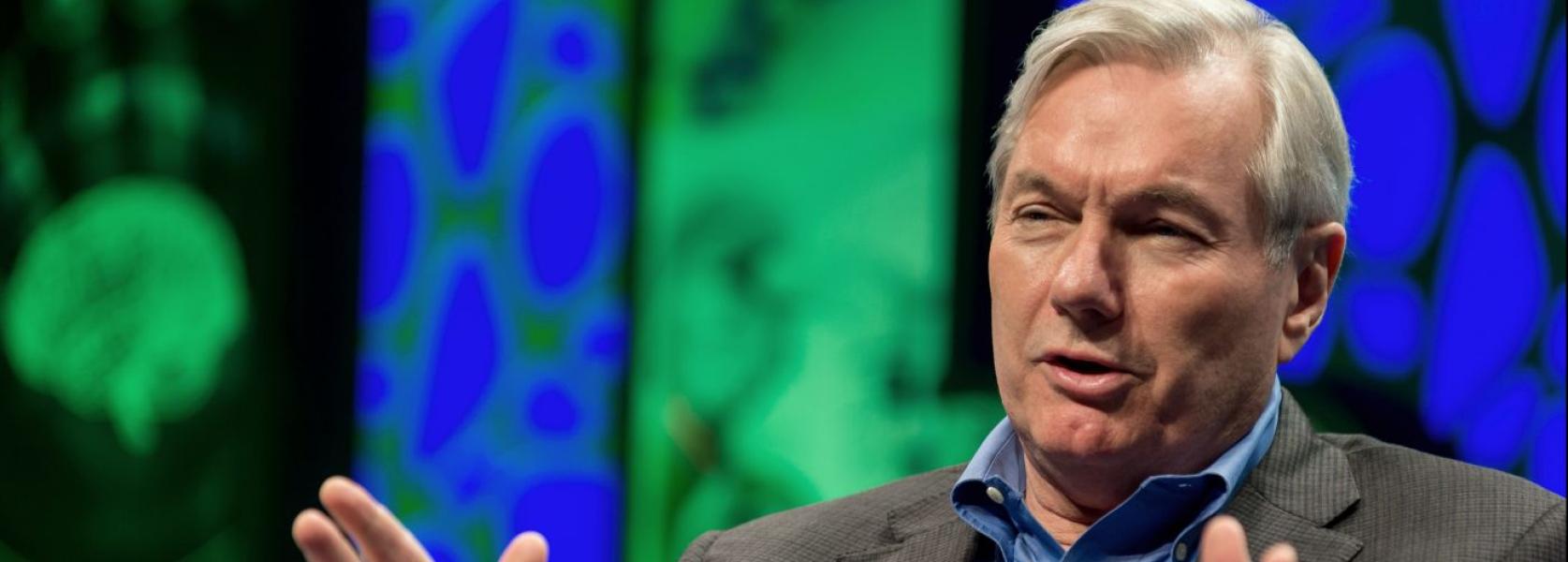
In this special episode of the podcast, Dr. Osterholm and Chris Dall discuss the ACIP's recent decision to end universal hepatitis B birth dose recommendations and the impact it will have on public health.
Noted articles:
…And What Have We Done?
This Is What It Looks Like When RFK Jr. Wins
Resources for vaccine and public health advocacy:
Learn more about the Vaccine Integrity Project
Chris: Hello and welcome to the Osterholm update, a podcast on Covid 19 and other infectious diseases with Doctor Michael Osterholm. Doctor Osterholm is an internationally recognized medical detective and director of the center for Infectious Disease Research and Policy, or Cidrap, at the University of Minnesota. In this podcast, Doctor Osterholm draws on nearly 50 years of experience investigating infectious disease outbreaks to provide straight talk on the latest infectious disease and public health threats. I'm Chris Dahl, reporter for CIDRAP news, and I'm your host for these conversations. Hello, everyone, and welcome to a special episode of The Osterholm Update podcast. We're recording this December 8th episode of the podcast to discuss what Doctor Osterholm told The New York Times was, quote, a defining moment for our country, what Doctor Osterholm was referring to was last Friday's decision by the Advisory Committee on Immunization Practices to end a long standing recommendation that all US children receive the first dose of the hepatitis B vaccine at birth. In an 8 to 3 vote, the panel voted that only infants born to mothers who test positive for hepatitis B, or whose status is unknown, should receive a birth dose of the vaccine, while women who test negative should consult with their doctor and decide if they want their newborn to receive a birth dose or delay the first shot for two months.
Chris: The decision by the panel, which has been handpicked by Health and Human Services Secretary Robert F Kennedy Jr and reflects his views on vaccines, was made despite the fact that the universal birth dose has nearly eliminated hepatitis B cases in US infants since it was implemented in 1991, and that no new safety data was presented at the meeting to indicate a change was necessary. This has a great potential to cause harm, and I simply hope that the committee will accept its responsibility when this harm is caused. One of the dissenting panel members said that sentiment has been widely echoed by medical societies, pediatricians and infectious disease and public health experts alike in recent days. So, Mike, let's start with that vote. I don't think any observer was surprised by it, but it was still shocking to see ACIp members make the decision to no longer recommend the universal birth dose of the hepatitis B vaccine, and to make it in a way that was so contrary to how this panel has acted in the past. Can you explain for our listeners why this is such a significant decision and what it means for public health?
Dr. Osterholm: Chris, as you noted, I did say in The New York Times on Friday that this is a defining moment for our country. I've come to the point of fully understanding that we can no longer trust federal health authorities when it comes to vaccines. Let me remind the listening audience that I have spent all 51 years of my career, trying very hard to just call balls and strikes. As you know, I have served roles in every presidential administration dating back to Ronald Reagan up through the Biden administration, including serving as a science envoy for the State Department during Trump one, in an effort to better prepare the world for what was not that far off the next pandemic. And in each and every instance, I've served in those roles without partizanship with just the fact that I'm a private in the public health army. And so from that perspective, I hope my comments can be taken the same, but also in that same 51 year career, never, never, never have I ever thought that we could not trust federal health authorities when it comes to vaccines. And that is now the case. Let me remind our listeners what was at stake during Friday's meeting. Remember that, in fact, today we have almost eliminated transmission of hepatitis B to the next generation of children who were born to hepatitis B infected moms. Now, that did not come easy. During the 1980s and early 90s, we actually had several different approaches to trying to limit transmission of hepatitis B from an infected mother to her newborn child.
Dr. Osterholm: Just to remind everyone, the vast majority of hepatitis B transmission that occurs occurs during the birthing process from the infected mom to the new baby, and that if the child in fact is given vaccine and hbeag a type of immunoglobulin preparation at the time of birth, you have over a 95% chance of actually stopping that child from becoming infected. Well, we also learned, however, that while that tool is available, many such children fell through the cracks. Just remember that there has been a long history of persistent gaps in prenatal screening for things like hepatitis B, dating long before the discussions of the 1980s and early 90s. And unfortunately, those gaps continue. For example, today up to 18% of all pregnant women are not tested for hepatitis B before their delivery. Only 35% of those who are tested actually ever receive any recommended follow up, including information about how they can protect their unborn child from becoming infected. We hear often that in Denmark, a country of 6 million people with an incredibly comprehensive healthcare system where every record of every health event is readily available for any clinician to see and to then act upon. In this country, we don't have that. We have a safety net that has many, many holes in it. And we found that the only way to ensure that, in fact, you would not have kids going through the holes in the safety net was, in fact, to recommend vaccination for all kids.
Dr. Osterholm: Now, that is a obviously an important recommendation from a standpoint of risk benefit, meaning that if most mothers are not infected with hepatitis B virus, why do we need to vaccinate all the children? Because again, as I said, so many of them fell through the cracks. But in addition, this is without question one of the very safest vaccines that we have. If we had some downside to this, you could argue, well, we really need to do a cost benefit analysis to see if, in fact, it is better to vaccinate all children, whether we know the mother was infected or not, versus that of selectively only vaccinating those children born to mothers that we know are infected. The bottom line message was that with the 400 studies conducted over the last 40 years showing the incredible safety and effectiveness of this vaccine, there was no downside. Now, what has happened here is an effort to basically without any new data. The ACIp took up this issue. And as you know, voted to eliminate now the universal infant dose. They surely did keep in place the fact that if a mother is known to be hepatitis B positive, that the child should be vaccinated. Well, let me just say that we are about to watch a big spike in new cases of hepatitis B transmitted from an infected mom to the newborn child over the course of the next several years, it's guaranteed.
Dr. Osterholm: And if, in fact, if we'd had more data that supported the fact that they would not fall through the cracks, or that there was a safety alert that we should be concerned about, this would be different. But in fact, this was an effort based on ideology. This was a solution looking for a problem. This was not good science. And, you know, I can talk about all the implications of this and go on, but I want to refer to two specific articles that were published since the ACIp meeting over the weekend. We will make links to both of these articles available in our notes. The first article I referred to is entitled What Have We Done? A reflection on the ACIp meeting that felt different. This was a Substack column written by Doctor Joe Steyer, who heads up the unbiased science and is a co-participant in the Evidence Collective with Caitlin Gentilini, another well-known communicator. I think Jess has captured this so well in terms of the concern that we have today for what this means. And she lays out in very clear terms things like Denmark about the fact that we cannot retrofit the American health care system to do the Danish approach, and therefore to think that somehow that was going to change based on this recommendation is foolish. We will now start seeing kids fall through the cracks. In addition, throughout the course of the two days, there were a number of comments made that just had no relationship to reality, and they demonstrated the very biased aspect of the discussion that was taking place.
Dr. Osterholm: Injustice article. She reflects on the few things that were very evident at the meeting, such as the fact that it was largely political theater, but it was one not really for scientists. The fact that we hear often we don't see hepatitis anymore. And guess why? It's because of the fact we've been doing what we do, and we should continue to do it. And some people even raised questions about, well, this is a safety net, as if somehow that was a bad thing and that we shouldn't be using it. So I urge you to take a look at this piece. The second piece that is worthy of your consideration is one by another well-known author and writer on Substack, The Breakdown. It's a bulwark newsletter by Jonathan Cohen, and his article is entitled This Is What It Looks Like When RFK Jr Wins. And in his very first sentence of his article, he lays it out very succinctly, referring to RFK Jr. He says his hand-picked expert just voted to rollback hepatitis B vaccine guidelines and reverse a historic public health victory. Again, Jonathan lays out in very clear terms what happened and the consequences of what this means. So I hope all of you can take away two lessons from this particular event. One is we have just basically forfeited any ability in this country to lay claim to a federal government that can be trusted with our vaccines.
Dr. Osterholm: So from here on out, anything that comes out of the federal agencies about vaccines should be dismissed and not counted. The second thing is that meeting gave us the absolute evidence. We have to find new ways in this country to have the kind of discussions about what vaccines should be recommended and why. We can no longer count on the ACIp. It has disqualified itself. And this is going to be a huge challenge because we don't have a system today that has been well tried That will give us the same kind of comparable expert overview and advice as we saw from the previous acip's. And so we have a lot of work to do over the upcoming days to try to figure that out. So again, I just want to say it was a very sad day to see the kind of activity that took place at this recent ACIp meeting. And the fact of the matter is, is that it has set historic precedent for what I'm afraid over the next several years will be the continued erosion and in some cases, almost destruction of the kind of scientific vaccine based program that this country has been so well known for. Again, I urge you to go back and look at both Jesse and Jonathan's article, again, linked in our show notes. This will give you, I think, the real understanding of just how dangerous the courses that we are now upon with our childhood vaccines.
Chris: Well, that leads me to my next question, Mike. Last week's ACIp meeting really confirmed that the members of this committee, with the exception of a few individuals, believe that any potential safety signal associated with a vaccine, even if it's not backed by any data, is a reason not to recommend that vaccine, regardless of the benefits. So, given that reality, are you concerned that they're going to try and undo other recommendations in the childhood immunization schedule?
Dr. Osterholm: Chris, they have all but shouted to the world that that is exactly their attempt. Just in the last several weeks, issues by members of the committee, or also individuals in leadership positions at the FDA or CDC have laid out concerns about adjuvants, about aluminum salts as an adjuvant, and the fact that aluminum is related to some adverse outcome. For example, they have noted the ongoing concern about the use of aluminum salts, a type of adjuvant, in vaccines, to give you a better boost. Even though there is an entire body of evidence showing that there is no relationship between aluminum in vaccines and any kind of health impact, we've also heard them talk repeatedly about the need for single antigen doses, meaning that rather than giving MMR together, give em and give em and give are in separate visits, which will be a major deterrent for a parent to make so many additional scheduled visits to their healthcare provider. On top of it, we don't have a manufacturer today that makes this kind of vaccine in these single antigen dose vials. I don't see any company anytime soon quickly retrofitting to do that.
Dr. Osterholm: So if the committee should make that recommendation again for no reason, remember, there is no scientific data to support at all that giving these combined vaccine antigens is a problem. And in fact, for MMR we know that we even get an enhanced response from the mumps vaccine when it's given simultaneously with measles and rubella. We also know that there's a real discussion afoot about challenging how the vaccine injury compensation program is conducted, and whether or not there should be additional types of illnesses like the autism spectrum added to that particular program, which in a sense would bankrupt the program should. In fact, there be this large number of individuals brought into the claim world with that. What does that mean? I could go on and on. I expect all of these issues to come up before ACIp, and I expect ACIp to handle them, as they have just handled the hepatitis B discussion be damned with the data. It doesn't matter. What matters is what our ideology tells you we want, and that is a dangerous course.
Chris: I hope this wrap up has been helpful for everyone, and has helped put last week's ACIp meeting into context. For more on that meeting, you can read our news coverage at Cidrap news. And we will see you again on December 18th. Thank you. Thanks for listening to the latest episode of The Osterholm Update. If you enjoyed the podcast, please subscribe, rate, and review wherever you get your podcasts, and be sure to keep up with the latest infectious disease news by visiting our website, CIDRAP. This podcast is supported in part by you, our listeners. If you would like to donate, please go to CIDRAP. The Osterholm Update is produced by Sidney Repenning and Elise Holmes. Our researchers are Corey Anderson, Meredith Arpi, Leah Mott, Emily Smith, Claire Stoddart, Angela Ulrich, and Mary Van Beusekom.