Dentists still write millions of prescriptions a year for an antibiotic with life-threatening risks

Dolores Hernandez Owens photo

Dolores Hernandez Owens (Photo courtesy of Robert Flournoy)

Tooth bottle with inner RX iconAntibiotic Aftershocks 

This is part 1 in a three-part series on potential harms from taking antibiotics for dental procedures. Parts 2 and 3 will publish tomorrow and Thursday. All will be available here.


Dentists wrote more than 2.3 million prescriptions last year for an antibiotic called clindamycin, whose label has carried a black box warning for more than four decades, due to its high rate of life-threatening complications.

One of those prescriptions was given to Dolores Hernandez Owens.

Owens, 92, lived with her husband of 45 years in a small yellow house with a white fence in southern California. She relished feeding the people she loved, preparing both the Mexican dishes on which she was raised, and the soul food her husband savored. She tended the flower garden and fruit trees in her yard, gathering armfuls of lemons, grapefruits, and figs as presents for her family.

Owens was also a woman of faith. Her favorite Gospel songs could inspire her to dance with joy, rocking from side to side, gently waving her arms and smiling.

One year ago, her dentist told Owens that she needed a tooth pulled. Owens took the news in stride, joking that she might have to chew with her front teeth from now on, said her son, Robert Flournoy. Her dentist prescribed clindamycin, the second-most commonly used drug in dentistry.

That’s when Owens’ life changed.

Within days of her surgery, Owens developed severe stomach pain, nausea, loss of appetite, headaches, and frequent, severe bouts of diarrhea, Flournoy said. She sought care at the local emergency department and was hospitalized for a week. Her doctors diagnosed her as having colitis, an inflammation of the colon, and sent her home with more antibiotics. 

Although Owens’ symptoms improved at first, they returned with a vengeance after about a week. When Owens visited a second hospital a few weeks later, she learned her illness was caused by an infection with Clostridioides difficile, often called C difficile or C diff, a bacterium that releases toxins that can destroy the lining of the intestine

Owens’ family wondered if her illness was caused by food poisoning, Flournoy said.

Neither Owens nor her family knew that C difficile infections are closely related to antibiotic use. More than half of people who develop these infections outside a hospital have taken antibiotics, research shows. Of those people, 15% were prescribed antibiotics because of a dental procedure.

“If we had known the side effects, we would have told her not to take it,” Flournoy said. 

A dangerous trend

Although taking any antibiotic can lead to C difficile—which sickens half a million Americans a year and kills nearly 30,000—clindamycin has long been known to pose an especially high risk

“Clindamycin is notorious for causing C diff infections,” said Amesh Adalja, MD,senior scholar at the Johns Hopkins Center for Health Security and infectious disease specialist who has treated many patients with C difficile. Yet “clindamycin is one of the go-to antibiotics for dentists.”
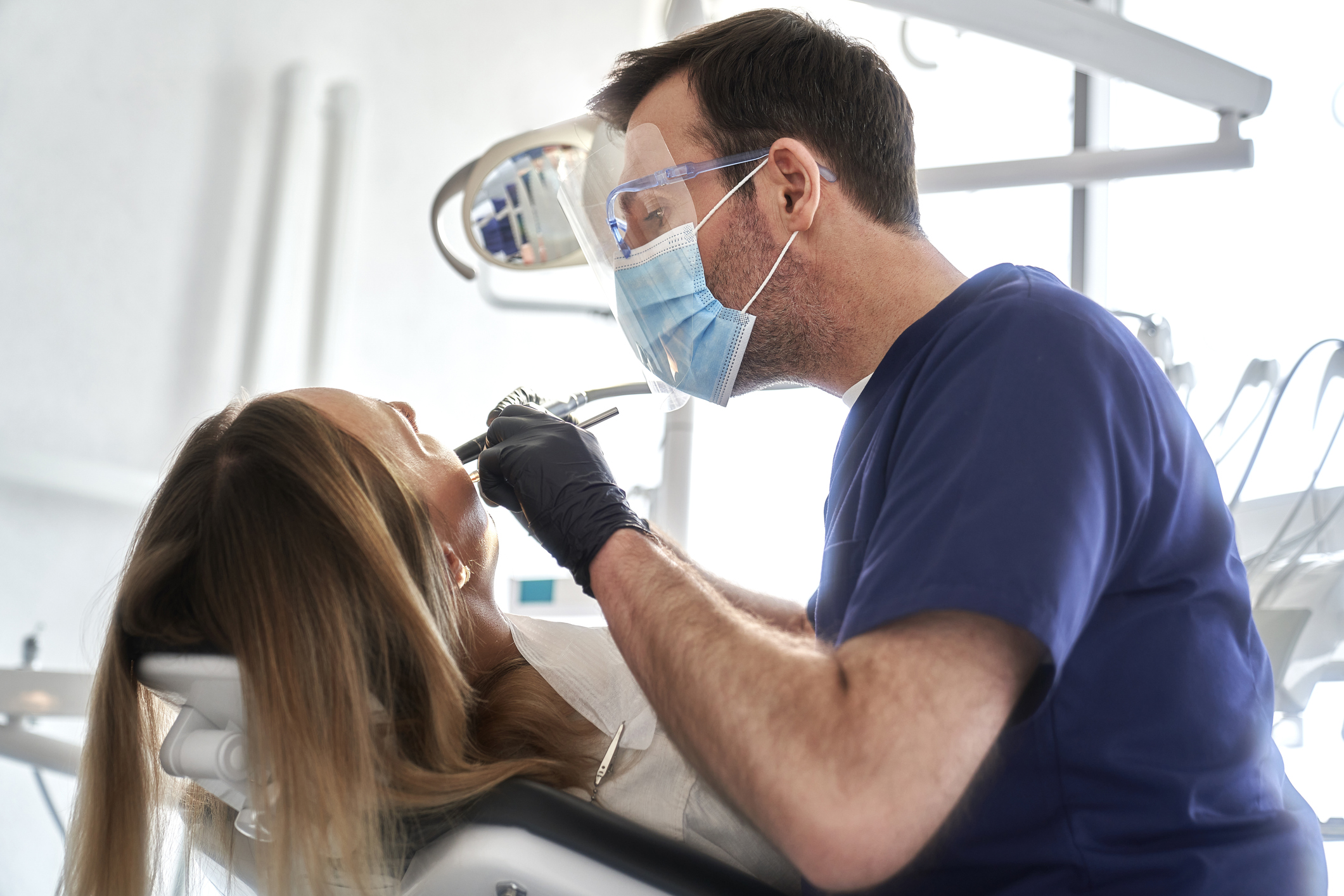
Dentist performing procedure
gpointstudio / iStock

Many dentists prescribe antibiotics to healthy patients to prevent potential infections, in spite of research that finds 80% of these antibiotics are unnecessary. In addition to increasing the risk of C difficile infections, prescribing unnecessary antibiotics increases the risk of antimicrobial resistance (AMR), which has made antibiotics and other infection-fighting medications less effective. AMR contributes to an estimated 5 million deaths a year around the world.

For years, experts and professional societies have recommended that dentists tamp down their use of antibiotics—especially clindamycin—to reduce the risks to patients. 

A CIDRAP News investigation found that the message isn’t getting through. In spite of repeated warnings about the risks, dentists continue to prescribe antibiotics in large numbers, often inappropriately.

Instead of declining, antibiotic prescribing by dentists increased by 6% from 2020 to 2025, when the profession wrote more than 27 million antibiotic prescriptions, according to data provided exclusively to CIDRAP News from IQVIA Institute for Human Data Science, an organization based in Parsippany, New Jersey, that provides research and analysis on health care data.

Although dental prescriptions for clindamycin decreased 35% from 2020 to 2025, it remains the profession’s second-most commonly prescribed antibiotic, according to IQVIA’s National Prescription Audit, which includes prescriptions provided at retail stores, by mail, and at pharmacies serving residents in long-term care facilities.

The data suggest that “antibiotics are massively overprescribed in dentistry,” Adalja said. The decline in clindamycin use “isn’t enough,” considering its life-threatening risks, he said. “Dentists are still using it too much.”

Elliot Abt, DDS, who co-wrote antibiotic guidelines for the American Dental Association (ADA), said he’s disappointed that clindamycin is prescribed more often than all but one antibiotic.

“I would have liked to see it at or near the bottom of the list,” said Abt, adjunct associate professor of oral medicine at the University of Illinois College of Dentistry. “Changing practitioners’ behavior is a slow and challenging process.”

Table of antibiotics prescribed by dentists
Natalie Vestin / CIDRAP

A heartbreaking physical decline

C difficile ravaged Owens’ small body. 

Owens developed sepsis, a life-threatening complication of C difficile in which the immune system overreacts to infection in a way that damages multiple organs.

She bled internally, losing so much blood that her doctor ordered a transfusion, Flournoy said. She became so dehydrated, weak, and light-headed that she tumbled off the toilet in her room, badly bruising her knee.

If we had known the side effects, we would have told her not to take it.

Robert Flournoy

Owens’ hands, arms, and legs became swollen, and the skin on her arms became discolored. Her granddaughter, Aisha Ruiz, said she hesitated to apply hand lotion to Owens’ skin for fear that it would tear.

Flournoy remains haunted by his mother’s suffering. One question keeps repeating in his mind: Why are dentists still prescribing clindamycin?

Doing as they were taught

For decades, dental schools taught dentists to prescribe antibiotics to prevent procedure-related infections, Abt said.

Dentists were taught to prescribe a type of penicillin, called amoxicillin, because of its effectiveness and safety record. For patients such as Owens, whose medical record listed a penicillin allergy, dentists were taught to prescribe clindamycin.

Because bacteria from the mouth can travel around the body, dentists were taught to prescribe antibiotics to patients with certain heart conditions to prevent a rare but dangerous infection of the lining of the heart and valves, called infective endocarditis, Abt said. Dentists also routinely prescribed antibiotics to people with artificial joints, even if they were otherwise healthy, for fear that the joints could become infected, said Antonia F. Chen, MD, MBA, chair and professor of orthopedic surgery at University of Texas Southwestern.

Experts began to rethink these recommendations as the risks of clindamycin became more apparent. In 2015, researchers reported that a single dose of clindamycin could cause serious complications, including deaths, related to C difficile. 

“Dentists did not believe that their prescribing was associated with resistance or C difficile because they perceived their prescribing to be of short duration,” said Katie J. Suda, PharmD, a professor of medicine at the University of Pittsburgh. “They felt that one dose of antibiotic prior to a dental procedure was not associated with an adverse event.”

Dentists in separate silos

Hospitals have made significant progress against C difficile and antimicrobial resistance in recent decades, in large part because they’re required to implement antibiotic stewardship programs, which aim to reduce inappropriate antibiotic use.

But dentists, who work largely in private practice clinics outside hospitals, are seldom included in stewardship efforts. “Dentistry is at the beginning of antibiotic stewardship,” said Emily McDonald, MD, MPH, a medical officer in the office of antibiotic stewardship at the Centers for Disease Control and Prevention.

Although a dentist can check a database to see if someone has been prescribed opioids, there’s usually no way for dentists to learn which antibiotics a patient has taken, said Erinne Kennedy, DDS, a board member of the Association for Dental Safety. That’s because doctors and dentists tend to use incompatible electronic health record systems that can’t share information.

Chart of top 3 antibiotics for dental indications
Natalie Vestin / CIDRAP

Without access to a person’s medical records, a dentist may have no way to know if a patient has previously been treated for C difficile, a major risk factor for a recurrent infection, unless the patient volunteers that information, Kennedy said.

Dentists also may not see the complications caused by inappropriate antibiotic use, said Christian Lillis, co-founder and CEO of the Peggy Lillis Foundation, an advocacy group that raises awareness about C difficile. Hospital-based physicians and nurses may be more aware of the risk of C difficile because patients with the infection, like Owens, tend to be hospitalized.

“When you get diarrhea after you go to the dentist, you don’t call your dentist. You go to the hospital or ER,” said Lillis, whose family launched the foundation after their mother died in 2010 due to a C difficile infection at age 56. “My mother was dead for three weeks before her dentist knew.”

Updating guidelines

In recent years, professional societies have worked to educate health care providers about the risks of antibiotics, recommending that dentists restrict their use to a relatively small group of patients with the greatest need or highest risk.

“Antibiotics are a very, very precious resource and a finite resource,” said Purnima Kumar, DDS, PhD, an ADA spokesperson and chair of periodontics and oral medicine at the University of Michigan School of Dentistry. “They must be reserved for a time when it is required and always be conserved for the patient who needs it.” 

But the ADA’s recommendations on clindamycin are nuanced.

While ADA guidelines still say that clindamycin can be used for treatment, the society has ruled it out as a prevention strategy, said B. Jason Kyles, DDS, clinical assistant professor of oral and maxillofacial pathology, radiology and medicine at the New York University College of Dentistry.

ADA guidelines state that antibiotics aren’t needed to treat dental infections that cause pain and swelling, except in limited circumstances. The guidelines include clindamycin as a possible choice to treat patients who are allergic to penicillin.

“The ADA has entirely abandoned recommending clindamycin for preventing heart and joint infections and strongly discourages it for treating them unless absolutely no other safe options exist,” Kyles said. Clindamycin is “now considered more of a last resort. Dentists are encouraged to use alternatives.”

Some dentists prescribe antibiotics more often than needed because of outside pressure, such as the fear of a lawsuit if a patient develops a serious infection. 

Pressure can also come from patients. Some expect antibiotics before or after invasive dental procedures, especially if they are used to receiving a prescription. Changing patient expectations isn’t easy, Kumar said.

Antibiotics are a very, very precious resource and a finite resource....They must be reserved for a time when it is required and always be conserved for the patient who needs it.

Purnima Kumar, DDS

Significantly, the dental profession has no guidelines for the use of antibiotics in dental implants or tooth extractions, Suda said. About half of all antibiotic prescriptions written by dentists are associated with these two procedures.

Dentists, Suda said, are “using the best information they have to prescribe what they feel is safe for their patients.”

Alternatives to clindamycin

Given her age, Owens had a higher risk of developing a C difficile infection than most dental patients, said Ryan Maves, MD, an infectious disease specialist and professor of medicine and anesthesiology at Wake Forest University School of Medicine. 

Although there are no official guidelines on antibiotic use for single tooth extractions, the procedure that Owens underwent, multiple evidence reviews have found no benefit to prescribing them.

When dentists do prescribe preventive antibiotics, they have a number of options besides clindamycin for patients with reported penicillin allergies, Maves said.

Although prescribing clindamycin for a tooth removal is “not outside the standard of care,” Maves said for that someone like Owens, he would “certainly work pretty heroically to avoid clindamycin.”

McDonald noted that all antibiotics have side effects, including some with potential risks for the heart.

“There are situations in which the only antibiotic you have left, due to these other reasons, is clindamycin,” McDonald said. “But that's where you have to say, ‘Is this antibiotic really needed?’”

Dolores Owens with cowboy hat
Dolores Hernandez Owens (Photo courtesy of Robert Flournoy)

Rather than blame individual dentists for overprescribing drugs such as clindamycin, the country needs to examine “the system in which dentists practice,” she said.

And while younger dentists are now learning to avoid clindamycin and reduce their use of antibiotics in general, “it's going to take a couple of generations to change practice,” said Kevin C. Lee, MD, DDS, assistant professor of oral and maxillofacial surgery at the University of Washington Harborview Medical Center.

Flournoy said he’s frustrated to learn that dentists still write millions of prescriptions for clindamycin, and that the practice could continue for decades. “The thought that others will likely go through what my mother endured fills me with sorrow and anger,” Flournoy said.

Tiring of treatment

Owens spent the last few weeks of her life hospitalized, helpless, and in pain.

C difficile caused severe inflammation throughout Owens’ colon, according to her medical records. To save her life, a surgeon suggested removing her colon and creating an opening in her abdomen through which waste could exit her body and be collected in a bag, Ruiz recalled. The doctor told Owens that she would die without surgery.

Owens said no.

“She said, ‘I'm done,’” Flournoy recalled. “She said, ‘I want to go home and be with the Lord.’”

Her family moved Owens home for hospice care. In a bed set up in the back room, she listened to her favorite music and watched Christian TV shows. Although she could no longer cook, Owens still wanted to feed her people, and urged her family to order pizza.

For the first time in weeks, Flournoy said, his mother looked peaceful. “To see her enjoy being here brought joy to my heart,” he said.

Owens passed away April 14, 2025, two days after leaving the hospital.

“When you lose your mother,” Flournoy said, “it feels like part of you dies too.”

Today, Flournoy said, he wants to raise awareness about the risks of clindamycin and C difficile to prevent other families from suffering the same trauma. 

“This should never have happened,” Flournoy said. “This has to stop.”


Tomorrow: Read about efforts to reduce inappropriate antibiotic use in dentistry.

Thursday: Read about what consumers can do to reduce their risk of receiving an inappropriate antibiotic and contracting a C difficile infection.

This week's top reads

Our underwriters

Grant support for ASP provided by

Unrestricted financial support provided by