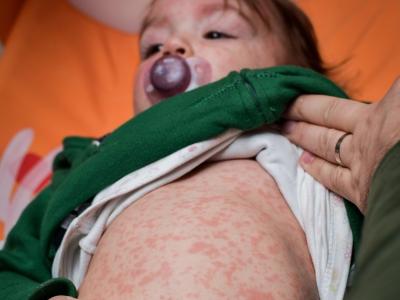
No cases have been seen in children who are fully vaccinated.
The outbreak has grown to 63 cases, up from 50 cases 3 days ago.
A measles outbreak in the Columbus, Ohio, area has expanded to 50 cases.
Using a test-to-stay (TTS) strategy in K-12 schools during the winter of 2021-22 resulted in substantial reduction in missed school days, according to a study yesterday in Pediatrics.
Automated text messages were as effective as direct phone calls in encouraging study participants to get the COVID-19 vaccine, according to a JAMA Network Open study yesterday from the Perelman School of Medicine at the University of Pennsylvania,.
A study of samples from two Brazilian rivers found a high incidence of colistin-resistant bacteria and MCR-1 producers, Brazilian and Portuguese researchers reported today in the Journal of Global Antimicrobial Resistance.
Following the reappearance of Ebola in the Democratic Republic of the Congo's (DRC's) Equateur province, the country today launched an rVSV-EBOV vaccine campaign, tapping an initial shipment of 200 doses, the World Health Organization (WHO) African regional office said today.
Three percent of 10,403 adults with COVID-19 pneumonia were diagnosed as having new-onset dementia after a median of 182 days, a significantly higher proportion than that observed with other types of pneumonia, finds a study yesterday in Open Forum Infectious Diseases.
An analysis conducted at hospitals in Michigan found that the more antibiotic stewardship strategies a hospital reported, the lower its overuse of antibiotics at discharge, researchers reported yesterday in Clinical Infectious Diseases.
Missed measles vaccinations and eroded surveillance during COVID-19 are setting up a perfect storm.