CIDRAP newsletters options
In an annual report for 2018, public health officials in Scotland yesterday said total antibiotic use in humans has dropped by 6.2% since 2014, and resistance has stayed mainly stable.
The findings, from Health Protection Scotland, for the first time include data on animal antimicrobial use from small-animal veterinary practices and data on environmental antimicrobial resistance.
In the latest in a small but steady stream of cases, Saudi Arabia's Ministry of Health (MOH) today reported one more MERS-CoV infection, which involves a 75-year-old man from Jeddah.
"AMR is a looming public health threat and potential economic disaster."
Prequalification comes a day after European officials granted full approval.
In an update today, Saudi Arabia's Ministry of Health (MOH) reported one new MERS-CoV case, in a man from Riyadh. The case is Saudi Arabia's eighth this month.
A new study that surveyed 22.5% of Australia's hospitals from January 2016 through June 2018 found that surgical antimicrobial prophylaxis (SAP) was often inappropriate, because of both incorrect timing and overly long treatment. The study appears in JAMA Network Open.
In other developments, only 1 new Ebola case has been reported in recent days.
In updates yesterday and today, Saudi Arabia's Ministry of Health (MOH) reported two more MERS-CoV cases, one of them fatal and both from Riyadh.
One of the patients is a 33-year-old man whose contact with camels isn't known. He is not a health worker, and his exposure is listed as primary, meaning he probably didn't contract MERS-CoV (Middle East respiratory syndrome coronavirus) from another patient.
A retrospective analysis of Veterans Administration (VA) patients who had stool testing for Clostridiodes difficile shows an overall decrease in C difficile infection (CDI) over the course of a decade, with temporal increases linked to implementation of molecular testing methods, researchers reported today in Infection Control and Hospital Epidemiology.
Some parts of the south and central US are among the few hot spots, and flu strains vary by region.
Our weekly wrap-up of antimicrobial stewardship & antimicrobial resistance scans
Nearly one in five antibiotic prescriptions for hospitalized children in Australia is inappropriate, Australian researchers reported yesterday in the Journal of Antimicrobial Chemotherapy.
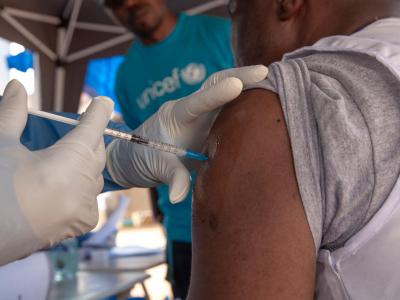
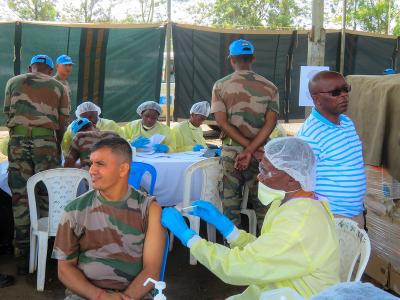
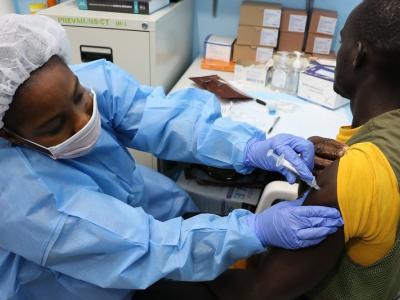
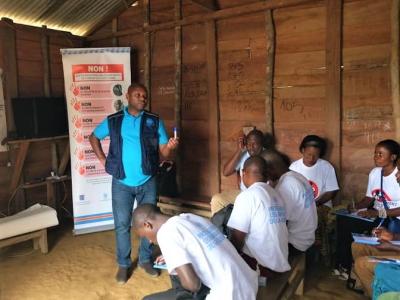
The US Agency for International Development (USAID) today announced an additional $56 million in humanitarian aid to help curb the Democratic Republic of Congo (DRC) Ebola outbreak.
According to a statement, the new funding brings USAID's total since the August 2018 start of the outbreak to $266 million. The support also targets preparedness efforts in the region and in countries that neighbor the DRC.
With 1 new case today, the outbreak total climbs to 3,286, and recent cases reflect movement of infected people.
Takeda's dengue vaccine candidate (TAK-003) is safe and effective against dengue virus, according to part 1 of phase 3 clinical trial results published yesterday in the New England Journal of Medicine.
Also, a study today highlights serious long-term symptoms among Ebola survivors.
Coincidentally, all 3 new Saudi cases involved camel contact.
Researchers studying the incidence of respiratory syncytial virus (RSV) deaths in India's Maharashtra state earlier this year identified an H9N2 avian flu infection in a 17-month-old boy, according to a study published today in Emerging Infectious Diseases.
The results of a randomized clinical trial show that the use of a rapid, multi-pathogen respiratory panel (RP) in an emergency department (ED) was associated with a trend toward decreased antibiotic use, according to a study yesterday in Open Forum Infectious Diseases.
Poll finds 41% expect antibiotics if they have a cold that lingers.