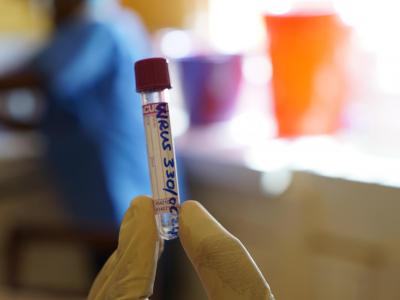
Boston University's National Emerging Infectious Disease Laboratories (NEIDL) received final approval from the Boston Public Health Commission to conduct biosafety level 4 (BSL-4) research, clearing the final hurdle to begin work on some of the world's most lethal pathogens, such as Ebola and Marburg virus, BU Today, the campus newspaper, reported.
China has detected two new human avian influenza cases, one involving an adult sickened by H7N9 and the other a young child infected with H9N2, according to government reports in the region.
Analysis of blood samples provides clues about how the disease unfolds and which patients are more likely to die.
Group B Streptococcus (GBS) bacteria cause at least 147,000 stillbirths and infant deaths worldwide each year, but providing effective treatment brings up antibiotic resistance and stewardship issues, according to a supplement to Clinical Infectious Diseases published today.
South Africa reported four more outbreaks involving highly pathogenic H5N8, two in poultry and two in other captive bird settings, according to two reports today from the World Organization for Animal Health (OIE).
In another study, researchers develop easy-to-use risk scores for triaging patients.
The Florida Department of Health (Florida Health) today reported the state's first locally acquired Zika case of the year, putting the nation's total this year at three local cases.
In a statement, Florida Health said the locally transmitted case has been confirmed in Manatee County, which wasn't one of the areas to report cases last year.
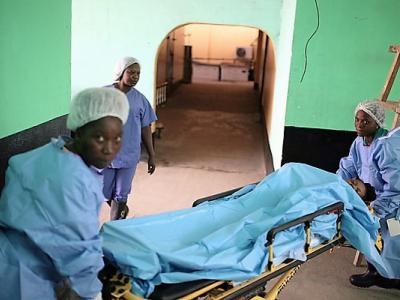
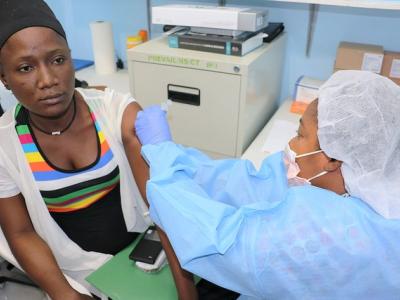
A trial at the end of Liberia's Ebola outbreak shows 2 candidate vaccines posed no major safety concerns and triggered immune responses that lasted at least a year.
Italy's chikungunya outbreak has expanded to a second region, and the total number of suspected or confirmed cases has climbed to 298 as of Oct 4, a rise of 115 cases from World Health Organization's update at the end of September.
Comprehensive biomedical research must continue its crucial role in preparing the world for the next pandemic or other far-reaching public health emergency, whether it be caused by a novel influenza strain, Ebola, or some other transmissible pathogen, Anthony Fauci, MD, director of the National Institute of Allergy and Infectious Diseases (NIAID) and colleagues wrote in a commentary in the Journal