Yesterday the World Health Organization (WHO) described five recent cases of MERS-CoV in Saudi Arabia, providing more evidence of the risk that camel contact poses in transmitting the disease.
The highly pathogenic H5N2 avian flu virus strain that caused outbreaks in poultry flocks across the United States is better adapted to chickens than a precursor H5N2 virus and is highly adapted to wild ducks, according to a new study by US Department of Agriculture (USDA) scientists published in Virology.
A study in Liberia has produced more evidence of persistence of the Ebola virus in semen after patients' recovery from the disease, with some of them still testing positive more than a year after recovery and greater age indicated as a possible risk factor.
Patients infected with the Ebola virus were 20% more likely to survive if they were co-infected with malaria, according to a study of Liberians who received care at a treatment center in Monrovia in 2014 and 2015 during West Africa's outbreak. A research team led by the National Institute of Allergy and Infectious Diseases (NIAID) published the findings yesterday in Clinical Infectious Diseases.
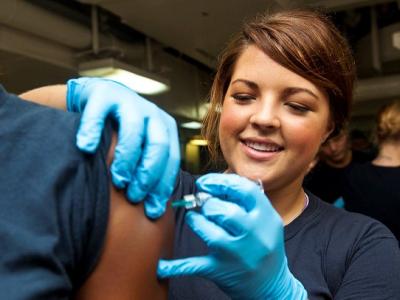
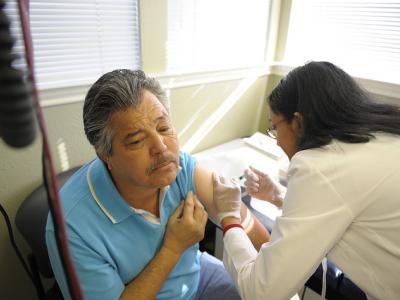
Protection against hospitalization for influenza was 57% and varied little among all age-groups, even in those 75 and older.
A number of studies conducted at the time of the 2009 H1N1 pandemic and shortly afterward reported a higher risk of severe disease in obese patients, while some did not. Today a study in Influenza and Other Respiratory Viruses found that obesity was not a risk factor for the more general condition called influenza-like illness (ILI).
After 7 days of no reported cases, the Saudi Arabia Ministry of Health (MOH) reported a new case of MERS-CoV today. The case is not related to the current outbreak at King Khalid University Hospital in Riyadh.
Type 2 diabetes patients who were vaccinated had a 30% lower risk of hospitalization for stroke and a 22% lower risk for heart failure.
Infants receive seasonal flu immunity through maternal influenza vaccines, but previous studies have not established how long this protection lasts. A study yesterday in JAMA Pediatrics—the largest of its kind to date—shows that infant immunity peaks by 8 weeks after birth and wanes significantly during the first 6 months of life.
A new study in Clinical Infectious Diseases reports that the flu vaccine in 2014-15 was more effective than expected in hospitalized adults, including those 65 or older.