The number of Cryptosporidium outbreaks, which occur most commonly in the summer, has risen about 13% each year from 2009 to 2017, according to a new report from the US Centers for Disease Control and Prevention (CDC) published today in Morbidity and Mortality Weekly Report (MMWR).
The Centers for Disease Control and Prevention (CDC) today confirmed 227 new cases of Salmonella infection tied to backyard poultry such as chicks and ducklings, swelling the outbreak to 279 cases in 41 states.
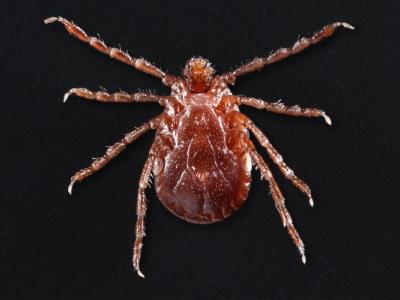
The tick was found on a manicured lawn and in sunny areas, which differs from other tick species.
A group of patients in Inner Mongolia likely represent the first identified human cases of a new tick-borne illness, Alongshan virus (ALSV), which belongs to the jingmenvirus group in the flavivirus family. A description of ALSV and these cases was published today in the New England Journal of Medicine.
Saudi Arabia's Ministry of Health (MOH) reported another MERS-CoV case, which involves a 70-year-old woman from Riyadh, the country's capital. In a related development, the World Health Organization Eastern Mediterranean regional office (WHO EMRO) shared new details about a string of recent cases in the Saudi city of Khafji in April, which it said included two clusters.
Saudi Arabia's Ministry of Health (MOH) reported a new MERS-CoV case over the weekend in an update to its epidemiologic week 15 report.
On Apr 13, the MOH noted that a 75-year-old woman from Khafji had contracted MERS-CoV (Middle East respiratory syndrome coronavirus) as a secondary case, meaning likely not from another MERS patient. It's unknown if she had camel contact.
Today the US Centers for Disease Control and Prevention (CDC) switched its recommendation for first-line treatment for severe malaria to a drug not approved by the Food and Drug Administration (FDA) because the previously recommended drug will no longer be produced by the manufacturer.
The Saudi Arabian Ministry of Health (MOH) announced seven new cases of MERS-CoV over the weekend, recorded in reports for epidemiologic weeks 8 and 9. Three of the cases are in Wadi ad-Dawasir, two of which appear to be part of an ongoing hospital outbreak.
Today Saudi Arabia's Ministry of Health (MOH) reported two new MERS-CoV cases, both in Wadi Al Dawasir, a town in south-central Saudi Arabia.
In an update to its epidemiologic week 5 report, the MOH said the patients were a 44-year-old man and a 62-year-old women, both hospitalized for their MERS-CoV (Middle East respiratory syndrome coronavirus) infections.
According to a series of tweets made by Food and Drug Administration (FDA) Commissioner Scott Gottlieb, MD, the agency is trying its best to handle food safety inspections and other critical work during what has become the nation's longest government shutdown.