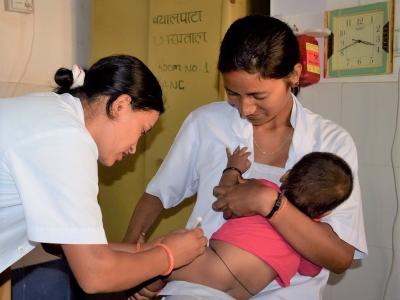
A phase 3 clinical trial conducted in Malawi has found that a single dose of typhoid conjugate vaccine (TCV) is safe and more than 80% effective at protecting children against typhoid fever, an international team of researchers reported yesterday in the New England Journal of Medicine.
The agency confirms 9 cases not tied to international travel but says reporting for 2020 is not yet complete.
Researchers from the Centers for Disease Control and Prevention (CDC) have identified 33 cases of extensively drug-resistant (XDR) Salmonella enterica serotype Typhi in the United States linked to travel in Pakistan and Iraq, according to an update today in the CDC's Morbidity and Mortality Weekly Report (MMWR).
The efficacy of the conjugate vaccine was thus 82%, and it had a good safety profile.
A paper today in Clinical Infectious Diseases calls for more engagement between antibiotic stewardship programs (ASPs), dentists, and orthopedic surgeons to curb unnecessary dental antibiotic prophylaxis.
An international group of researchers, in a phase 3 trial, have demonstrated that ceftolozane-tazobactam—an antibiotic approved in 2014 for complicated urinary tract and intra-abdominal infections—is non-inferior to meropenem for serious cases of nosocomial (hospital-acquired) pneumonia, paving the way for a potential new tool for the disease.
Enhanced surveillance has identified five US cases of extensively drug-resistant (XDR) typhoid infections associated with travel to Pakistan, according to a report today from the Centers for Disease Control and Prevention (CDC).
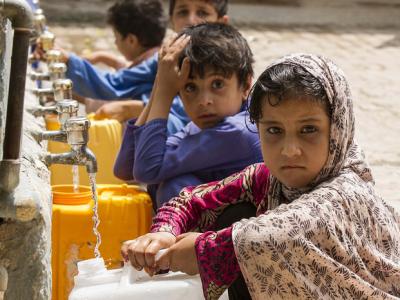
Insufficient clean water and poor sanitation raise the risk of acquiring XDR typhoid in Pakistan.
Scientists have identified the genetic basis for an XDR typhoid outbreak in Pakistan.
Health officials in Los Angeles County today announced the area's first sexually transmitted Zika case, which involves a male resident who traveled to Mexico and had Zika symptoms in early November and his female partner, who did not travel.