US surgeon general nominee dodges vaccine questions in Senate hearing

News brief
case means
Photo: Ron Johnson/ Wikimedia Commons 

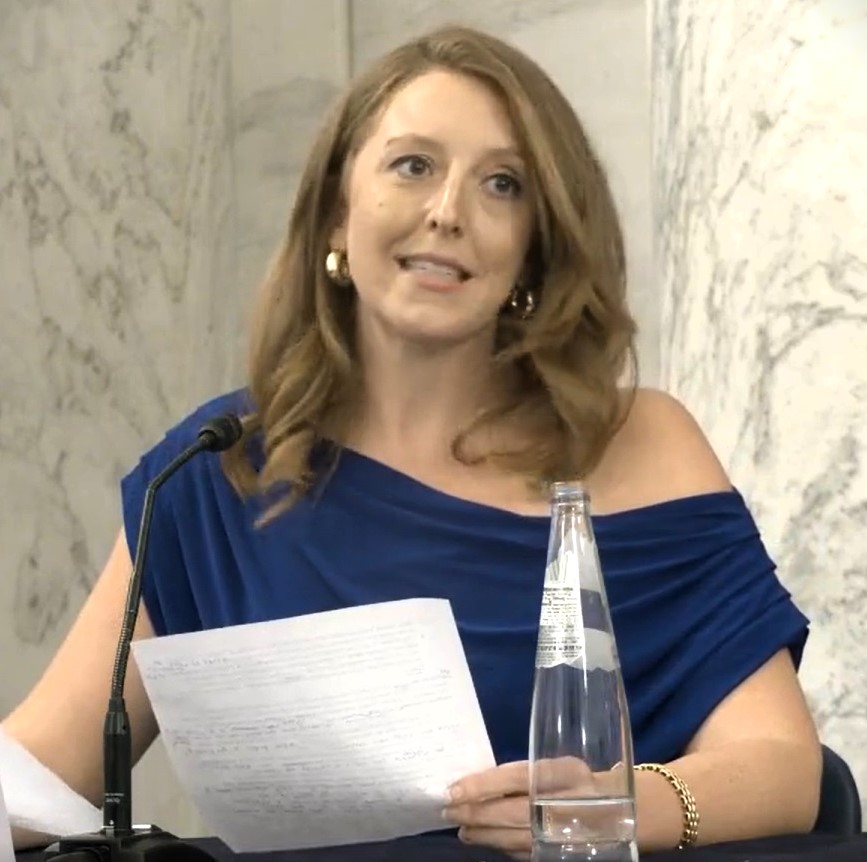
Casey Means, MD, a Stanford-trained physician who stopped practicing medicine when she left her surgical residency to become a full-time wellness influencer and author, dodged several questions from senators yesterday during a confirmation hearing for her surgeon general position.

Senators, including Bill Cassidy (R-Louisiana) and Tim Kaine (D-Virginia), asked pointed questions about whether Means would recommend that parents vaccinate children with the measles, mumps, and rubella vaccine, and if the seasonal influenza vaccine saved lives. In a pointed back-and-forth with Cassidy, Means refused to say she did not believe vaccines cause autism, instead saying, “no stone should be left unturned” when researching the autism crisis.  

At another point in the hearing, Means defended removing the newborn dose of the hepatitis B vaccine from the childhood immunization schedule. 

I think there are many parents, and I think the administration, question whether this vaccine is necessary for all children on the first day of life.

“I think there are many parents, and I think the administration, question whether this vaccine is necessary for all children on the first day of life,” Means said. 

Means has close ties to RFK Jr 

The surgeon general post, considered the nation’s top doctor, has been vacant for the entirety of President Donald Trump’s second term. Means was initially supposed to have a hearing in the fall, but it was delayed because of the birth of her first child. 

Mean’s brother, Calley Means, serves as a senior adviser for the US Department of Health and Human Services (HHS) since 2025. The Means siblings have been known for their early promotion of the “Make America Health Again” movement and their friendship with HHS Secretary Robert F. Kennedy Jr.
CARB-X targets 4 product themes for new funding round

News brief

CARB-X today announced the product themes for its latest funding round. 

The global non-profit partnership, launched in 2016 to support early-stage antibacterial research and development (R&D) to address the rising threat of antimicrobial resistance, said its 2026 funding round will focus on four distinct product themes:

  • Direct-acting therapeutics for infections caused by gram-negative bacteria
  • Novel chemistry scaffolds with activity against validated bacterial targets
  • Non-vaccine approaches for preventing neonatal sepsis
  • Diagnostics for neonatal sepsis

In a news release, CARB-X (Combating Antibiotic-Resistant Bacteria Biopharmaceutical Accelerator) Interim Chief of R&D Richard Alm, PhD, said the funding round is focused on aligning with the “areas of greatest unmet need and global public health impact.” 

The organization highlighted recent estimates showing that a steady stream of new, potent antibiotics targeting gram-negative bacteria could avert up to 11.1 million cumulative deaths caused by antimicrobial resistance in the next 25 years, primarily in low- and middle-income countries (LMICs). 

Neonatal sepsis, a theme of previous CARB-X funding rounds, causes an estimated 570,000 infant deaths a year worldwide, with LMICs bearing the highest burden.

“By focusing on priority Gram-negative bacteria, novel chemistry, and neonatal sepsis, we are directing innovation toward syndromes that drive the highest morbidity and mortality worldwide, particularly in low- and middle-income countries,” Alm said. “This disciplined, burden-driven approach ensures that CARB-X derisks innovation that is positioned for real-world impact.”

Since its inception, CARB-X has funded 122 early-stage projects designed to treat, prevent, and diagnose antibiotic-resistant infections. Fourteen of those projects are in late-stage clinical development, and three have reached the market. 

Veterans in supported housing more likely to receive flu shot

News brief


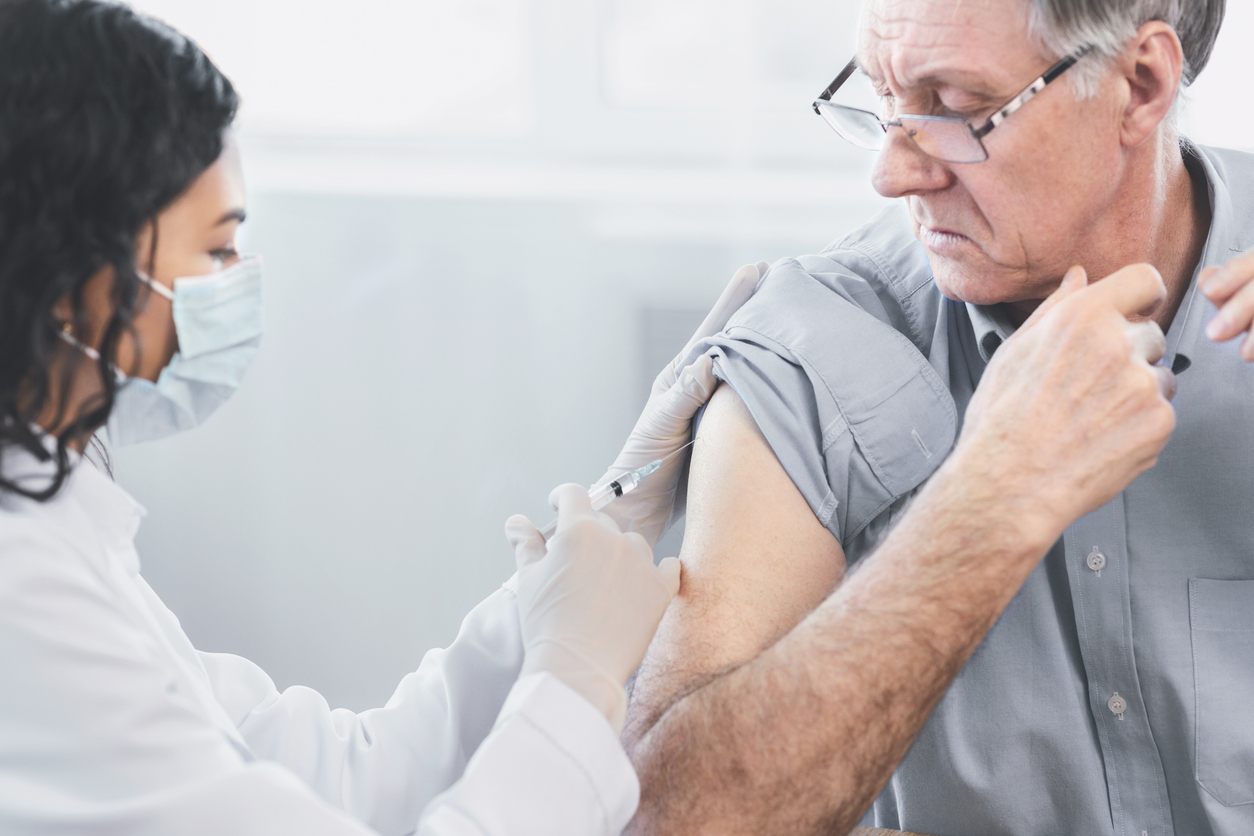
Older man getting flu shot
Prostock-Studio / iStock

A new study finds that veterans in a supported housing program from the Department of Veterans Affairs (VA) were about 50% more likely to receive a flu shot compared with veterans not enrolled in the program.

In the study, published this week in JAMA Network Open, researchers identified nearly 500,000 veterans experiencing homelessness, of whom 61,018 entered a supported housing program from the VA and the Department of Housing and Urban Development (HUD). Veterans were eligible for the program if they experienced homelessness for at least two consecutive months from June 1, 2020, to November 30, 2024.

Supported housing combines affordable housing with support services for people with complex challenges, including mental illness or substance use disorders. Supported housing, an evidence-based approach, is associated with better health outcomes and lower health care costs. According to one study, placement in supported housing resulted in a 14.3% reduction in emergency department visits and a 25.2% reduction in associated spending.

Supported housing may improve preventive service uptake

In the new study, 32% of veterans in supported housing received flu vaccines, compared with 21% of other veterans experiencing homelessness, and had 48% higher odds of receiving a flu vaccine. Veterans were more likely to be vaccinated against the flu if they were older and had more health complications at the beginning of the study period. More than 87% of veterans in the study were men, with a mean age of 52 years.

The retrospective study was led by researchers from the VA. In the study, authors wrote that the VA/HUD program “can improve preventive service uptake among homeless populations by helping individuals prioritize health and reduce barriers to care.”

Authors noted that it’s possible that the housing program attracted more health-conscious veterans who were already more inclined toward getting a flu shot. If that’s true, it could have biased the results.

Still, authors wrote, “These findings underscore the promise of integrated housing and health care strategies for improving preventive health in people experiencing homelessness.”

This week's top reads

Our underwriters