Shingles vaccination may prevent or delay dementia onset or slow its progress, regardless of dementia type, a team of German, UK, and US researchers wrote this week in Cell.
In April, the authors reported that the live-attenuated herpes zoster (HZ; shingles) vaccine appeared to prevent or delay dementia diagnoses in Wales and Australia. That study estimated that vaccinees were 20% less likely to develop dementia in the next seven years.
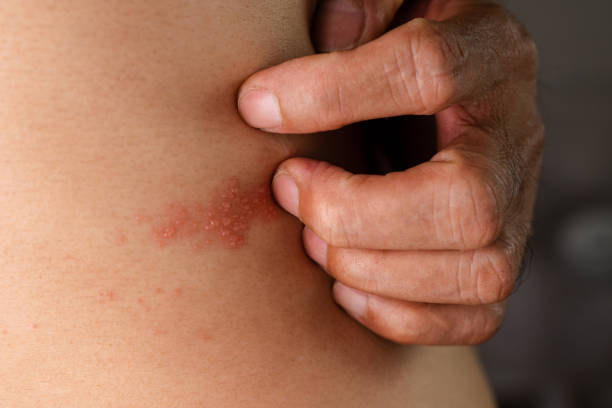
The HZ virus, which can lead to a painful rash called shingles, occurs when the varicella-zoster virus, which causes chickenpox, typically in childhood, reactivates later in life after a period of dormancy.
Mechanism for dementia benefits unknown
For the current study, the team used electronic health record data and death certificates to conduct a natural experiment after the shingles vaccine was rolled out in Wales.
Residents who turned 79 just after the campaign started were eligible for the vaccine for one year, while those who turned 80 just before were ineligible for the rest of their lives. The reason for the age-related eligibility difference was a limited vaccine supply, which provided for a natural experiment.
Clinical and subclinical reactivations of the neurotropic [having an affinity for nerves] herpesvirus (the varicella-zoster virus) that causes chickenpox and shingles may constitute a chronic immune stressor that drives inflammatory pathways in both the peripheral and central nervous system.
The data were derived from 304,940 people born from September 1925 to September 1942 and living in Wales as of September 2013. Among them, 282,557 had no record of cognitive impairment before September 2013 and were included in the cohort for analyzing the effect of shingles vaccination on mild cognitive impairment (MCI). Another 14,350 people had been diagnosed as having dementia before 2013.
The study’s aims were to determine the effect of shingles vaccination on new diagnoses of MCI among older adults with no history of dementia, as well as on dementia-related deaths among those who already had the disease.
“Clinical and subclinical reactivations of the neurotropic [having an affinity for nerves] herpesvirus (the varicella-zoster virus) that causes chickenpox and shingles may constitute a chronic immune stressor that drives inflammatory pathways in both the peripheral and central nervous system, interfering with neuroimmune homeostasis in older age,” the researchers wrote.
“The varicella zoster virus has also recently been linked to amyloid deposition and aggregation of tau proteins, as well as cerebrovascular disease that resembles the patterns commonly seen in Alzheimer’s disease, such as small- to large-vessel disease, ischemia, infarction [stroke], and hemorrhage,” they added.
In certain neurodegenerative diseases, amyloid, an abnormal protein, forms fibrous clumps in the brain, and tau protein disrupts normal brain-cell function by assuming distorted shapes and accumulating in the brain.
Vaccine most beneficial in women
Among adults with no record of cognitive impairment before shingles vaccination, 7.3% were newly diagnosed as having MCI during the nine-year follow-up. Among eligible adults, shingles vaccination reduced new MCI diagnoses by 1.5 percentage points.
Scaled to the percentage of adults with no previous dementia diagnosis before the shingles vaccination program began, receipt of the vaccine resulted in a 3.1 percentage-point reduction in new MCI diagnoses during follow-up.
Among those diagnosed as having dementia before shingles vaccine availability, 49.1% died due to dementia over the follow-up period. Being eligible for vaccination lowered deaths due to dementia by 8.5 percentage points. The effect of receiving the vaccine was a 29.5 percentage-point reduction in dementia deaths.
Of adults who had dementia at baseline, eligibility for shingles vaccination reduced all-cause deaths over the follow-up period by 6.5 percentage points. Adjusted for the proportion who were vaccinated, receiving the vaccine decreased all-cause deaths by 22.7 percentage points—though the confidence intervals for these reductions were wide, indicating considerable uncertainty. There was no significant effect of HZ vaccination eligibility or receipt on non-dementia deaths.
Among women, being eligible for and being vaccinated reduced new diagnoses of MCI by 2.5 and 5.1 percentage points, respectively. The corresponding estimates for the effects on dementia deaths in women who already had dementia were a decrease of 13.9 and 52.3 percentage points, although the confidence intervals for these reductions were also wide. In contrast, shingles vaccination had no significant effects on MCI diagnoses or deaths in men.
Potential large benefits for health, medicine
“We found that live-attenuated HZ vaccination reduced both new diagnoses of MCI among those without any record of cognitive impairment and deaths due to dementia among patients living with dementia,” the authors said. “The HZ vaccine thus appears to have a beneficial effect at both ends of the clinical disease course of dementia.”
Of importance with respect to this present study, these beneficial off-target effects have often been found to be far stronger among female than male individuals, as well as for live-attenuated rather than other types of vaccines.
The researchers said that shingles vaccination, and perhaps vaccination in older people more generally, prevents or slows dementia through an immune mechanism, regardless of the causative pathogen.
“Such an effect might counteract immunosenescence [age-related waning of immunity] and would add to the growing body of evidence suggesting that vaccines frequently have broader health benefits beyond their intended target,” they wrote. “Of importance with respect to this present study, these beneficial off-target effects have often been found to be far stronger among female than male individuals, as well as for live-attenuated rather than other types of vaccines.”
Given the wide availability, relatively low cost, and safety of the shingles vaccine, the authors said that its beneficial effects on the dementia disease process would be of great significance to population health, clinical medicine, and dementia research.
“Our finding that HZ vaccination had a beneficial effect on two different dementia-related outcomes in two different patient samples—and at two opposing ends of the disease course of dementia—thus provides promising evidence that HZ vaccination may prevent or slow the dementia disease process in a substantial proportion of individuals,” they concluded.
In a Stanford Medicine news release, senior author Pascal Geldsetzer, MD, PhD, MPH, of Stanford, said that while previous studies based on health records have also linked the shingles vaccine to lower dementia incidence, they have been flawed.
“All these associational studies suffer from the basic problem that people who go get vaccinated have different health behaviors than those who don’t,” he said. “In general, they’re seen as not being solid enough evidence to make any recommendations on.”
It is unknown whether a newer version of the vaccine, which contains only certain proteins from the virus and is more effective at preventing shingles, may have a similar or even greater impact on dementia, the team said.