Florida said the Little River neighborhood is no longer an active site of Zika transmission.
Findings from "minibrain" experiments raise new questions on how Zika infects developing fetal brain cells.
The case, involving a woman in Brownsville, is the first local US case outside Florida.
Also, a second mouse study finds evidence that the virus damages testes and fertility.
In other developments, the WHO spells out its Zika research priorities and a need for solid long-term funding.
The agency shifts to long-term response, which it says is more likely to provide sustained funding.
Florida has 6 new local infections, and Argentina and Guadeloupe have reported their first microcephaly cases.
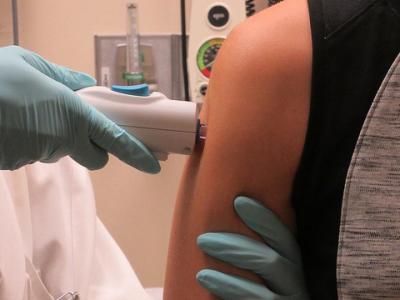
A DNA vaccine could help stamp out the outbreak, while a live-attenuated vaccine could offer lifelong immunity.
In other developments, California warned of local Zika activity in popular holiday travel destinations, including Mexico, and Florida reported one more local case.
New experiments suggest that mosquitoes can infect humans with Zika and chikungunya viruses in a single bite, according to a study presented today at the annual meeting of the American Society of Tropical Medicine and Hygiene (ASTMH).