With the next meeting of federal vaccine advisers set to kick off later this week, the current chair of the group has been promoted to a new role in the Department of Health and Human Services (HHS).
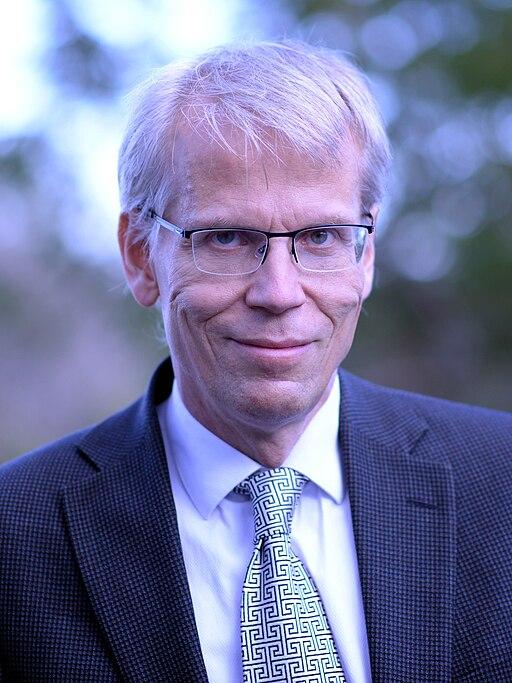
In a news release yesterday, HHS said biostatistician and epidemiologist Martin Kulldorff, PhD, has been appointed chief science officer for the Office of the Assistant Secretary for Planning and Evaluation (ASPE). Kulldorff has been serving as chair of the Centers for Disease Control and Prevention’s (CDC) Advisory Committee on Immunization Practices (ACIP) since June, when HHS Secretary Robert F. Kennedy Jr. fired the 17 sitting members of the group and replaced them with new appointees
Kulldorff has chaired the last two ACIP meetings, both of which concluded with changes to vaccine policy that have been criticized by public health officials. At the first meeting of the newly reconstituted ACIP in June, members voted to recommend that Americans only receive single-dose flu shots that don’t contain the preservative thimerosal, though no studies have indicated the preservative causes harm.
In September, the group voted to remove a long-standing ACIP recommendation that children aged 12 to 47 months have the option of receiving the combined measles, mumps, rubella, and varicella vaccine. It also voted not to recommend COVID-19 shots, saying instead that people can get the shots after discussing risks and benefits with a doctor, nurse, or pharmacist.
Under Kulldorff, significant changes were made to ACIP working groups, which assist with vaccine efficacy and safety reviews and craft the wording of proposed recommendations. Experts from the CDC and from medical societies, who had played critical roles in previous meetings, were sidelined. Both meetings were also more disorganized than previous ACIP meetings, with members at times unclear of what they were voting on.
In his new role at ASPE, Kulldorff will advise Secretary Kennedy on policy matters, coordinate department research and evaluation activities, and analyze policy options across public, health care, and human services.
“I look forward to contributing to the science-based public health policies that will Make America Healthy Again,” Kulldorff said.
New chair for a critical meeting
Kuldorff’s move to HHS means that the ACIP will now be chaired by Kirk Milhoan, MD, PhD, a pediatric cardiologist and critic of coronavirus vaccines who was named to the group in September. Milhoan is a senior fellow at the anti-mRNA Independent Medical Alliance.
Milhoan will be responsible for running the proceedings at the upcoming ACIP meeting on December 4 and 5 in Atlanta. Members are expected to vote on whether to end the practice of giving all newborns a birth dose of the hepatitis B vaccine and to discuss the timing and composition of vaccines in the childhood immunization schedule. Several of the new ACIP members have suggested that US children receive too many vaccines too soon, and that the cumulative effects have not been properly studied—a claim that most public health and infectious disease experts dispute.
“We’re looking at what may be causing some of the long-term changes we’re seeing in population data in children, specifically things such as asthma and eczema and other autoimmune diseases,” Milhoan told the Washington Post.
Sean O’Leary, MD, MPH, a professor of pediatrics and infectious diseases at the University of Colorado Denver Anschutz Medical Campus and member of the American Academy of Pediatrics (AAP), said at an AAP press briefing today that any changes the group makes to the childhood immunization schedule “could be devastating to children’s health and public health as a whole.”
O’Leary also said he’s concerned Milhoan doesn’t have any vaccine or infectious disease policy background. He noted that past ACIP chairs have been experts in vaccinology, public health, and infectious disease, and had been on the committee long enough to understand the downstream implications of the group’s recommendations.
“And now we have someone who really has apparently no policy background whatsoever chairing this really important committee for the American public,” O’Leary said.