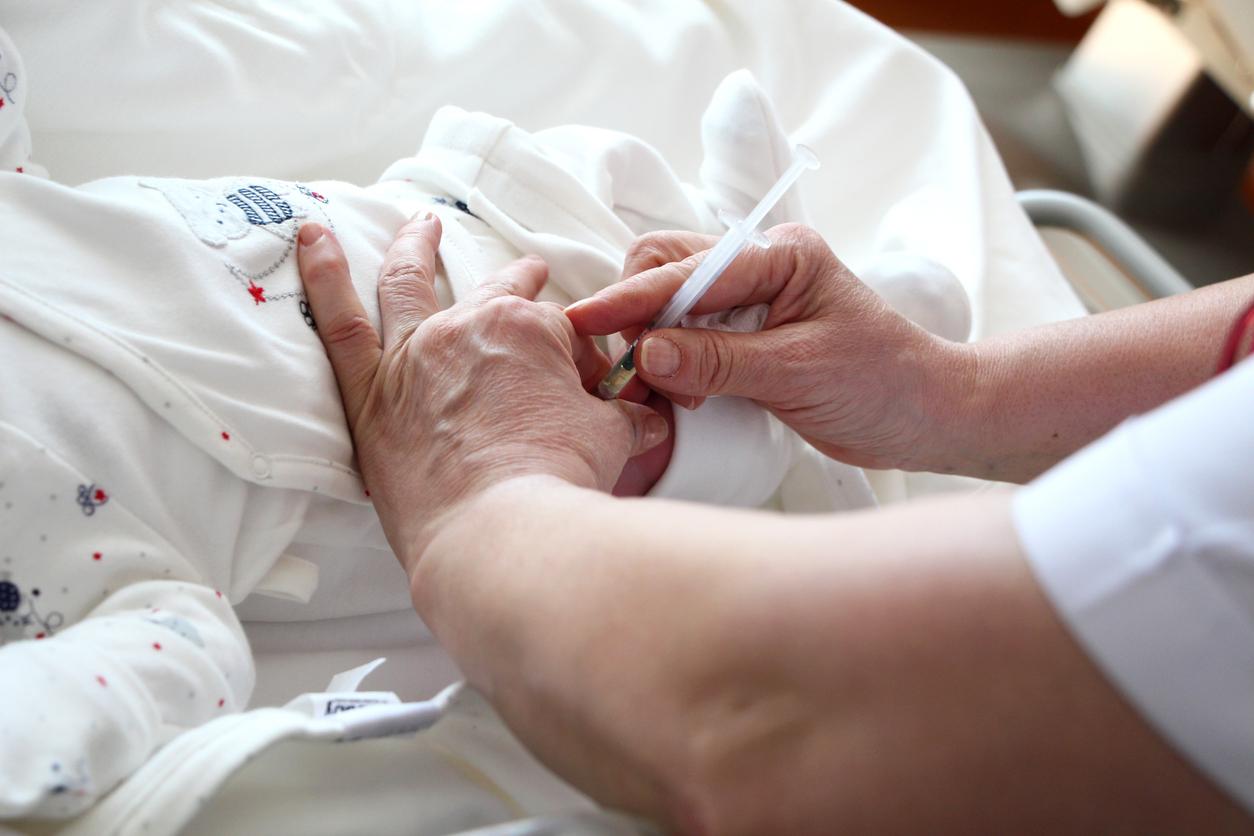
Many health care providers—including doctors, medical societies, city and state health departments, and regional health alliances—are rejecting unscientific vaccine recommendations from an influential federal advisory panel, and instead will continue following guidance from the American Academy of Pediatrics (AAP).
The panel, which advises the Centers for Disease Control and Prevention (CDC), voted Friday to overturn a 34-year-old recommendation to vaccinate all babies against hepatitis B at birth, a practice that has helped reduce the number of hepatitis B infections in children and young people by 99%. Instead, the Advisory Committee on Immunization Practices (ACIP) voted to recommend the birth dose only for the infants of women who test positive for hepatitis B or whose infection status is unknown.
The panel voted that women whose blood tests show they aren’t infected with hepatitis B should discuss the issue with their doctors. The acting CDC director, Jim O’Neill, MA, has not yet announced whether the agency will adopt the recommendations as official policy.
Hospitals, regional health alliances rejecting ACIP recommendations
Lurie Children’s Hospital of Chicago will continue to recommend hepatitis B vaccines to newborns within 24 hours of delivery – when immunization will protect the largest proportion of infants – as recommended by the Chicago and Illinois health departments, said Larry K. Kociolek, MD, MSCI, vice president of system preparedness, prevention, and response and a pediatric infectious diseases attending physician.
“The pediatric vaccine schedule currently adopted in the US is based on decades of research, extensive real-world experience, and vetting by well-trained and unbiased medical and public health experts,” Kociolek told CIDRAP News.
Recommendations from the ACIP “were made without any new research suggesting that the current vaccine schedule is flawed in terms of its safety or effectiveness,” Kociolek said. “We will continue to endorse the pediatric vaccine schedule currently in place.”
ACIP’s members were handpicked by Health and Human Services Secretary Robert F. Kennedy Jr., a longtime anti-vaccine activist. Many of the new members parrot Kennedy’s false claims that vaccines aren’t adequately tested for safety.
ACIP’s decision to vaccinate only babies deemed to be at “high risk” for hepatitis B flies in the face of evidence, said Ravi Jhaveri, MD, head of infectious diseases at Lurie Children’s Hospital.
The new recommendation “assumes that we can accurately predict who has infection and who will be exposed in the future; we cannot,” said Jhaveri, who noted that previous recommendations to target hepatitis B vaccines toward babies of infected moms failed to lower infection rates. “This is the lesson we learned prior to starting birth dose. The fact that this committee ignores our prior experience proves their agenda has nothing to do with the evidence.”
Other clinicians are taking a similar approach. The hepatitis B vaccine is “safe, exceptionally effective, and one of the great success stories in modern public health,” said Stephen Patrick, MD, MPH, MS, a neonatologist at Children’s Hospital of Atlanta, who said he will not change how he practices because of the ACIP vote.
“For the first time in my career, I am deeply concerned that I cannot fully rely on the CDC’s recommendations,” Patrick said. “My duty is to my patients, and I will continue to lean on my training and the best available evidence.
Before the CDC recommended a universal birth dose, about 30,000 children were infected every year, he said. About 90% of infants infected at birth develop chronic hepatitis B. About 25% of children with chronic infections die prematurely from liver cancer or cirrhosis.
In defiance of Kennedy and the agency he is remaking in his image, the West Coast Health Alliance, Northeast Public Health Collaborative and Governors Public Health Alliance also rejected the ACIP’s proposal. The regional health care alliances were formed in recent months, largely in states led by Democratic governors, to provide an alternative to the CDC, which has lost the confidence of doctors across the country.
Teaming up with parents to protect children
Dr. Manisha Juthani, MD, an infectious disease physician and commissioner of the Connecticut Department of Public Health, said her state has no plans to change its vaccination policy.
“We do not anticipate changing our policy,” Juthani said today at a press conference of public health leaders. “If anything, we are more concerned about how to communicate and clarify the noise from the facts.”
Juthani said all vaccines are given only after informed consent from parents or guardian.
“No vaccine is put into the into a child without the consent of the parent,” Juthani said. “We are going to still encourage providers to have that conversation at birth.”
The Maryland Department of Health has issued a standing order “to ensure hepatitis B vaccine accessibility to all children and infants in the state,” said Michelle Taylor, MD, DrPH, MPS, commissioner of the Baltimore City Health Department and incoming chair of the Big Cities Health Coalition, at the press conference.
For the first time in my career, I am deeply concerned that I cannot fully rely on the CDC’s recommendations.
Many parents will be confused by ACIP’s recommendation, and pediatricians should be willing to listen to them and provide thoughtful answers, said Lisa Costello, MD, MPH, chair of the AAP’s committee on state government affairs.
People “fiercely love their children, and they want to do what's in their best interest,” Costello, a pediatrician and associate professor of general pediatrics at the West Virginia University School of Medicine, said at the press conference.
“As pediatricians, we're on that team with them,” she added. The vaccine discussion is “one that we need to keep having and make sure that we're meeting people where they're at.”
Insurance coverage of vaccines to continue
Private insurance plans will continue to cover the birth dose of hepatitis B vaccines as well, according to the BlueCross BlueShield Association and AHIP, formerly America’s Health Insurance Plans, an industry group.
AHIP members will cover all vaccines recommended by ACIP as September 1, including updated flu shots and COVID-19 vaccines, with no cost sharing through the end of 2026. BlueCross BlueShield companies will cover all vaccines approved as of January 1, 2025.
In August, Kennedy warned health providers not to deviate from the CDC’s vaccine recommendations.
“AAP should also be candid with doctors and hospitals that recommendations that diverge from the CDC’s official list are not shielded from liability under the 1986 Vaccine Injury Act,” Kennedy posted on X, the social media platform.
That statement is misleading, said Dorit Reiss, PhD, a law professor at the University of California San Francisco.
Doctors could defend themselves from malpractice claims by citing the AAP vaccine schedule as a standard of care.
“If there are multiple standards in the profession, it is not malpractice as long as you followed one of the accepted approaches,” Reiss said.
Hepatitis B vaccines are still included in the Vaccine Injury Compensation Program (VICP), a program established by Congress nearly 40 years ago, said Richard H. Hughes IV, JD, MPH, who teaches vaccine law at George Washington University.
That means that families who believe that their child was injured by a vaccine are still required to first file a complaint with the vaccine court. If the vaccine court rejects their claim, they may sue in civil court.
“AAP guidelines form a viable standard of care and there are liability shields under the Vaccine Injury Compensation Program,” Hughes said. “Therefore, providers should have protections.”
If Kennedy wants to remove hepatitis B vaccines from the VICP, the law requires that he go through a lengthy rule-making process, in which proposed changes are published and the public is given time to comment, Reiss said.
Jhaveri said he is trying to take an optimistic view.
“I think most people see vaccines as a positive thing, which is why they consistently get their children vaccinated,” Jhaveri said. “I think this will continue because they can see the benefits of vaccines for themselves.”