Alex Lee suffered for years because of a chronic hepatitis B infection.
Like many people with chronic hepatitis B, Lee contracted the virus from his mother during birth. Lee didn't learn he was infected until he was 40, when his mother underwent a liver transplant due to organ failure caused by hepatitis B.
By the time Lee was diagnosed, he already had advanced cirrhosis, a serious liver disease. He has since undergone surgery to remove growths on his liver, followed by chemotherapy to treat liver cancer caused by the virus, as well as a liver transplant. Although Lee is healthy today at 68, he will need to take anti-rejection drugs for the rest of his life to prevent his immune system from attacking his new liver.
Yet Lee considers himself lucky; he doesn't need to worry that his children will develop the same disease. All three were vaccinated against hepatitis B, the first anti-cancer vaccine approved in the United States.
"I would recommend all babies take the vaccination," said Lee, a volunteer health educator for San Francisco Hep B Free, a nonprofit that educates community members about hepatitis B. "I was lucky that I found out early and that my liver cancer was not advanced."
A 99% drop in hepatitis B
The Centers for Disease Control and Prevention (CDC) first recommended vaccinating all babies against hepatitis B at birth in 1991. Since then, chronic hepatitis B infections in children and adolescents have fallen by 99%.
A study published in 2022 found that US children who received the vaccines as newborns were 22% less likely to die from any cause.
The universal birth dose of hepatitis vaccine "has been incredibly effective,” said Ravi Jhaveri, MD, head of infectious diseases at Lurie Children’s Hospital of Chicago. “The US is in many ways is an envy of the world because we have been able to do this."
Since 1991, the universal HBV birth dose has prevented more than 500,000 childhood infections and prevented an estimated 90,100 childhood deaths, according to a joint statement from the American Public Health Association and 72 public health experts that was submitted as a public comment in response to an upcoming meeting of the CDC’s Advisory Committee on Immunization Practices (ACIP).
"The universal hepatitis B birth dose is one of the most significant public health achievements in US child health over the past several decades,” said Kelly Gebo, MD, MPH, dean of the George Washington University Milken Institute School of Public Health, one of the authors of the public comment, which was posted online yesterday.
Vaccination has had even more dramatic effects in Taiwan, which in 1984 became the first country to vaccinate all newborns against the virus. Mortality from a life-threatening form of hepatitis B in infants fell by more than 90% from 1977-1980 to 2009-2011, according to a research letter in JAMA. Mortality from chronic liver disease and hepatocellular carcinoma, a type of liver cancer that can be caused by hepatitis B, fell by more than 90% among people age 5 to 29 from 1977-1980 to 2001-2004.
The universal hepatitis B birth dose is one of the most significant public health achievements in US child health over the past several decades.
Taiwan's vaccination program has been so successful that it has achieved herd immunity, which occurs when vaccines reduce the amount of virus in circulation, protecting even unvaccinated people, researchers found.
US vaccination efforts, which began in limited populations in 1984, are expected to prevent 9.5 million acute cases of hepatitis B infection and 2.4 million chronic cases by 2050, saving over 600,000 lives, said Devin Razavi-Shearer, MPH, director of the Polaris Observatory at the Center for Disease Analysis Foundation, a nonprofit research group that specializes in the study of complex and poorly understood diseases.
Changes to the vaccine schedule a real possibility
Yet the vaccination programs’ success is now in danger.
The Trump administration has questioned the safety and necessity of the hepatitis B vaccine for months.
In September, the ACIP postponed a vote on changing its recommendation for hepatitis B vaccines. But the committee is scheduled to reconsider the birth dose of hepatitis vaccine—along with safety of other childhood immunizations—at meetings tomorrow and Friday.
The committee, whose members were handpicked by Health and Human Services Secretary Robert F. Kennedy Jr., plans to vote to stop recommending the universal birth dose of hepatitis B vaccine, according to an interview with the committee's new chair, Kirk Milhoan, MD, PhD, published in the Washington Post yesterday. Instead, members could vote to withhold the first dose of hepatitis vaccine until babies are older.
Many of the new members of the ACIP have expressed anti-vaccine views. Few have any experience with vaccine research.
A vote against the birth dose could lead insurance plans—which tend to base their coverage of vaccines on ACIP recommendation—to stop paying for the shots.
The American Academy of Pediatrics (AAP), which publishes its own vaccine schedule, still recommends the universal birth dose.
The AAP will "continue to recommend it because it saves lives," said Sean O’Leary, MD, MPH, who chairs the academy's infectious-diseases committee, at a press conference yesterday.
The hepatitis B vaccine is "incredibly safe," said O'Leary, a professor of pediatrics and infectious diseases at the University of Colorado Denver Anschutz Medical Campus and Children’s Hospital Colorado.
"I have never seen a serious reaction to a hepatitis B vaccine," said O'Leary, who practiced for eight years as a general pediatrician and worked in a newborn nursery. "We gave literally thousands of babies hepatitis B vaccine. I never once saw a fever actually associated with hepatitis B vaccine."
But O'Leary and other public health experts are now competing for the nation's attention with Kennedy, a long-time anti-vaccine activist. Kennedy has claimed, without evidence, that the hepatitis B shot causes autism. At a press conference with Kennedy at the White House in September, President Donald Trump called the childhood vaccine schedule "a disgrace" and argued for delaying the first dose of hepatitis B vaccine until children are 12 years old.
Screening mothers no substitute for newborn vaccination
Hepatitis spreads through contact with blood or other bodily fluids. The virus is wildly infectious, given that it can spread through microscopic amounts of blood and can survive on surfaces for weeks.
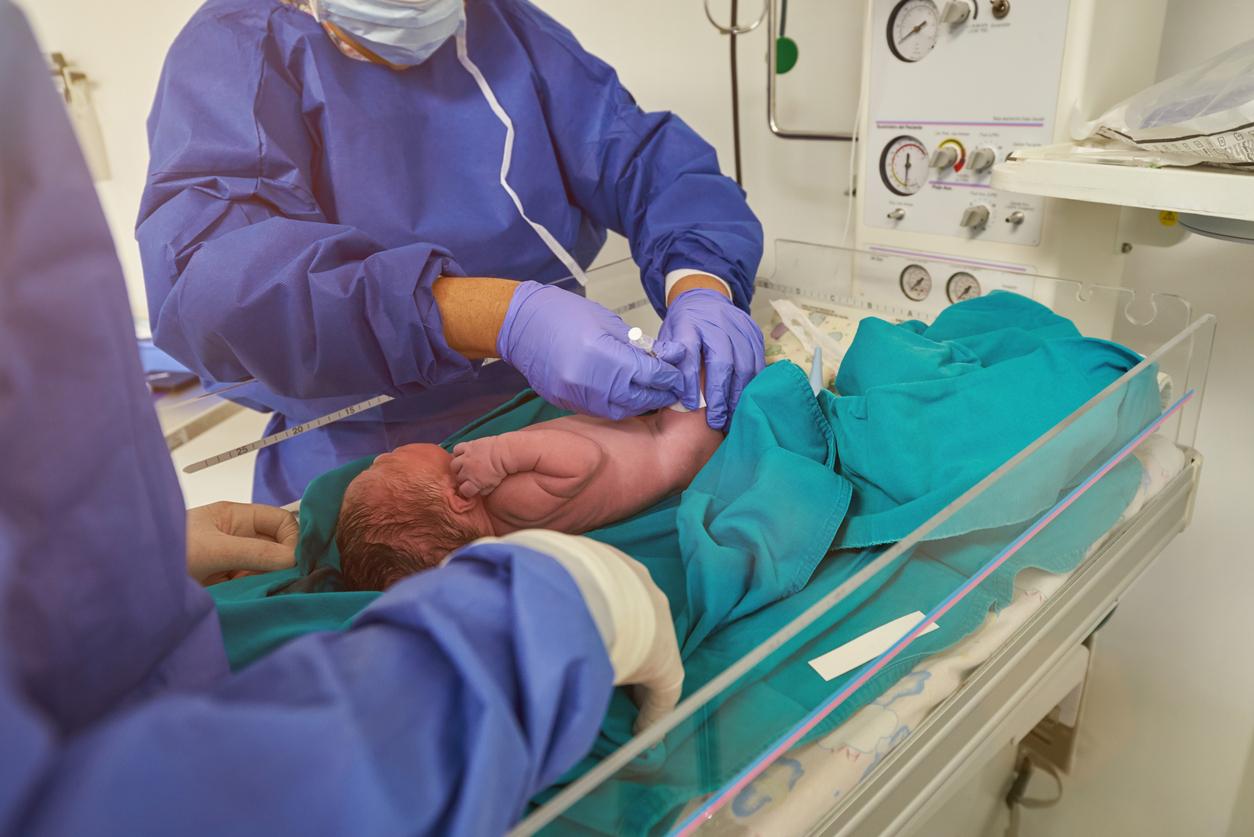
Because babies can be infected before or during delivery, the AAP recommends vaccinating all newborns against hepatitis B within 24 hours of birth.
Ninety percent of babies exposed to hepatitis B during childbirth develop a chronic infection. When newborns are exposed to hepatitis B, the virus enters the bloodstream and travels to the liver, where it can establish a lifelong infection, Jhaveri said. Vaccinating newborns just after delivery gives the immune system the chance to fight off the infection quickly, rather than allowing the virus to multiply.
We gave literally thousands of babies hepatitis B vaccine. I never once saw a fever actually associated with hepatitis B vaccine.
At previous ACIP meetings, some members have suggested vaccinating only babies whose mothers have hepatitis B, instead of routinely vaccinating all newborns.
The United States tried that approach in the 1980s, and it failed, Jhaveri said. Only half of people with chronic hepatitis B infection know they are infected.
Although all pregnant women are supposed to be screened for hepatitis B at their first prenatal visit, the reality is that 18% of women are not tested for the virus during pregnancy, according to a review of 400 studies spanning 40 years released yesterday by the Vaccine Integrity Project at the University of Minnesota’s Center for Infectious Disease Research and Policy (CIDRAP), publisher of CIDRAP News.
One-quarter of pregnant women in the United States get no prenatal care in the first trimester, according to a recent report from the March of Dimes. And 2.3% of pregnant women get no prenatal care at all.
Even when women are screened, test results sometimes go missing, leaving obstetricians and pediatricians unaware that a patient has a chronic infection. It’s also possible for women to become infected with hepatitis B later in pregnancy. Lastly, babies can become infected by household members, the CIDRAP report finds.
Delaying the birth dose to 2 months in babies whose mothers are not known to be living with hepatitis B could lead far more children to become chronically infected, according to a new report from HepVu, the Hepatitis B Foundation, and the National Viral Hepatitis Roundtable, which provide education and advocacy about hepatitis B. The change could lead to at least 1,400 preventable hepatitis B infections among children, 300 additional cases of liver cancer, 480 preventable deaths and over $222 million in excess healthcare costs, for each year the revised recommendation is in place, the report finds.
Delaying the first hepatitis vaccine to age 12 years would lead to 2,700 preventable hepatitis B infections and $313 million in excess healthcare costs for each year the revised recommendation is in place.
The CDC last month outlined a plan to increase hepatitis B screening in pregnant women. But simply offering more testing is not enough to protect babies, Jhaveri said.
"The argument being made by RFK Jr and others who are advocating for eliminating birth dose vaccine is that we screen women during pregnancy and we only need to target those who test positive," Jhaveri said. "In order to do that, we would need to ensure that all women are getting tested and that we invest in a public health system to ensure those results are shared between providers.
"The reality is just the opposite: This administration has slashed funding for public health departments across the country and eliminated Medicaid coverage for millions of Americans."