Experimental hantavirus drug ships to Europe as US passengers offered home quarantine

News brief
Clinicians await hantavirus patient in ambulance
Piso Mojado / Flickr cc

Emergency shipments of the experimental antiviral drug favipiravir are on their way to France, the Netherlands, and Spain to treat hantavirus patients from the MV Hondius cruise ship or run clinical trials, the European Commission (EC) announced yesterday in a news release.

Fujifilm Pharmaceuticals donated 1,400 tablets of favipiravir, which the European Medicines Agency has identified as the most likely candidate to use under clinical-trial or compassionate-use protocols. No drugs or vaccines are currently approved for hantavirus treatment or prevention. Individual European Union (EU) member states will decide how to use the drug.

“In parallel, the Commission is launching emergency procurement procedures to ensure availability of additional doses in case further cases are confirmed in the coming weeks, thereby strengthening EU’s preparedness,” the EC said.

In the release, Hadja Lahbib, EC commissioner for equality, preparedness, and crisis management, said, “Thanks to close cooperation between the EU, Member States and our Japanese partners, we were able to rapidly secure access to potentially life-saving Hantavirus treatments for European patients. This shows the value of preparedness, cooperation, and trusted global partnerships.”

24/7 monitor required for home quarantine

US officials said they will allow American MV Hondius passengers to return home from a quarantine facility in Nebraska as soon as June 1, but only if their individual states post a monitor 24/7 outside their homes for the last three weeks of their six-week quarantine, CNN reported today. 
Thanks to close cooperation between the EU, Member States and our Japanese partners, we were able to rapidly secure access to potentially life-saving Hantavirus treatments for European patients.

Hadja Lahbib

The 18 Americans were exposed to the Andes hantavirus, which can transmit from person to person, as they sailed the South Atlantic this spring. They have been quarantined at the University of Nebraska since disembarking in the Canary Islands on May 10. A total of 13 cases, including three deaths, have been linked to the ship.

Meanwhile, Wired reports that the Trump administration pulled funding from a center established in 2020 to research zoonotic diseases such as hantavirus and Ebola in June 2025, a move fueled in part by conspiracy theories. 

The National Institutes of Health had given the Centers for Research in Emerging Infectious Diseases about $82 million over five years. But when its funding came up for renewal last year, the center received a stop-work order that characterized the research as “unsafe for Americans and not a good use of taxpayer funding.”

FDA vaccine advisers recommend XFG variant as target for fall’s updated COVID vaccines

News brief
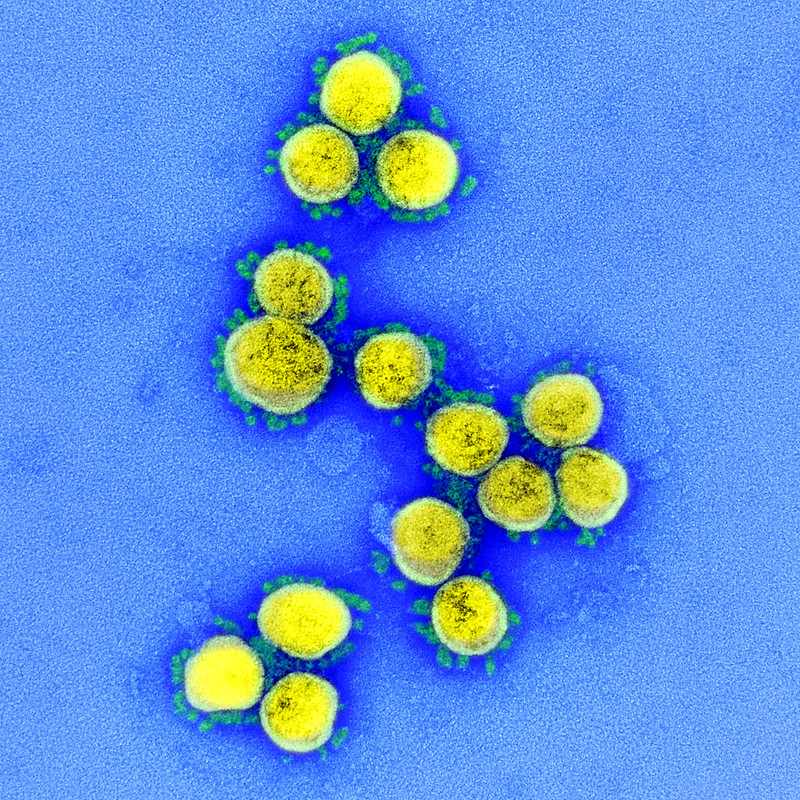
XFG variant
NIAID / Flickr cc

This fall’s updated COVID-19 vaccines should target the SARS-CoV-2 XFG variant, the US Food and Drug Administration’s (FDA’s) Vaccines and Related Biological Products Advisory Committee (VRBPAC) said yesterday.

At the meeting, the first since FDA Commissioner Marty Makary, MD, MPH, resigned earlier this month, Natalie Thornburg, PhD, of the Centers for Disease Control and Prevention’s (CDC’s) respiratory division, said XFG is a hybrid of two Omicron subvariants and has mutations linked to immune escape. As of April 11, the most recent date with available CDC variant data, XFG strains make up just over half of circulating variants in the United States.

FDA expected to give vaccine makers go-ahead

Vaccine makers Moderna and Sanofi discussed data on mice research suggesting that vaccines targeting XFG trigger higher antibody concentrations against circulating SARS-CoV-2 strains than Pfizer’s and Moderna’s current LP.8.1-targeting vaccines.

Earlier this month, the World Health Organization Advisory Group on COVID-19 Vaccine Composition recommended that vaccines target the LP.8.1 variant but said that XFG, NB.1.8.1, or other variants could also be used.

The recommendation now goes to the FDA, which is expected to allow vaccine manufacturers to start producing doses for the fall and winter respiratory illness season.

This week's top reads

Our underwriters

Unrestricted financial support provided by