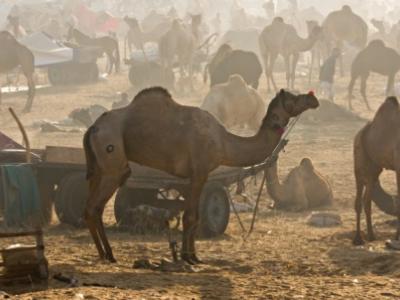
RNA analyzed from camels in Nigeria is of a different lineage from Mideast strains.
Cases of tularemia in four US states have reached at least 104 for 2015, according to federal and state officials.
Having a longer incubation period—the time from virus exposure to disease—was tied to a lower risk of death in MERS-CoV patients in South Korea, according to a study yesterday in Emerging Infectious Diseases.
French and Hong Kong researchers analyzed data on 170 cases of MERS-CoV (Middle East respiratory syndrome coronavirus) infection, of which exposure data were available for 109.
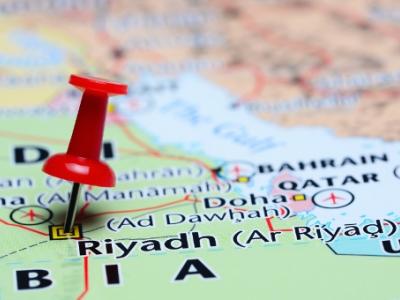
Saudi Arabia's Ministry of Health (MOH) reported a new MERS-CoV case today in the capital city of Riyadh.
The case involves a 21-year-old Saudi woman who is in critical condition with a MERS-CoV (Middle East respiratory syndrome coronavirus) infection. She is not a healthcare worker and was not exposed to other MERS patients, the agency said. No other risk factors were noted.
Saudi Arabia reported a new MERS-CoV infection yesterday in the city of Buraidah, while an international team of researchers found no serologic evidence that the virus is endemic in Kazakh camel herds.
A South Korean man who recently suffered a MERS-CoV relapse died from his illness today, according to a report from the Korea Herald, which cited the country's health ministry. The 35-year-old man had also been battling lymphoma.
WHO provides new details on 7 recent Saudi MERS cases, 6 of which had healthcare links.
Scientists find that the timing and intensity of MERS virus shedding is similar to SARS.
The lastest patient, a foreign man in Riyadh, contracted the disease in a healthcare setting.
The King Abdulaziz City for Science and Technology (KACST) and Saudi Arabia's ministries of health and agriculture have launched a joint program for comprehensive MERS-CoV research on the Middle East, Arab News reported today as the country's Ministry of Health (MOH) reported no MERS cases for the 7th straight day.