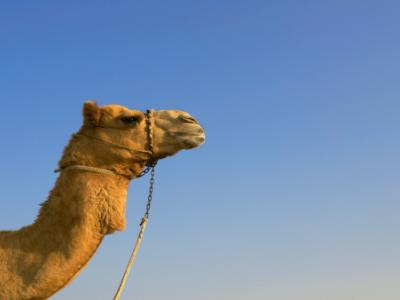
Also, a new study found that 47% of Kenyan camels tested had evidence of MERS-CoV antibodies.
The Institute of Medicine (IOM) this week published a report on a 2-day medical countermeasure workshop it held in late March to discuss how to how better develop and deliver medical countermeasures (MCMs) for emerging infectious disease threats, based on challenges that flared up during West Africa's Ebola outbreak.
Researchers also report promising findings in monkeys for a new antiviral, and CDC experts discuss response steps.
For the fourth day in a row Saudi Arabia's Ministry of Health (MOH) has reported a MERS-CoV infection in a foreign woman in her 20s in Riyadh who is not a healthcare worker, while South Korea has quarantined 61 people after a man tested positive for the virus days after he had recovered from the disease.
After going 8 days without a case, Saudi Arabia reports 3 in young foreign women.
Jordan's health ministry today reported another MERS-CoV case, involving a 53-year-old man who had contact with an earlier case, according to a report from Kuwait News Agency (KUNA). The story's Amman dateline and the man's status as a contact suggest that his infection is likely related to a hospital outbreak in the Jordanian capital.
Despite suspected MERS, the Saudi man's body can't be tested due to embalming.
Two of four Jordan cases involve health workers, and contact info in a Riyadh case is being probed.
The Centers for Disease Control and Prevention (CDC) received reports of 113 additional cases of salmonellosis likely linked to cucumbers in the past week, raising the outbreak total to 671, the agency said in an update yesterday.
A case update from the WHO showed a variety of exposure types, with some unknown.