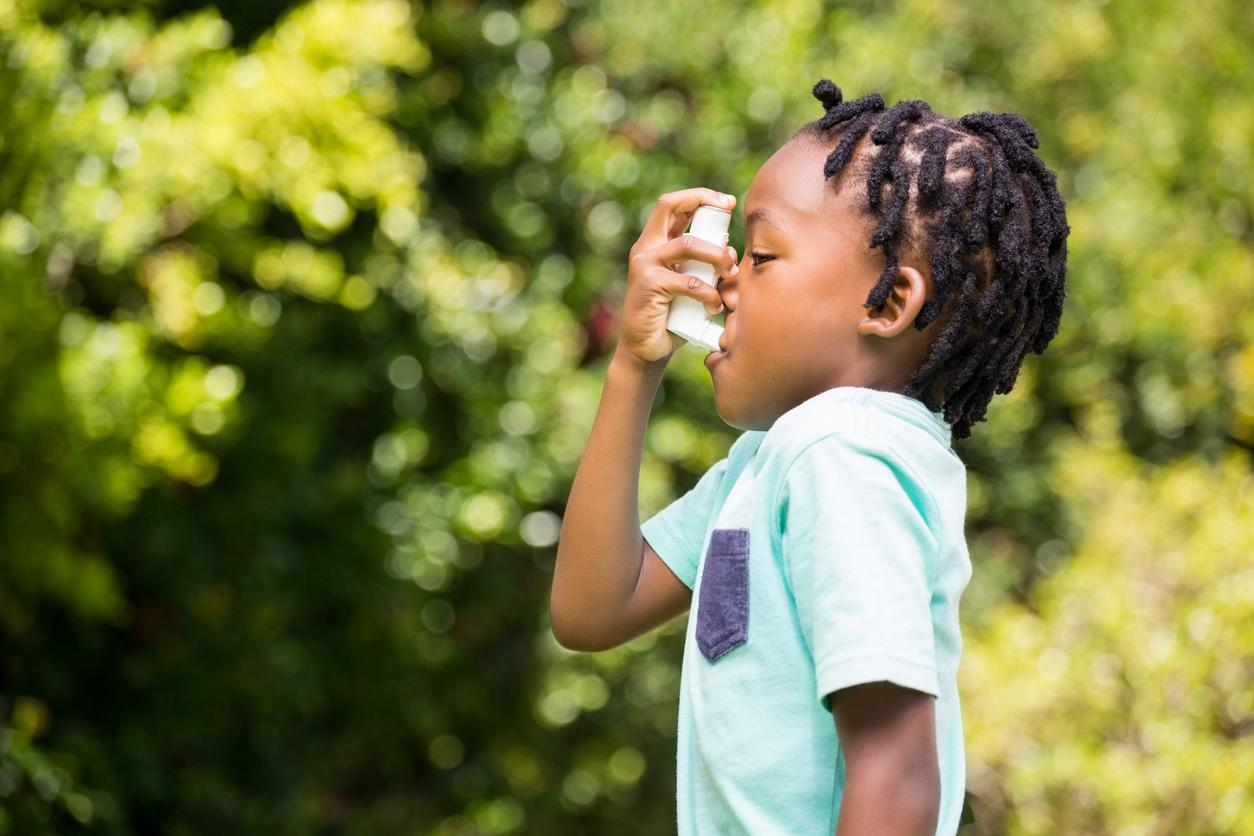
Respiratory syncytial virus (RSV) infection in early infancy may significantly raise the risk of childhood asthma, particularly for children whose parents have asthma or allergy, Belgian and Danish researchers wrote last week in Science Immunology.
The investigators analyzed data from the Danish National Patient Registry on more than 24,000 RSV-related hospitalizations among roughly 1.5 million infants younger than 6 months and on the receipt of specialized asthma care among parents and their children (up to 24 years of age) from 1994 to 2018.
They also evaluated inhaler and nasal corticosteroid prescriptions from the Danish National Prescription Registry and the link between both outcomes and age and parents and children using the Danish Civil Registration System. Last, the team modeled the mechanism behind the connection in newborn mice infected with an RSV-like virus and exposed to the house dust mite (HDM) allergen.
While maternal RSV vaccination during pregnancy and immunization of newborns with long-acting monoclonal antibodies can help prevent poor infection outcomes, uptake is uneven, the study authors noted.
Having a parent with asthma nearly doubles the risk
Children born to nonasthmatic parents and hospitalized for RSV bronchiolitis (inflammation of the bronchial airways) in the first 6 months of life had a threefold higher cumulative risk of asthma than those not hospitalized for RSV in the same period (hazard ratio [HR], 3.32).
But children born to an asthmatic parent and not hospitalized for RSV bronchiolitis were at nearly double the risk of asthma than those born to parents without asthma (HR, 2.06 for children of an asthmatic mother; HR, 1.71 for an asthmatic father), confirming the strong influence of parental asthma on risk.
Unexpectedly, the highest cumulative asthma risk was seen in children both hospitalized for RSV and born to an asthmatic mother (HR, 5.38) or asthmatic father (HR, 4.73) compared with the uninfected children of nonasthmatic parents.
Having a parent with allergic rhinitis (AR, or hay fever) was also a risk factor for asthma development, with the highest risk among those both hospitalized for RSV and born to a parent with AR. The effect was stronger when the mother was taking an AR medication (HR, 4.09) than when the father was taking it (HR, 3.77) and when both parents were taking it (HR, 4.98) than in uninfected children of parents without AR.
Benefits likely extend to low-risk populations
Newborn mice born to mothers with HDM allergy experienced more severe type 2 inflammation (outsized immune response involved in asthma and allergy) and asthma-like symptoms, explained by maternal transfer of allergen-specific immunoglobulin G (IgG) antibodies (Abs), which increase uptake of allergens. But the risk was mitigated when mice were immunized against RSV.