Dovetailing with recent cases announced in Minnesota and a product recall, the US Centers for Disease Control and Prevention (CDC) said today that 11 Salmonella Virchow illnesses in 9 states have been linked to Garden of Life RAW Meal Organic Shake and Meal products.
Two outbreaks of Escherichia coli O26 infections linked to Chipotle restaurants are now over after causing 60 total cases in 14 states, the Centers for Disease Control and Prevention (CDC) said in a statement today.
In the more than 2 months since a previous update, the toll of a cucumber-linked Salmonella outbreak has risen by 50 cases and 2 deaths, and Tennessee has joined the list of affected states. Cases have reached 888, deaths 6, and states 39, the Centers for Disease Control and Prevention (CDC) said today.
A multistate Salmonella outbreak linked to nut butter produced by an Oregon company has reached 13 cases but now appears to be over, the Centers for Disease Control and Prevention (CDC) said today.
After going more than 2 weeks without a MERS-CoV case, Saudi Arabia today reported its second in as many days.
The first report from a surveillance system launched by the US Centers for Disease Control and Prevention (CDC) in 2009 to examine the acute gastroenteritis outbreak patterns that aren't part of foodborne or waterborne outbreaks found that noroviruses was by far the most frequently reported cause, with Shigella and Salmonella also making up a portion of the illnesses.
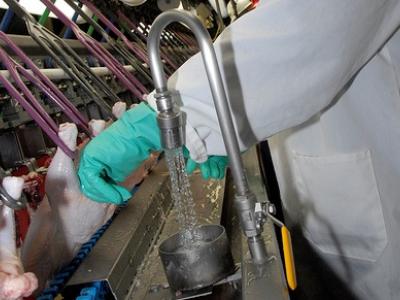
Guidance involves steps to curb Salmonella and Campylobacter in poultry and better trace ground beef.
Regions vary by disease impact and type of threat, with Africa and Southeast Asia bearing large burdens.
The recall affects all of the company's nut butter spread products, which were distributed to nationwide retailers and through the mail.
Having a longer incubation period—the time from virus exposure to disease—was tied to a lower risk of death in MERS-CoV patients in South Korea, according to a study yesterday in Emerging Infectious Diseases.
French and Hong Kong researchers analyzed data on 170 cases of MERS-CoV (Middle East respiratory syndrome coronavirus) infection, of which exposure data were available for 109.