A multistate outbreak of Salmonella Poona linked to cucumbers imported from Mexico has grown by 71 cases since Oct 14, to 838, the Centers for Disease Control and Prevention (CDC) said today in an update.
Multistate events are linked to 56% of outbreak deaths even though they make up just 3% of outbreaks.
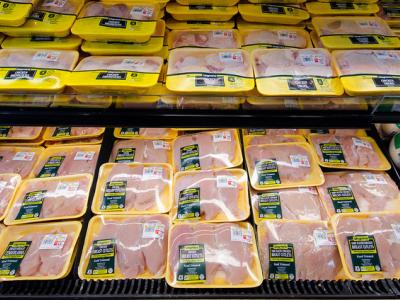
The Centers for Disease Control and Prevention (CDC) on Oct 16 released final reports on two separate Salmonella outbreaks linked to frozen chicken entrees.
The Institute of Medicine (IOM) this week published a report on a 2-day medical countermeasure workshop it held in late March to discuss how to how better develop and deliver medical countermeasures (MCMs) for emerging infectious disease threats, based on challenges that flared up during West Africa's Ebola outbreak.
The 2 outbreaks involve separate Salmonella strains; 15 people required hospitalization.
Inadequate measles vaccination coverage places one in eight US kids at risk for contracting the disease and one in four of those 3 years old or younger, according to data presented today at IDWeek in San Diego, the Infectious Diseases Society of America (IDSA), a sponsor of the conference, reported today in a press release.
The multistate outbreak of salmonellosis linked to imported cucumbers has grown by 61 cases, to 732, and an additional death has been reported, the Centers for Disease Control and Prevention (CDC) said yesterday in an update.
One more state is affected, bringing that total to 35, the CDC said. The outbreak has now caused four deaths.
The Centers for Disease Control and Prevention (CDC) received reports of 113 additional cases of salmonellosis likely linked to cucumbers in the past week, raising the outbreak total to 671, the agency said in an update yesterday.
The US Centers for Disease Control and Prevention (CDC) said today that 140 more infections and one more death have been reported in a multistate outbreak linked to cucumbers tainted with strains of Salmonella Poona.
Saudi Arabia's Ministry of Health (MOH) reported two new MERS-CoV cases in Riyadh today that don't appear to be linked to a large hospital outbreak, and it confirmed a death in a previously reported patient.