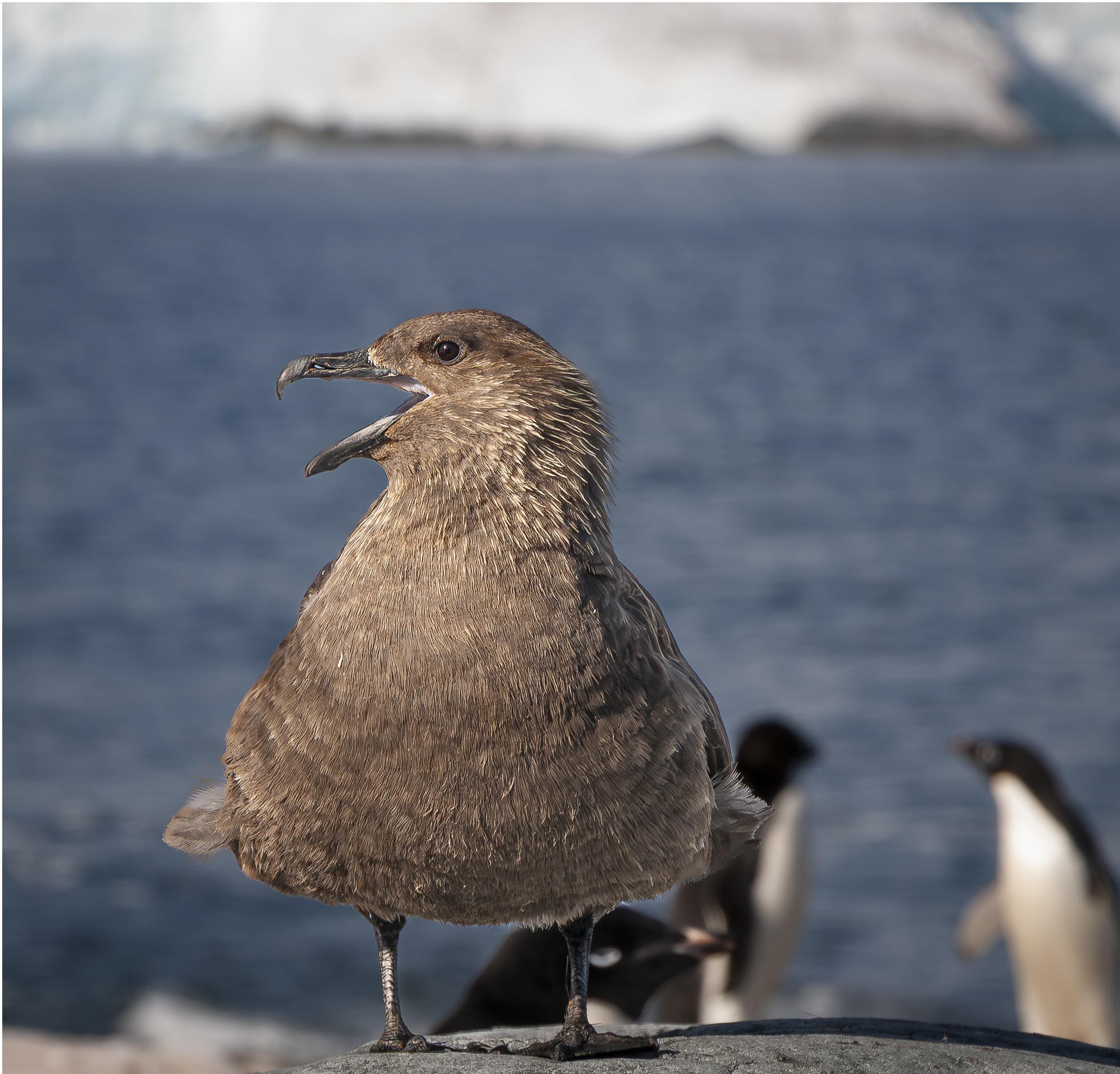
More than 50 skuas (gull relatives) died of highly pathogenic H5N1 avian flu in 2023 and 2024 in Antarctica, the first documented wildlife die-off from the virus on that continent, per an Erasmus University–led study published in Scientific Reports.
The researchers describe the deaths, which occurred in the summers of 2023 and 2024 in a skua breeding colony at one of 10 sites in Antarctica they visited as part of a research expedition in March 2024. Skuas are scavenging seabirds that live primarily in polar and subpolar regions.
The team surveyed wildlife at the South Shetland Islands, northern Weddell Sea, and Antarctic Peninsula, collecting tissue samples, performing post-mortem exams, and gathering environmental samples.
While H5N1 has been circulating in Antarctica since 2023, “this is the first study to show they died of the viral infection,” co-senior author Ralph Vanstreels, DVM, PhD, of the University of California Davis, said in a university news release.
‘If nobody is watching, we won’t know what is happening’
H5N1 was detected at three sites and diagnosed as the cause of death of nearly all dead skuas at Beak Island. The birds rapidly died of multi-organ necrosis (tissue death). The virus didn’t kill other examined species such as penguins or fur seals.