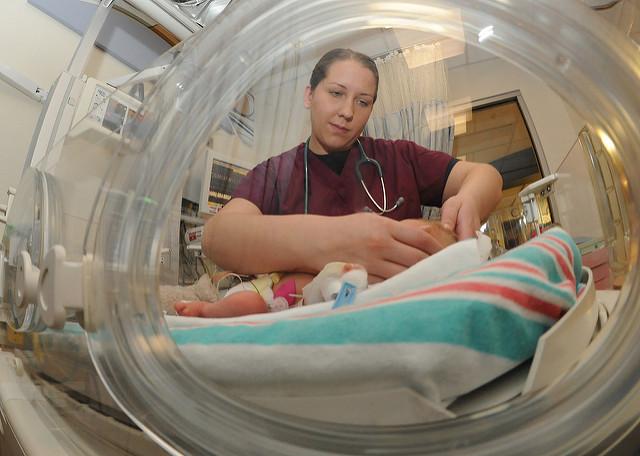
Enhanced infection-prevention measures introduced in neonatal intensive care units (NICUs) during the COVID-19 pandemic were associated with a substantial decline in viral health care–associated infections (HAIs), but they did not reduce rates of bacterial or fungal infections, according to a large study published this week in JAMA Network Open.
The researchers, led by a team at the Children’s Hospital of Philadelphia, analyzed data from 48,475 infants admitted to 12 NICUs in the United States and Canada from March 2018 to July 2022. The goal was to compare infection rates before and amid the pandemic, when measures such as universal masking, enhanced hand hygiene, and increased visitor restrictions were introduced.
Viral HAIs dropped by half in pandemic
Among 41,889 infants evaluated for viral HAIs, rates fell by more than half during the pandemic, from 0.35 to 0.16 infections per 1,000 patient-days. The decline persisted into the second year of the pandemic, even as circulation of respiratory viruses increased.
In contrast, bacterial and fungal HAIs remained the same before and during the pandemic, at 1.70 and 1.78 infections per 1,000 patient-days, respectively.
The findings suggest that infection-prevention strategies like universal masking and enhanced hand hygiene were effective at limiting viral transmission in NICUs during the pandemic but did not curb bacterial or fungal infections. “Preventive interventions beyond those implemented during the pandemic would likely be necessary to further reduce bacterial or fungal HAIs,” conclude the authors.