CDC advisers drop decades-old universal hepatitis B birth dose recommendation, suggest blood testing after 1 dose

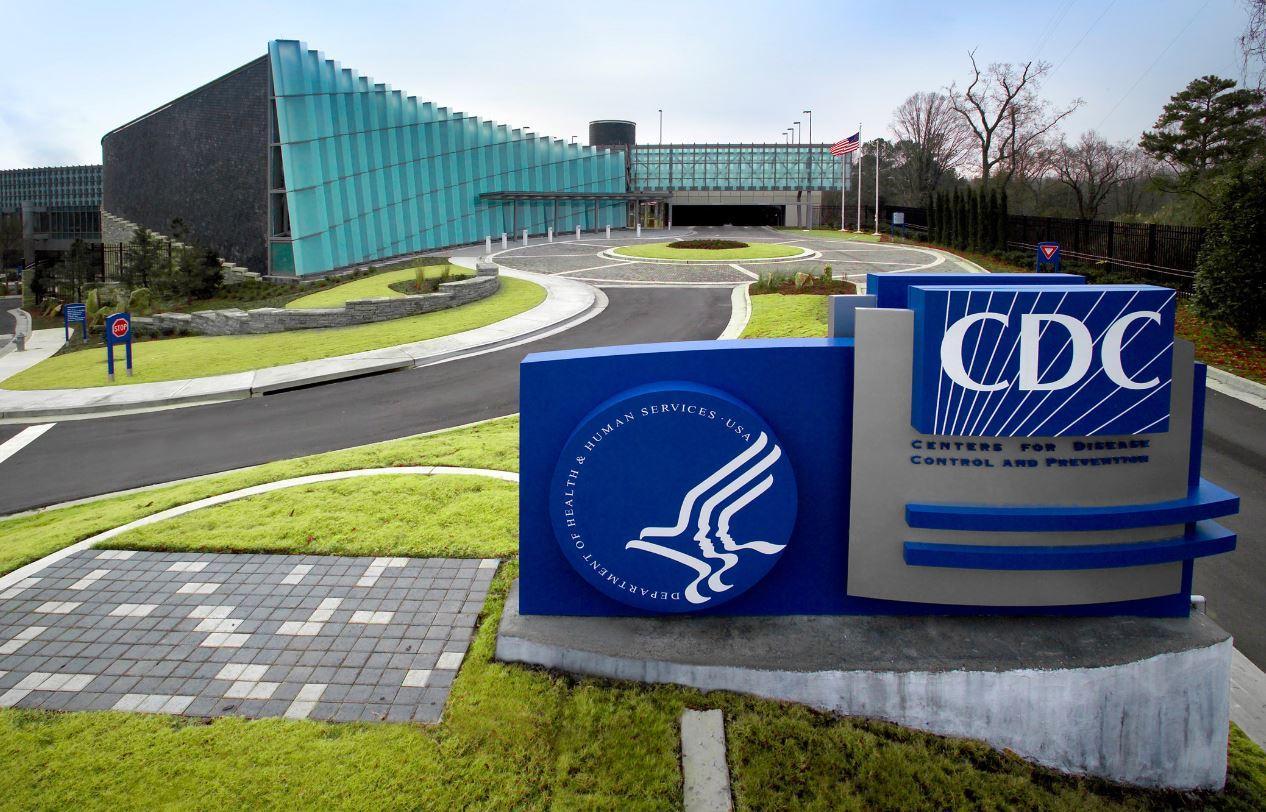
CDC headquarters from outside

James Gathany / CDC

This morning, after contentious discussion, the Advisory Committee on Immunization Practices (ACIP) voted 8-3 to drop the recommendation for a universal birth hepatitis B vaccine dose and 6-4 to suggest that parents use serologic testing—which detects antibodies in the blood—to determine whether more than one dose of the three-dose series are needed.

Under the first recommendation, only infants born to mothers who test positive for hepatitis B would receive a birth dose, while parents of other babies would be advised to postpone the first dose for at least two months.

ACIP makes vaccination recommendations to the Centers for Disease Control and Prevention (CDC), including those for different age-groups and disease risk status, as well as on US immunization schedules for children, adolescents, and adults. The CDC director has ultimate discretion whether to approve ACIP’s advice, and physicians can make their own decisions about whether to comply, but ACIP recommendations have historically affected insurance coverage of vaccines.

Lack of evidence supporting decisions

The historic decisions came a day after the committee, installed by US Health and Human Services (HHS) Secretary Robert F. Kennedy Jr., decided to postpone the vote following a contentious discussion filled with anti-vaccine rhetoric and racial innuendo. Kennedy has claimed, without evidence, that the hepatitis B vaccine causes autism.

Today’s votes occurred despite some members urging another delay, heated exchanges during which members cited abundant evidence supporting the efficacy and safety of the current recommendations, a lack of evidence to support the changes, and an ad hoc two-minute rule for speaking that cut off some members before they could finish their statements.

The first part of the discussion, led by Robert Malone, MD, a vaccinologist at Louisiana State University, centered on the risks and benefits of the universal hepatitis B vaccine birth dose, which the CDC has recommended, regardless of the mother’s risk factors, since 1991. 

The second, very brief, discussion segment focused on whether children need more than one hepatitis B vaccine dose and the proposed use of serologic testing to investigate whether vaccinees are protected against hepatitis B. A proposal touted a threshold of at least 10 milli-international units per milliliter (mlIU/mL) of antibody, which proponents said correlates to adequate protection against infection, despite a lack of evidence that it does.

No new data, safety signals

ACIP member Joseph Hibbeln, MD, a psychiatrist, neuroscientist, and former chief of the Section on Nutritional Neurosciences at the National Institutes of Health (NIH), questioned the basis of the recommendation that infants of uninfected mothers not receive their initial hepatitis B vaccine dose until at least two months of age.

“This specific point is the reason why we tabled this issue for three months to more fully discuss it; however, we have still not had any information or science presented or discussed with regards to this issue of before or after two months of age,” he said. He also urged his fellow members to rely on data rather than speculation.

At ACIP’s September meeting, members voted to postpone a vote on the birth hepatitis B dose because most felt that more data was needed to inform the wording of the recommendation.

We have still not had any information or science presented or discussed with regards to this issue of before or after two months of age.

Joseph Hibbeln, MD

At today’s meeting, some members emphasized parental rights and expressed concern about risk and implying any obligations as to timing, while others objected to arguments about theoretical harms (eg, cumulative aluminum exposure, breaching the blood-brain barrier) because they were hypotheses rather than evidence, and a few pointed out the onerous burden of screening and follow-up, which may lead some patients and families to miss care.

Kirk Milhoan, MD, PhD, medical director of For Hearts and Souls Free Medical Clinic, cited safety concerns and said that one in 20 vaccinees don’t show immune activation despite 95% uptake. “Do I need to give this injection that has some risk?” he asked. “It’s not risk-free.”

Vaccine practice in US, Denmark

Presenter Tracy Beth Hoeg, MD, PhD, who was named acting director of the Food and Drug Administration’s (FDA’s) Center for Drug Evaluation and Research this week, questioned why the United States universally vaccinates newborns against hepatitis B when Denmark does not. 

In response, subject matter expert Adam Langer, DVM, MPH, acting principal deputy director and associate director for science at the CDC's National Center for HIV, Viral Hepatitis, STD [sexually transmitted disease], and Tuberculosis Prevention, said that the United States is unique in many ways.

Among them, “Denmark, the entire country has 6 million people,” he said. “The population of New York City alone is 8 million people. More than 95% of pregnant women in Denmark are screened for hepatitis B. This is far higher than the number in the United States. Prenatal care is free for both citizens and refugee or asylum seekers in Denmark. We all know this is not the case in the United States.”

Canada was cited as a more appropriate comparison, and recent Canadian analyses support the need for a universal birth dose.

During the second vote, ACIP member H. Cody Meissner, MD, retired chief of pediatric infectious diseases at Tufts Medical Center, said, “I will just say we’ve heard ‘do no harm’ is a moral imperative. We are doing harm by changing this wording, and I vote no.”

Meissner was a previous member of both ACIP and the FDA’s Vaccine and Related Biological Products Advisory Committee and led the HHS National Vaccine Injury Compensation Program.

We are doing harm by changing this wording, and I vote no.

H. Cody Meissner, MD

Langer reminded members that CDC recommendations are made as policy for the entire country. 

“It's simply not possible for us to look at every single individual case and make a decision about what's best for that particular baby and that particular set of parents,” he said. “That's why we have individual practitioners who are making those decisions in conjunction with the parents [and] with adult patients when that's relevant.”

A third vote maintained consistency of coverage for all payment mechanisms, including programs such as the Vaccines for Children Program, Children’s Health Insurance Program, Medicaid, and Medicare, and the federal Health Insurance Marketplace. At ACIP’s September meeting, members recommended that all pregnant women be tested for hepatitis B, a test covered under all insurance programs.

Outside experts decry changes

Yesterday, at a meeting of the Expert Vaccine Analysis Team (E-VAT), team member Bruce Gellin, MD, MPH, senior advisor at the Georgetown University Global Health Institute and principal for the Vaccine Integrity Project at the University of Minnesota’s Center for Infectious Diseases Research and Policy (CIDRAP), questioned how physicians would counsel patients on the new recommendations. 

“It’s going to be very complicated when you have the government saying one thing, professional medical associations saying other things, the insurance companies covering things that are pre-existing policies, and then some poor person on the front line has got to try to explain it... It’s really a problem,” he said. CIDRAP publishes CIDRAP News.

Shannon McNamara, MD, an emergency medicine physician who provides virtual urgent care in New York, recounted the case of an emergency department patient who had liver cirrhosis and a gastrointestinal bleed from hepatitis B: “He came in totally lucid and said, ‘I feel like I’m going to die.’ Then he proceeded to vomit up his entire blood volume, and despite all our efforts, he died. This is why we’re so mad.”

Jaime Friedman, MD, a San Diego pediatrician, told CIDRAP News that the recommendations won’t change her practice. “I will still recommend it to newborns,” she said. “Our two-month vaccine series will still include hep B because at this time we use a combination vaccine to reduce the number of injections babies receive.”

I will still recommend it to newborns.

Jaime Friedman, MD

Su Wang, MD, global health advisor for the Hepatitis B Foundation and a medical director for the Chinese Medical Program at Cooperman Barnabas Medical Center in New Jersey, told CIDRAP News that she was upset when she saw the footnote to the language on the birth dose vote, which recommended taking a risk-based approach for immigrants.

"When we replace universal birth dose with a risk-based approach that singles out families based on whether they’ve emigrated from certain regions, we are repeating a pattern we’ve seen before,” said Wang, who was infected with hepatitis B as a baby. “These policies have consistently led to profiling, racism, and discrimination, and they drive people away from testing and care.”

‘Great potential to cause harm’ 

Those opposed to the changes emphasized that the vaccine is safe and effective and that hepatitis B rates and resulting liver cancer, cirrhosis, and premature death will rise among the unvaccinated or undervaccinated—whether in infancy or later in life, when unprotected adults will be vulnerable to infection, including through injectable drug use or unsafe sex.

A 2024 CDC study showed that the current US vaccination schedule has helped prevent more than 6 million hepatitis B infections and nearly 1 million hepatitis B–related hospitalizations.

This has a great potential to cause harm, and I simply hope that the committee will accept its responsibility when this harm is caused.

Joseph Hibbeln, MD

“We're seeing disease rates go down because of the effectiveness of the vaccine,” Meissner said. “But that doesn't mean that the virus has gone away, and it really means the vaccine is working effectively. So it's a mistake to say because we're not seeing so much disease, we can alter the… frequency or the schedule for administration, because we will see hepatitis B infections come back. The vaccine is so effective, it does not make sense in my mind to change the immunization schedule.”

Hibbeln concurred, saying, “This has a great potential to cause harm, and I simply hope that the committee will accept its responsibility when this harm is caused.”

This week's top reads

Our underwriters