Report finds US biodefense lagging as biological risks intensify

News brief
Svisio / iStock

A bipartisan working group convened by the Center for Strategic and International Studies (CSIS) has released a new report identifying critical policy actions that would strengthen US defenses against biological threats. 

The report, Protecting Americans from Biological Threats, was developed by the CSIS Bipartisan Alliance for Global Health Security Working Group on Biodefense over the course of four months and is endorsed by more than 40 experts spanning public health, national security, biotechnology, and government. 

The working group concludes that US biodefense capabilities have steadily weakened as biological threats have grown more frequent, complex, and dangerous and as US adversaries see biowarfare as a particular area of advantage. Years of incomplete implementation of biodefense strategies and recent budget and workforce cuts have left critical gaps in US biopreparedness. 

Key proposals for strengthening biodefense

To strengthen US biodefense, the working group lays out some key proposals, including creating a White House Office of Biopreparedness, empowering public and private institutions to build a skilled biodefense workforce, integrating biosafety requirements and funding into grant agreements with groups conducting research on epidemic- and pandemic-prone pathogens, and strengthening surge manufacturing capabilities for medical countermeasures. 

“Together, these commonsense, immediate actions provide a vision for a feasible and affordable bipartisan path forward to improve U.S. biopreparedness,” notes the report. 

CSIS is a bipartisan, nonprofit policy research organization founded in 1962 that focuses on advancing practical solutions that address the world’s greatest challenges, including national and international security threats. 
Campus measles outbreak grows in Florida

News brief
measles virus
CDC/ Cynthia S. Goldsmith; William Bellini, Ph.D.

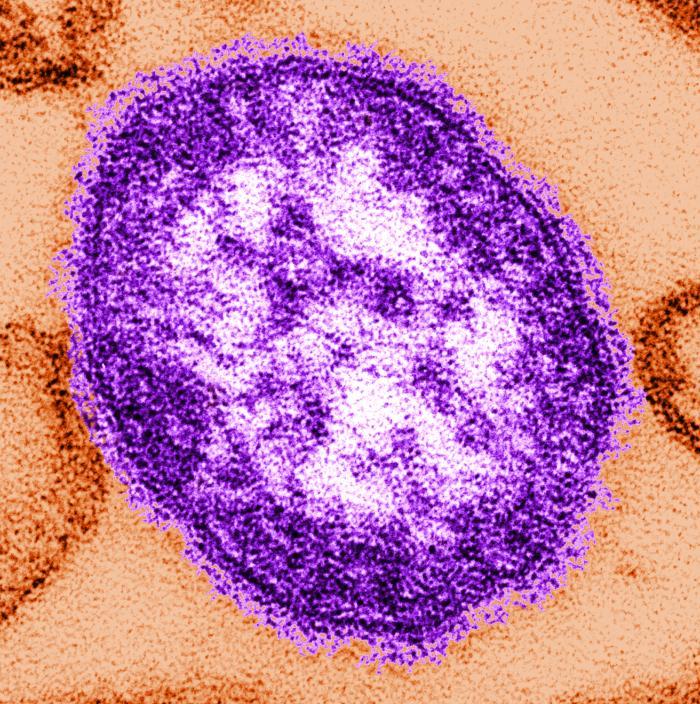
At least 20 students at Ave Maria University in Florida now have confirmed measles infections. The Collier County outbreak still has 14 cases pending testing, according to local news sources. 

According to a dashboard maintained by Johns Hopkins University, Florida has the fourth most measles cases so far in 2026, with 21 confirmed. South Carolina has by far the most (553), followed by Utah (48) and Arizona (34), with those three states experiencing ongoing outbreaks that began in 2025. 

Florida had 29 measles infections in all of 2025, according to the dashboard.

South Carolina warns of measles encephalitis

During a press conference yesterday, South Carolina’s State Epidemiologist Linda Bell, MD, told reporters that at least 19 people have been hospitalized in her state during the current outbreak, with an untold number of patients suffering from measles-related encephalitis, or brain swelling, that has been linked to several severe measles outcomes, including loss of hearing. 

Bell said measles complications are not reportable to the state health department, and details of encephalitis cases could not be shared with the public. 

In addition to measles encephalitis, Bell said her office is aware of several pregnant women who were exposed to measles and required administration of immune globulin to protect against the high risk of complications for both the mother and newborn. 

CARB-X funds development of rapid test for typhoid fever

News brief

CARB-X announced today that it’s awarding Chembio Diagnostic Systems $1.8 million to support the development of a rapid, finger stick–based diagnostic test for typhoid fever.

The money will help Chembio, of Medford, New York, develop a blood-based point-of-care test, using its proprietary Dual Path Platform, that can detect acute infection caused by Salmonella enterica serovar Typhi based on the presence of immunoglobulin A (IgA) antibodies. Chembio says using IgA antibody detection will provide more accurate results than current rapid tests for typhoid fever, ensure timely treatment, and minimize selective pressure for antibiotic resistance.

Typically spread through consumption of contaminated food or water, typhoid fever causes an estimated 11 million to 21 million illnesses a year, primarily in countries in South Asia, Southeast Asia, and sub-Saharan Africa. The primary symptoms are abdominal pain and a high, prolonged fever.

Could be good news for lower-income nations

“A rapid, fingerstick-based test that delivers reliable results at the point of care could significantly improve how typhoid fever is diagnosed in low- and middle-income countries, where access to laboratory infrastructure is often limited,” Richard Alm, PhD, interim chief of research & development at CARB-X (Combating Antibiotic-Resistant Bacteria Biopharmaceutical Accelerator), said in a press release. “If successful, Chembio’s diagnostic capability can support better clinical decision-making, strengthen surveillance and stewardship efforts, and contribute to more effective management of enteric fever in high-burden settings.”

Since its founding in 2016, CARB-X has funded 122 projects designed to prevent, treat, and diagnose antibiotic-resistant infections.

More avian flu outbreaks in Pennsylvania, Colorado

News brief
egg layers
Joel Carillet / iStock

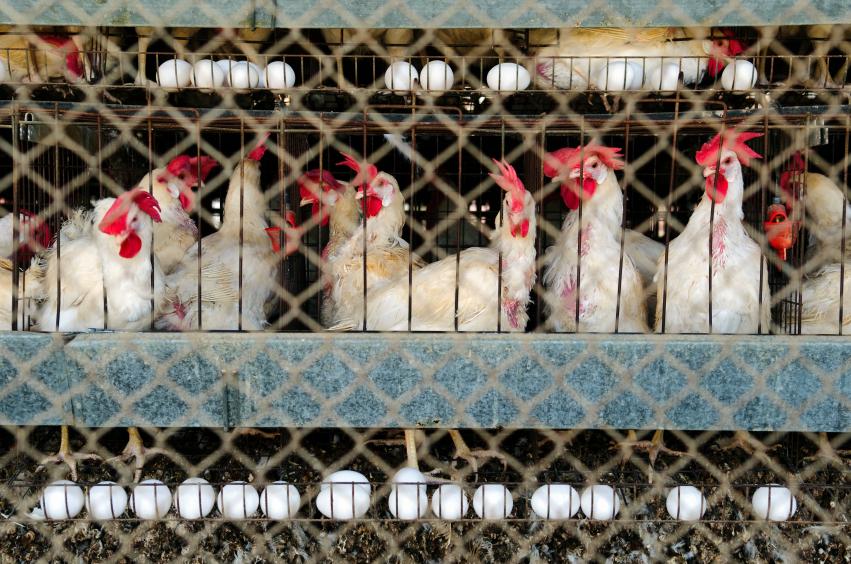
Millions of birds, including 1.3 million commercial table egg layers in Weld County, Colorado, have been sickened with highly pathogenic avian influenza, per this week’s notifications from the US Department of Agricultures Animal and Plant Health Inspection Services (APHIS).

In addition to the major outbreak in Colorado, 722,000 birds on a commercial table egg layer farm facility in Lancaster County, Pennsylvania, were also sickened. Lancaster County had two other detections this week involving roughly 70,000 poultry. Also of note, two live-bird markets in Philadelphia reported avian flu among 500 animals. 

In Charles Mix County, South Dakota, 71,800 animals were infected at a commercial turkey meat facility. 

Within the past 30 days, avian flu has been detected in 59 flocks, including 19 commercial flocks and 40 backyard flocks. A total of 4.9 million birds have been involved in these outbreaks. 

In wild bird detections, APHIS noted 25 detections, including several Canada goose detections in multiple counties in New York, and Canada geese in Garfield County, Oklahoma. 

Federal testing improves detection of H5N1 avian flu in US dairy herds

News brief
Theerawit Jirattawevut / iStock

Influenza A(H5N1) viral RNA was widely present in US retail milk during the spring 2024–25 outbreak among dairy cattle, according to a report published late last week in Emerging Infectious Diseases. 

In milk samples collected from April 13 to May 3, 2024, researchers detected influenza A viral RNA in 36% of samples from 13 states, including in five states (Arkansas, Indiana, Minnesota, Missouri, and Oklahoma) that had no reported outbreaks at the time. Across the country, only 29 infected herds had been reported as of April 12, a total that was inconsistent with the number of positive samples. 

“Our study revealed that early in the outbreak, the influenza A(H5N1) virus was more widespread than reported,” the researchers write. 

The team led by scientists at The Ohio State University College of Veterinary Medicine compared the findings with samples collected from December 27, 2024 to January 29, 2025. During the later period, only 6.9% of retail samples were positive. All the infected milk samples had been processed in California.

Federal regulations boost outbreak monitoring

Federal directives in April and December 2024 mandated increased testing to help identify infected herds and slow the spread of A(H5N1). Reported cases rose to more than 1,000 herds (which is expected when surveillance efforts broaden). The increased surveillance efforts revealed infection patterns more closely aligned with official detection numbers, suggesting that enhanced testing improved outbreak monitoring.

“Taken together, our findings suggest that early in the outbreak, cases in US dairy herds were widespread and went undetected, but federal regulations have since improved detection and worked to control the spread of H5N1 virus in dairy herds,” write the researchers.


This week's top reads

Our underwriters