Ebola outbreak in DR Congo approaches 7,800 cases

News brief
dignified burial
UNMEER / Flickr cc

The Ebola outbreak in the Democratic Republic of Congo (DRC) continues to infect those in Ituri province at an alarming rate, according to a new report published by the European Centre for Disease Prevention and Control (ECDC) yesterday. According to the report, the DRC has 7,773 confirmed cases, including 3,759 deaths, with 40 new confirmed cases and 27 deaths reported during a 48-hour period earlier this week. 

“Ituri province remains the most affected, with 5,966 cases, including 2,737 deaths, reported from 28 of 36 health zones,” the ECDC wrote. “In total, 84.5% of identified case contacts are under follow-up in the affected provinces.”

Without a high rate of case contact follow-up, the outbreak will continue to ravage the region, experts have warned, with new, unknown transmission chains accounting for new cases. 

Efforts to ensure safe burials

Today the World Health Organization (WHO) published an account of a family’s resistance to safe burial techniques in the DRC, with the family refusing a safe and dignified burial for more than 24 hours because they did not want a body bag used.

Experts in risk communication and community engagement were called in, and eventually a safe burial took place. The WHO said acts of community engagement and education are the best tools currently used to stop this outbreak. 
Measles outbreak in Chicago shelter cost nearly $9 million, CDC estimates

News brief
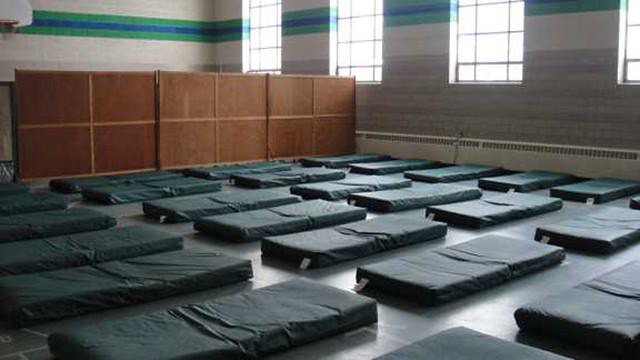
Shelter for unhoused people
Federal Register / Flickr cc

In JAMA Network Open yesterday, scientists from the Centers for Disease Control and Prevention (CDC) and Illinois public health agencies estimated the cost of a 2024 measles outbreak in two Chicago shelters for unhoused people newly arrived in the country at $8.7 million.

The economic evaluation tallied the costs of the outbreak, which took place from March 7 to April 30, in terms of the public-health response, direct medical expenses, and productivity losses in patients in isolation or quarantine and those caring for children who missed school or daycare due to isolation.

“Measles outbreak responses are highly intensive, requiring rapid case identification and isolation and contact management,” the authors wrote.

Cost per infection approached $153,000

In total, 57 people, including 30 women (median age, 3 years) contracted measles amid the outbreak, and authorities traced 3,569 contacts (median age, 17 years). The estimated societal cost was $8.7 million, or $152,636 per measles case.

Public-health response costs totaled $1.8 million in personnel costs, $1.4 million in vaccination expenses, $200,489 for lab testing costs, $104,263 for transportation, and $63,023 in other material costs. 

Though the outbreak placed a considerable cost burden on both public health and health care systems, rapid disease identification and mass vaccination among shelter residents prevented a more costly and larger outbreak.

Direct medical costs tallied $4.4 million, mostly from hospitalizations, and estimated productivity losses were $683,895, with 17,113 lost school days. Total health-sector and payer costs, including public health response and direct medical costs, were $8 million ($140,638 per case, and $2,246 per shelter contact).

“This outbreak response was one of the most expensive in the measles postelimination era due to the large costs associated with vaccination and isolation and quarantine in hospitals,” the authors wrote. “Though the outbreak placed a considerable cost burden on both public health and health care systems, rapid disease identification and mass vaccination among shelter residents prevented a more costly and larger outbreak.” 

“Strategies to reduce disease transmission and costs during outbreaks among undervaccinated populations living in congregate settings may include funding non–health care isolation and quarantine spaces and vaccinating new shelter residents on arrival,” the researchers concluded.

Quick takes: Typhus outbreak in LA, measles exposure at Philly airport, Legionnaires’ in Chicago

News brief
  • The Los Angeles County Department of Public Health is investigating a localized outbreak of flea-borne typhus in the Wilshire Center neighborhood of  Los Angeles, the department said yesterday in a press release. Rates of the disease have increased in the city in recent years, with a total of 220 cases documented last year, a record high. The current outbreak includes seven symptomatic case-patients, six of whom were hospitalized. So far this year the county has tracked 109 cases. “As flea-borne typhus cases continue to increase across Los Angeles County, preventing exposure to fleas on free roaming animals and wildlife is more important than ever,” said Muntu Davis, MD, MPH, Los Angeles County Health Officer. “Community members can help protect themselves and their neighbors by keeping pets on flea control year-round, rodent proofing their homes and making sure wildlife cannot live in or around their homes. Simple steps can prevent serious illness.”
  • Last week there were two possible measles exposures at Philadelphia International Airport. The exposures come on the heels of a reported exposure last week at the Children’s Hospital of Philadelphia  and highlight high virus activity in the state with the nation’s largest measles outbreak. Today the state will likely top 800 cases, with roughly 100 new cases reported each week, and four measles-associated deaths reported this year. 
  • The Hilton Garden Inn North Shore/Evanston, near Chicago, has been linked to two recent Legionnaires’ disease cases in visitors who reported using the hotel’s hot tub and pool during their stay. The case-patients stayed at the hotel in August, and the hotels pools and hot tubs have been closed since early September. “The Illinois Department of Public Health (IDPH) conducted water sampling and an environmental investigation of the hotel on September 8, 2026,” Evanston city officials said in a statement. “Both confirmed cases reported being in the pool and hot tub areas in August 2026, and those areas have been closed since September 2, 2026.” Water samples from other areas of the hotel did not detect Legionella bacteria, the statement said.

This week's top reads

Our underwriters

Unrestricted financial support provided by