
Oregon tracks decline in newborn hepatitis B vaccination

News brief
baby thigh
Antonio Gravante / iStock

Over the past four years, health officials at the Oregon Health Authority (OHA) have tracked a small but significant drop in newborn hepatitis B vaccination, at the same time they’ve documented a drop in prenatal screening. 

“It’s very concerning to see the number of babies getting a dose of hepatitis B vaccine after birth going down while the number of birth parents screened for hepatitis B is also decreasing,” said Dean Sidelinger, MD, MSEd, state health officer and state epidemiologist at OHA’s Public Health Division, in a statement. “The hepatitis B vaccine has been extremely successful at almost eliminating these illnesses, and with decreasing vaccination rates, we will see more children get sick.”

Up to 90% of infants infected with hepatitis B at birth develop chronic liver infections. Of those, about 25% of infected children will eventually die from cirrhosis or liver cancer if hepatitis is left untreated.

County-level vaccination rates vary

OHA is tracking state levels of both vaccination and screening through a new dashboard that goes back to 2020. In 2024, 82% of infants born statewide received the hepatitis B vaccine birth dose, down from 86% in 2022, with county-level rates ranging from 60% to 90%. In 2024 the rate of hepatitis B screening among women giving birth was 94%, down from 96% two years earlier.

In December of last year, the Centers for Disease Control and Prevention (CDC) stopped recommending routine newborn hepatitis B vaccination, a move criticized widely and ignored by guidelines from the American Academy of Pediatrics. 

The CDC now recommends the vaccine at birth only to babies born to mothers with hepatitis B and for babies two months or older after consultation with a health care provider. 
NIH Director Bhattacharya will temporarily oversee CDC

News brief
James Gathany, CDC

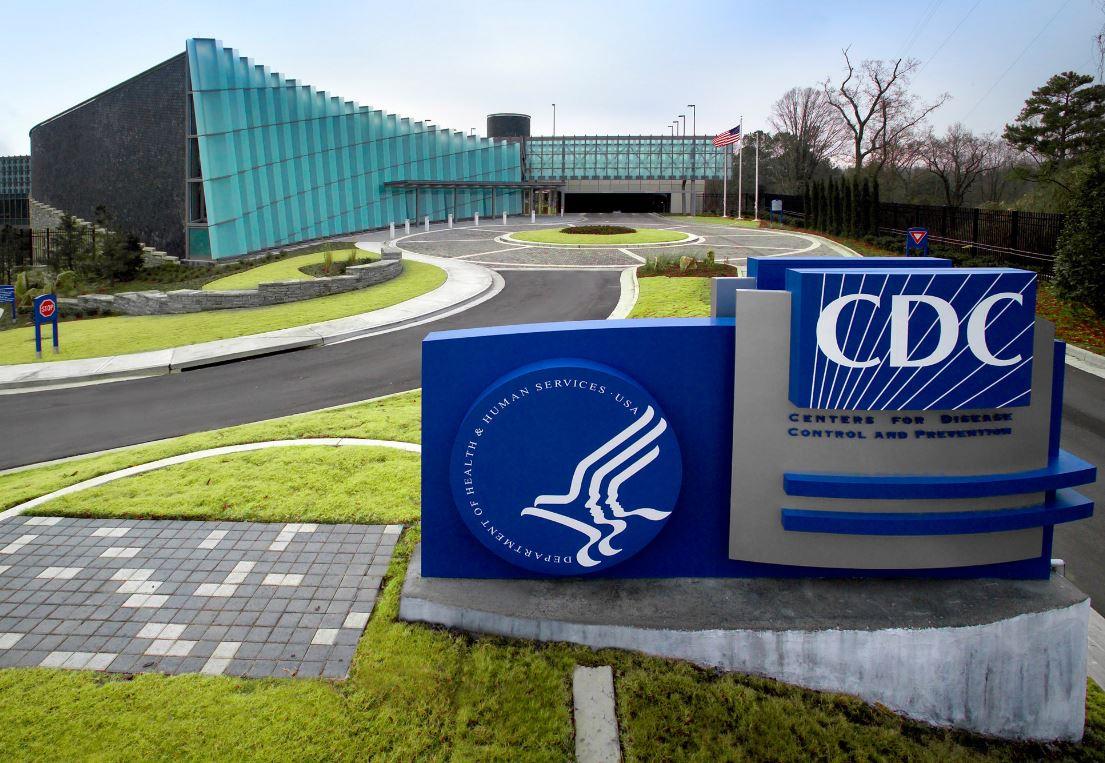
The Trump administration has tapped National Institutes of Health (NIH) Director Jay Bhattacharya, MD, PhD, to temporarily oversee the Centers for Disease Control and Prevention (CDC), reports the New York Times. The leadership change comes as the agency faces deep staffing cuts and internal upheaval.

Bhattacharya, a professor of medicine at Stanford University known for his anti-lockdown beliefs during the COVID-19 pandemic, will lead the CDC until a permanent director is appointed. The personnel shift comes after the Trump administration gutted CDC programs, including those dedicated to sexually transmitted infections such as HIV. 

In past interviews, Bhattacharya has emphasized his desire to rebuild public trust in health institutions, but during his tenure at NIH, distrust has only grown. Only 47% of Americans say they trust the CDC at least “a fair amount” to provide reliable vaccine information, down 12 percentage points since the beginning of Trump’s second administration.

Career scientists question Bhattacharya’s leadership

In a letter to Bhattacharya earlier this year, NIH scientists publicly expressed concerns about policies introduced during the second Trump administration, saying they have the potential to harm the health of Americans and those across the globe. 

Career NIH scientists have also criticized Bhattacharya for abdicating most of his day-to-day responsibilities in running the nearly $50 billion dollar agency, reports STAT, which raises concerns about further lack of leadership when his attention is split between the nation’s two largest health agencies. 

Since his confirmation, US Health and Human Services Secretary Robert F. Kennedy Jr. has aggressively overhauled leadership at the nation’s top health agencies, replacing long-trusted scientists with leaders who more closely align with his anti-vaccine views. This most recent leadership change comes in advance of November’s midterm elections. Kennedy has been pivoting away from a focus on vaccines to a focus on healthy eating.

Bhattacharya will replace Jim O’Neill, who had been serving as acting director until his departure last Friday, when the White House announced more personnel changes in the gear-up to the elections. 

Resistant foodborne bacteria widespread in Europe, report finds

News brief
Raw chicken and petri dish
Manjurul / iStock

New data from European health and food safety agencies show that resistance to commonly used antibiotics continues to rise in foodborne bacteria, threatening treatments for foodborne illness.

Published in a joint report from the European Food Safety Authority (EFSA) and the European Centre for Disease Prevention and Control (ECDC), the data show that a high proportion of Salmonella and Campylobacter isolates collected from humans and food-producing animals (cows, pigs, chickens, and turkeys) in 2023-24 were resistant to commonly used antibiotics, including ampicillin, tetracycline, and sulfonamides. Salmonella and Campylobacter are two leading causes of foodborne illness.

More concerning was that a high proportion of Salmonella and Campylobacter from humans and poultry showed increasing resistance to ciprofloxacin, which is considered a critically important antibiotic for human medicine. Because of the resistance levels, ciprofloxacin and other fluoroquinolone antibiotics can no longer be used for Campylobacter infections in people.

The report also noted that increasing detection of carbapenemase-producing Escherichia coli in food-producing animals and meat in several countries warrants close attention. Carbapenemase enzymes confer resistance to carbapenems, a class of antibiotics that aren’t authorized for use in veterinary medicine but are a last-resort option for severe infections in people. 

Some resistance is declining

On a more positive note, several countries reported declining resistance to ampicillin and tetracyclines in Salmonella isolates from humans and poultry, along with decreased resistance to erythromycin in Campylobacter isolates from humans and food-producing animals. Erythromycin is a first-line treatment for Campylobacter infections in people.

Few Salmonella, Campylobacter, and E coli isolates showed resistance to more than one critically important antibiotic at the same time. 

ECDC officials say the report highlights the importance of judicious antibiotic use in human and veterinary medicine and food production.

“Antimicrobial resistance in common foodborne bacteria such as Salmonella and Campylobacter highlights the close links between humans, animal, and food systems,” ECDC Chief Scientist Piotr Kramarz, MD, PhD, said in a news release. “Protecting the effectiveness of antimicrobials requires coordinated action through a strong One Health approach—because antimicrobial resistance affects us all.”

Novel flu nasal spray may provide short-term protection in pandemic, researchers say

News brief
Woman about to use nasal spray
eternalcreative / iStock

Two phase 1 clinical trials of a nasal spray containing influenza virus–specific monoclonal antibodies conclude that it’s safe—although it won’t replace flu vaccination because it stays in the nose for only a few hours, researchers say.

The trial findings, published in Science Translational Medicine, form the basis for efficacy studies in people and suggest that the spray may fill a gap by quickly providing short-term protection in a flu pandemic, particularly for high-risk populations such as health care workers.

Harvard researchers led the evaluation of the CR9114 nasal spray, which was developed at Leyden Laboratories in The Netherlands under a license from Johnson & Johnson. 

“Direct intranasal delivery of monoclonal antibodies may enable protection at the portal of entry of respiratory viruses,” the authors wrote.

Antibody binding suggests neutralizing potential

The team first assessed the spray’s efficacy in mice and macaques, demonstrating safety at all tested doses and schedules. In macaques, CR9114’s half-life (time for half a given quantity to be eliminated) was roughly three hours, necessitating twice-daily administration. 

Direct intranasal delivery of monoclonal antibodies may enable protection at the portal of entry of respiratory viruses.

Post-administration nasal samples bound hemagglutinin (substance on the influenza virus surface that facilitates cell entry) from strains of influenza A and B and neutralized A(H1N1), A(H5N1), and A(H3N2) better than baseline samples. Twice-daily dosing protected macaques against an influenza virus challenge. 

Phase 1 trials involving a total of 143 healthy people showed the accumulation of antibodies in the nose that could bind to influenza A and B in culture, which the authors said suggests their neutralizing potential. 

In expert reactions, Isabelle Montgomerie, PhD, of the Malaghan Institute of Medical Research, said that intranasal delivery produces high antibody concentrations using much smaller doses than intravenous antibody treatments.

"This study closely aligns with research currently under way in New Zealand at the Malaghan Institute of Medical Research, where we are developing influenza antibody therapies using mRNA technology and working with chemists at the Ferrier Research Institute to facilitate delivery directly to the nasal passage, with the aim of producing more affordable and longer-lasting protection,” she said.

Experimental E coli vaccine shows promise in phase 2 trial

News brief
E coli illustration
Stephanie Rossow / CDC

A vaccine that targets a major cause of diarrheal disease in children in low-income countries is safe and induced an immune response in a phase 2 trial, researchers reported this week in The Lancet Infectious Diseases.

The double-blind, placebo-controlled phase 2b trial, conducted in Gambia, was evaluating the safety, immunogenicity, and efficacy of ETVAX, an oral whole-cell vaccine for enterotoxigenic Escherichia coli (ETEC), which causes an estimated 75 diarrhea episodes and up to 42,000 deaths a year in children under five years old in low-income nations. Investigators enrolled children ages six to 18 months to receive ETVAX or placebo at three timepoints (days 1, 15, and 90).

A total of 4,936 children were randomized 1:1 to the ETVAX and placebo arms. The primary end points were serious adverse events and vaccine efficacy against moderate-to-severe ETEC-positive diarrhea (MSD-ETEC), excluding coinfections with other pathogens. The investigators also measured serum antibody response to ETEC colonization factors and heat-labile toxins, which cause severe diarrhea and dehydration.

While several ETEC vaccines are in development, ETVAX, developed by Scandinavian Biopharma, is the most clinically advanced. The study authors said the need for an ETEC vaccine will likely grow, given the predictions of increased ETEC incidence in a warming world.

“An ETEC vaccine could reduce illness and deaths, improve child growth, decrease health-care costs, and curb antimicrobial resistance,” they wrote.

First demonstration of protective efficacy 

Serious adverse events occurred in 1.0% of the ETVAX group and 1.3% of the placebo group, with none related to the vaccine. Among the 122 children in whom immunity was assessed, ETVAX increased antibodies to ETEC colonization factors and heat-labile toxins.

Although vaccine efficacy was only 26.6% for the primary end point, it rose to 48.2% against MSD-ETEC regardless of copathogens, and 80.6% when excluding enteroparasitic pathogens. Vaccine efficacy against all MSD-ETEC reached 67.8% when dosing started before age nine months.

“This study provides the first demonstration of induction of protective efficacy by ETVAX in young children who are at risk,” the authors concluded. “These findings support progression to a large, multicountry, phase 3 trial to confirm ETVAX efficacy against ETEC disease in children and to support ETVAX introduction in high-burden settings.”

This week's top reads

Our underwriters