
Seasonal flu activity in the United States remains high nationally but appears to be declining, according to an update from the Centers for Disease Control and Prevention (CDC).
The latest FluView report from the CDC shows several flu markers on the decline for the week ending January 10. Data from clinical laboratories nationwide show the percentage of flu-positive tests at 18.6%, down from 24.6% the previous week, while data from the National Healthcare Safety Network show the rate of hospitalizations for flu fell from 12.2 per 100,000 population to 8.4. The number of US jurisdictions reporting very high or high flu activity also fell from the previous week, from 45 to 36.
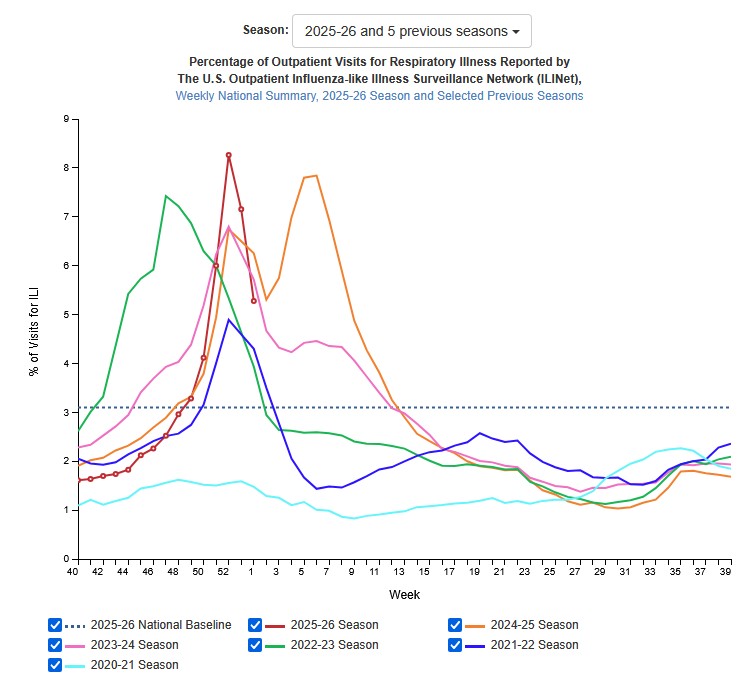
The percentage of outpatient visits for influenza-like illness fell from 7.2% to 5.3% but remained above the national baseline or the sixth consecutive week (see CDC graph below). The percentage of deaths due to flu (2.1%), however, was up slightly from the previous week.
One of the states where flu activity is picking up is California, which is seeing an increasing number of cases and hospitalizations, the California Department of Public Health (CDPH) reported earlier this week.
“It is important for families to know that flu vaccines, tests, and treatments remain widely available for all Californians and that it is not too late to get a flu vaccine,” CDPH Director and State Public Health Officer Erica Pan, MD, said in a news release.
It is not too late to get a flu vaccine.
Among the influenza A (H3N2) viruses that have been collected and undergone additional genetic testing, 90.9% belong to subclade K, the variant that has mutated to evade immunity from the current flu vaccine strain.
The CDC estimates there have been 18 million illnesses, 230,000 hospitalizations, and 9,300 deaths from flu this season. The deaths include 32 children, 90% of whom were not vaccinated. Fifteen of the deaths are new.
RSV elevated, COVID on the rise
The CDC’s weekly respiratory virus update, meanwhile, shows respiratory syncytial virus (RSV) activity is elevated in many parts of the country, with emergency department visits rising among young children (ages 0 to four) and hospitalizations up in infants under age one year.
COVID-19 levels are low but increasing nationally.
_0.jpg)