Utah measles cases hit 105; South Carolina sees 14 more cases

News brief

Utah’s Davis County has reported its first measles case of 2025, and media reports suggest the individual visited several public places while infectious, including a children’s museum and a Walmart. 

The Utah Department of Health and Human Services said there are now 105 measles cases in the state, with 22 reported in the past 3 weeks. The southwestern part of the state has 76 cases and is site of the current largest outbreak in the United States, along with neighboring Mohave County, Arizona. 

4 schools exposed with recent South Carolina cases 

The second largest outbreak in the United States is in Upstate South Carolina, where unvaccinated students at two schools in September started an outbreak that has spread in the community.

Today the South Carolina Department of Public Health said there were 14 more cases detected in the state since late last week. The total number of cases in South Carolina related to the Upstate outbreak is now 76, and the total number reported in the state is 79.

There are currently 134 individuals in quarantine and one in isolation.

“Eight of the new cases resulted from the previously reported exposure at the Way of Truth Church in Inman. The other two are still under investigation,” the department said. “There are currently 134 individuals in quarantine and one in isolation. “

With the new cases, the state has identified public exposures at four schools.
US flu activity on the rise

News brief
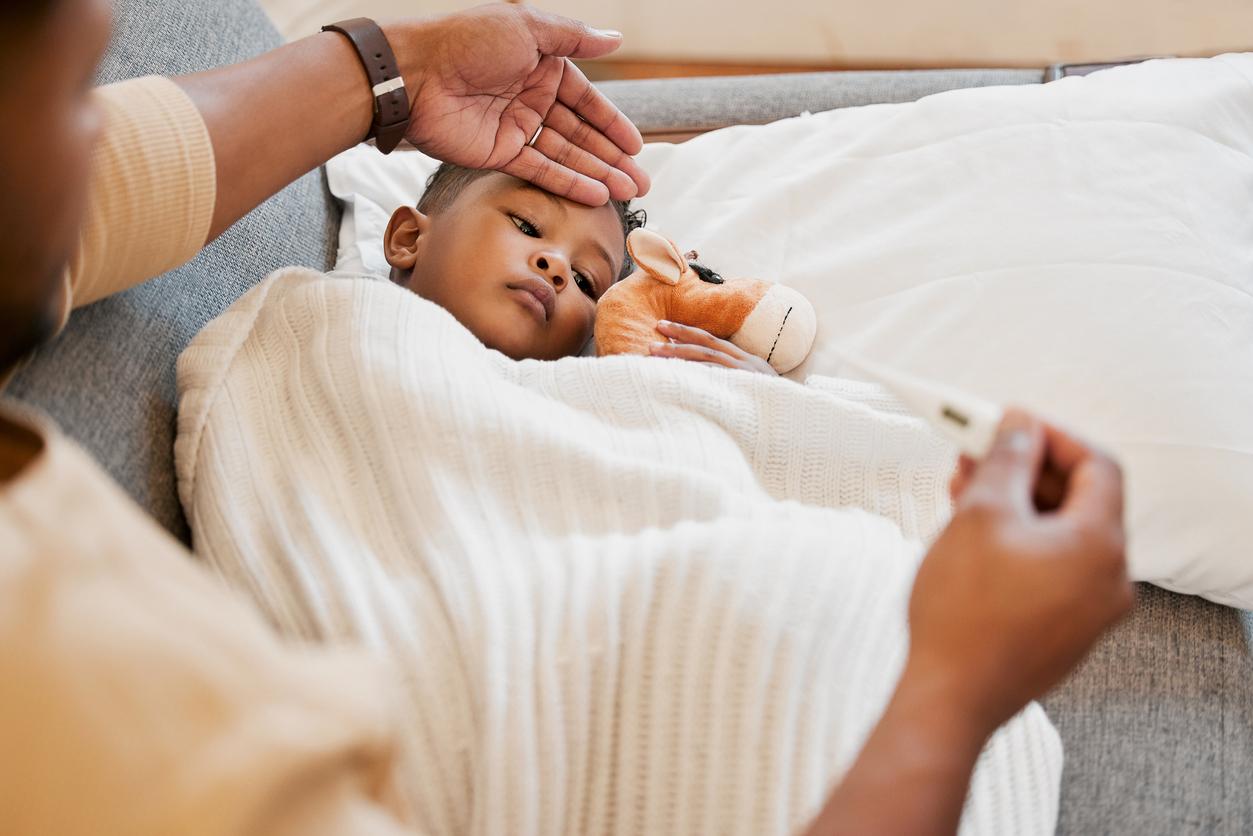
sick child
PeopleImages/iStock

According to the latest FluView report yesterday from the US Centers for Disease Control and Prevention (CDC), flu activity is on the rise across the United States, with activity especially noted in young adults and children. 

Clinical labs reported a 5% case-positivity rate for influenza in the past week, up from 2.9% the week before. Outpatient vistas for respiratory illnesses also increased, from 2.2% to 2.5%. 

“Percent positivity for influenza and the percentage of outpatient visits for respiratory illness and emergency department visits for influenza among pediatric age groups increased this week,” the CDC said. “The timing of the increasing activity is similar to several past seasons.”

High activity in Louisiana

Only one state—Louisiana—reported high influenza-like illness (ILI), while Colorado is seeing moderate activity. The previous week Louisiana and Puerto Rico logged moderate ILI activity.

Influenza A(H3N2) accounted for 82.3% of all influenza A viruses detected. Influenza A viruses account for around 90% of influenza cases seen in the United States this season, and H3N2 has been the dominant strain seen in the United Kingdom, Japan, and Canada so far.

There have been no pediatric deaths associated with influenza this season, but the CDC estimates 450 adult deaths and 11,000 hospitalizations have already occurred. 

Preschoolers with congenital Zika syndrome at significantly higher risk for epilepsy-related hospitalization

News brief
Grandfather with infant
iStock

A study involving more than 10 million children in Brazil finds a significantly higher risk of epilepsy-related hospitalization in early childhood in those with congenital Zika syndrome (CZS).

For the study, published yesterday in JAMA Pediatrics, researchers in Brazil and the United Kingdom analyzed national data to compare the risk of epilepsy-related hospitalizations during the first four years of life among children exposed to Zika virus (ZIKV) in utero (with and without CZS) compared with their unexposed peers. 

The children were singletons born at 22 or more weeks’ gestation from January 2015 to November 2018. The average gestational age was 38.5 weeks, 0.03% had CZS, and 0.08% were exposed to ZIKV in utero but didn’t develop CZS. ZIKV is primarily spread by infected Aedes mosquitoes, from mother to fetus or baby, and via unprotected sex.

“Some cases of epilepsy are primary, with no identifiable underlying cause, while others are secondary to structural abnormalities in the central nervous system,” the study authors noted. “An example of the latter is congenital Zika syndrome (CZS), where epilepsy is a clinical manifestation in nearly 50% of affected children, increasing to approximately 99% when microcephaly [abnormally small head size] is also present.”

Findings independent of microcephaly

After adjusting for confounding factors, CZS was tied to a markedly elevated risk of epilepsy-related hospitalization (2.44 vs 0.04 per 100 person-years in those without CZS; adjusted HR [aHR], 34.2). Age-specific aHRs peaked at 7 to 18 months (aHRs, 33.7 at ages 0 to 6 months, 44.6 for ages 7 to 18 months, and 20.6 for ages 19 to 48 months). 

These results suggest that prenatal ZIKV exposure alone may not elevate epilepsy risk requiring hospitalization, while CZS was associated with early childhood epilepsy-related hospitalizations.

Children with CZS who were microcephalic, normocephalic (normal head size), or macrocephalic (abnormally large head) showed similar links to hospitalizations for epilepsy, but those exposed to ZIKV without CZS weren’t at higher risk than their unexposed counterparts (aHR, 0.66). 

“These results suggest that prenatal ZIKV exposure alone may not elevate epilepsy risk requiring hospitalization, while CZS was associated with early childhood epilepsy-related hospitalizations,” the study authors wrote. “These findings for children with CZS were independent of the presence of microcephaly.”

This week's top reads

Our underwriters