
Early trial of Nipah virus vaccine shows promise

News brief

Fruit bat hanging upside down.
Cloudtail the snow leopard/Flickr cc

A phase 1 randomized clinical trial of a novel Nipah virus vaccine is leading to hope that there could soon be a way to prevent infection.

The study found that the shots were safe and generated an immune response, according to a study published Dec. 13 in The Lancet.  

The World Health Organization has listed Nipah virus, found mostly in southeast Asia, as a high-priority pathogen, because it kills up to 82% of people who are infected and there are no approved treatments or vaccines to prevent it.

The findings represent a “milestone” in the development of Nipah vaccines, according to an accompanying editorial in The Lancet written by Pragya D. Yadav, PhD, and Rima R. Sahay, MD, of the Indian Council of Medical Research-National Institute of Virology in Uttar Pradesh, India.

Stimulating the immune system

In the study, two doses of the experimental vaccine produced a strong immune response, with a higher dose of the vaccine stimulating the best immune system response. People given two doses produced antibodies within a month of vaccination, according to the study, which tested the experimental vaccine against a placebo in 192 healthy adults ages 18 to 49. People given only one dose of the vaccine had a weak immune response.

The most common adverse event related to vaccination was pain in the arm. There were no hospitalizations or deaths reported in people who received the vaccine.

Nipah, which was first identified in 1999, causes annual outbreaks. Although some infections don’t cause symptoms, the virus can cause fever and breathing problems, as well as encephalitis, or brain inflammation. The virus, which is mainly spread by fruit bats, has the potential to cause pandemics, because it can sometimes spread from person to person, according to the accompanying editorial in The Lancet.

In their editorial, Yadav and Sahay said the new vaccine should be tested in a larger, phase 2 trial, which could shed more light on safety, as well as how much protection the vaccine might provide.

European report calls on countries to update strategies on sexually transmitted infections

News brief
Packaged STI tests
Yau Ming Low / iStock

A new report by European health officials indicates outdated national strategies and gaps in testing are hindering European countries’ efforts to stem a continent-wide surge in sexually transmitted infections (STIs).

From 2014 through 2023, gonorrhea, syphilis, and chlamydia cases rose by 300%, 90%, and 180%, respectively, among gay and bisexual men who have sex with men in European Union/European Economic Area (EU/EEA) countries. Theres also been a more recent 200% increase in gonorrhea among women aged 20 to 24. The dramatic increases in STIs led the European Centre for Disease Prevention and Control (ECDC) to develop a monitoring system to help EU/EEA countries respond to the outbreaks. 

The report presents data from an online monitoring questionnaire submitted to 29 EU/EEA countries in 2024 related to four main thematic areas: national STI strategies, prevention, testing, and treatment. The purpose of this report is to provide public health decision-makers at national and European level with an overview of the situation in the EU/EEA in terms of responses to STI epidemics to inform action and policies,” the report states.

Outdated national strategies

The report found that while 18 of the 29 countries have a national strategy for STI prevention and control, only 10 have updated that strategy within the past five years, which could mean those strategies dont account for post-COVID pandemic behavior changes or the latest epidemiologic trends. Data on testing showed that in 13 countries, individuals still face out-of-pocket costs, while seven countries require patients under age 18 to have parental consent to access testing—a requirement that could potentially discourage adolescents from seeking help.

The report also found significant data gaps on STI prevention and treatment. Only four countries, for example, were able to submit data on the proportion of pregnant women screened for syphilis, which is important for prevention of congenital syphilis. Data on condom use and STI treatment among different populations was lacking.

To effectively curb these epidemics, countries are encouraged to update their national strategies, remove barriers to testing, and strengthen surveillance data on STIs and data on coverage of interventions to better target and improve prevention efforts,” the ECDC said in a news release.

USDA says H5 avian flu detection in Wisconsin dairy herd is new spillover event

News brief
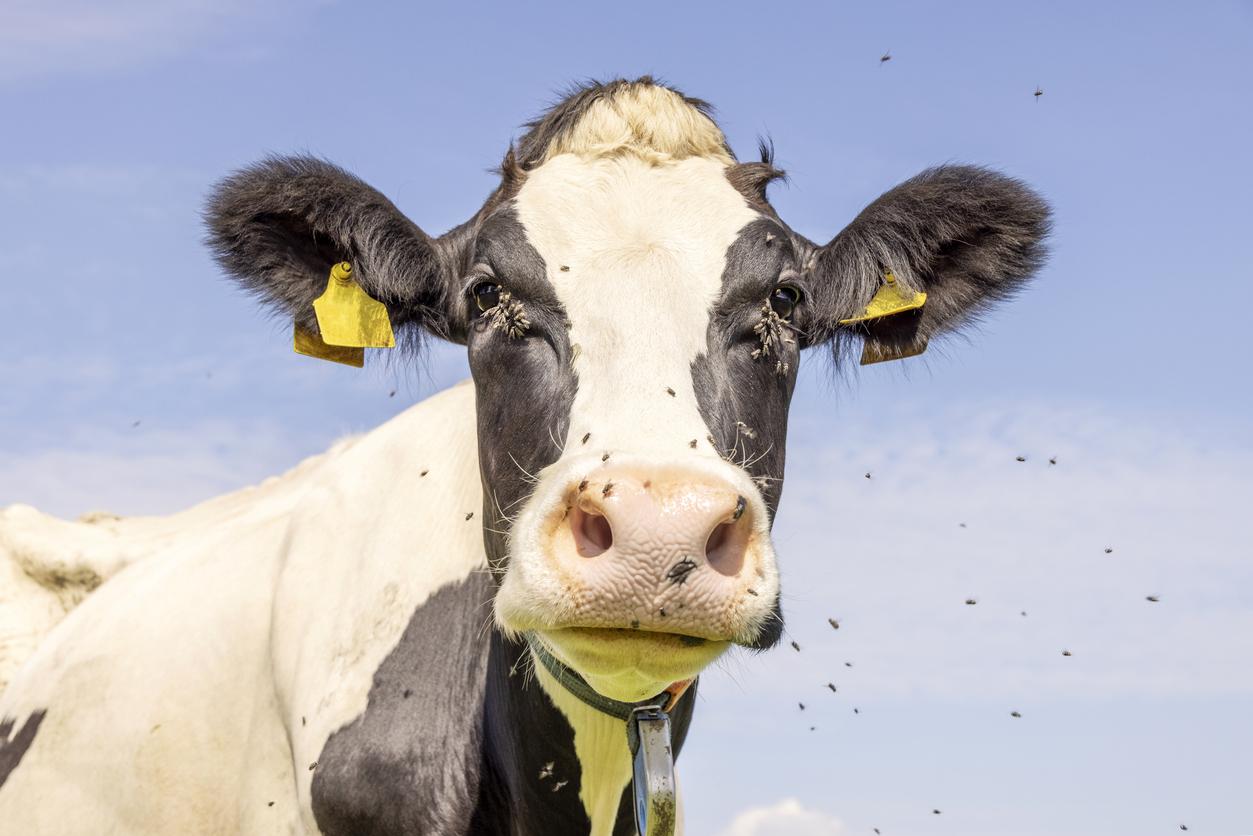
Dairy cow and flies
Clara Bastian / iStock

The US Department of Agriculture (USDA) Animal and Plant Health Inspection Service (APHIS) confirmed last week that the recent detection of highly pathogenic avian influenza (HPAI) in a Wisconsin dairy herd represents a new spillover event from wildlife.

In a December 19 update, APHIS said whole-genome sequencing confirmed that the virus detected in a Wisconsin dairy herd on December 14 is H5N1 clade 2.3.4.4b genotype D1.1, which was implicated in two spillover events in dairy herds in Nevada and Arizona earlier this year. The Wisconsin spillover event is considered separate from those two previous spillovers, APHIS said. No additional infected dairy herds have been detected.

Most H5N1 detections in US dairy cattle have involved the B3.13 genotype, which was initially detected in the Texas Panhandle in late 2023.

This detection does not pose a risk to consumer health or affect the safety of the commercial milk supply,” APHIS said.

More outbreaks in US poultry

Meanwhile, APHIS is reporting seven new HPAI outbreaks in US commercial and backyard poultry flocks. Two of the outbreaks are in Indianas hard-hit LaGrange County, with more than 32,000 birds affected at two commercial facilities. An outbreak at a commercial turkey breeder in Edmunds County, South Dakota, has affected more than 29,000 birds.        

Over the past 30 days, 70 US flocks (24 commercial and 46 backyard) have been confirmed as having HPAI, with 820,000 bids affected.

Study finds that despite broad COVID vaccine availability, COVID still deadlier than flu in hospitalized patients

News brief
KatarzynaBialasiewicz / iStock 

While the mortality gap between COVID-19 and influenza has narrowed since the onset of the pandemic, COVID continues to carry a substantially higher short-term risk of death than seasonal flu despite the availability of a COVID vaccine, according to a large population-based cohort study from South Korea.

For the study, published last week in the International Journal of Infectious Diseases, Korean researchers drew on data from national health insurance claims to compare 30-day all-cause mortality among more than 15 million people diagnosed as having COVID or influenza from July 2022 to December 2023.

76% higher odds of death by 30 days for COVID

A COVID diagnosis was associated with 76% higher odds of death within 30 days than influenza. Overall, 0.20% of patients with COVID died, compared with 0.016% of those with influenza, a roughly 12.5-fold difference in crude mortality. Among hospitalized patients, COVID was linked to a substantially greater risk of death in those receiving mechanical ventilation (1.88-fold higher).

The mortality gap was especially pronounced among adults aged 18 to 64 years (adjusted odds ratio [OR], 2.93), hospitalized patients (aOR, 2.55), and those who had a heart attack (aOR, 2.24), chronic lung disease (aOR, 1.94), or diabetes (aOR, 1.81). Adults aged 65 and older also had increased risk, though the relative odds were lower than those of the 18- to 40-year cohort (aOR, 1.95).

One possible explanation for the age-related differences, note the authors, is Korea’s prioritization of COVID vaccines for older adults and those in high-risk groups. They also cite differences in coverage between the two vaccines and differences in vaccine uptake as contributing factors. Among adults 65 and older, uptake for influenza vaccines was 82.5% in 2023-24 but only 45% for COVID. 

“This disparity may have contributed to the higher mortality observed for COVID-19,” the researchers write. “Collectively, these findings highlight the critical role of vaccination coverage in shaping mortality patterns and underscore the need for targeted strategies to improve uptake among younger populations.”

This week's top reads

Our underwriters