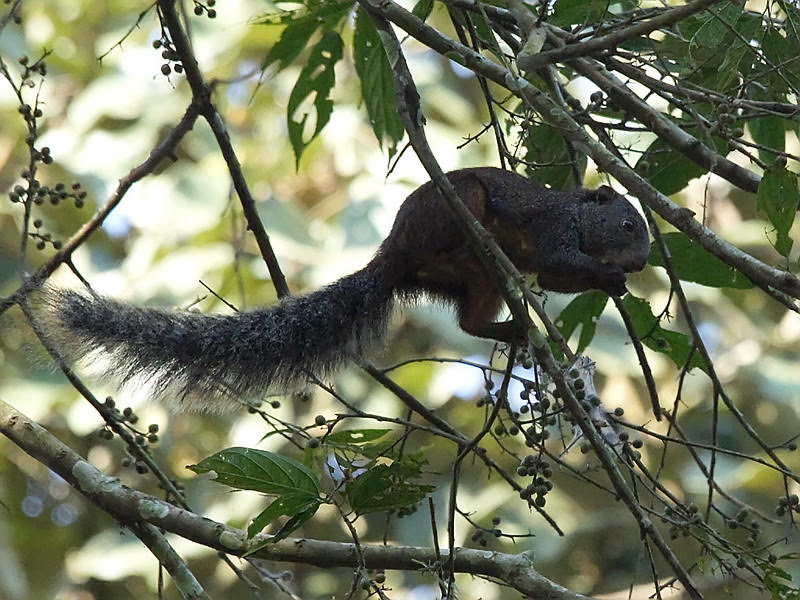
A report in Nature details a case of likely direct interspecies mpox virus (MPXV) transmission from a fire-footed rope squirrel to wild sooty mangabey monkeys in a Cote d’Ivoire national park in 2023.
To investigate the outbreak among a group of sooty mangabeys, the team examined molecular evidence from rodents and wildlife carcasses from the area, as well as ecological and behavioral evidence. The researchers have been monitoring the health of chimpanzees, mangabeys, and other wildlife in the park for decades.
“African rodents, especially squirrels, are suspected to be involved in MPXV emergence, but no evidence of a direct transmission to humans or non-human primates has been established,” the researchers, from Germany and Cote d’Ivoire, wrote.
Fecal samples link squirrel, virus to mangabeys
About one third of the mangabeys showed clinical signs of mpox infection, and four infants died. Genomic sequencing showed that the virus from an infected fire-footed rope squirrel that was found dead roughly two miles from the mangabey territory 12 weeks before the outbreak was nearly identical to the one that affected the mangabeys.
Because squirrels and non-human primates are hunted, traded and consumed by humans in West and Central Africa, exposure to these animals probably represents risk for zoonotic transmission of MPXV.
The finding was supported by a 2014 video that showed a mangabey from the infected group eating the same squirrel species and an analysis of fecal samples collected from the mangabeys eight weeks before the outbreak, which contained DNA from the rope squirrel and the virus.
“Our findings indicate that rope squirrels were the source of the MPXV outbreak in mangabeys,” the authors wrote. “Because squirrels and non-human primates are hunted, traded and consumed by humans in West and Central Africa, exposure to these animals probably represents risk for zoonotic transmission of MPXV.”
In a press release from the Helmholtz Centre for Infection Research in Germany, co–senior author Livia Patrono, DVM, PhD, of the center, said, “Identifying the animal sources of the virus and the exposure routes that lead to inter-species transmission are key steps towards understanding spillover mechanisms and developing effective prevention measures to mitigate the risk of transmission to humans.”