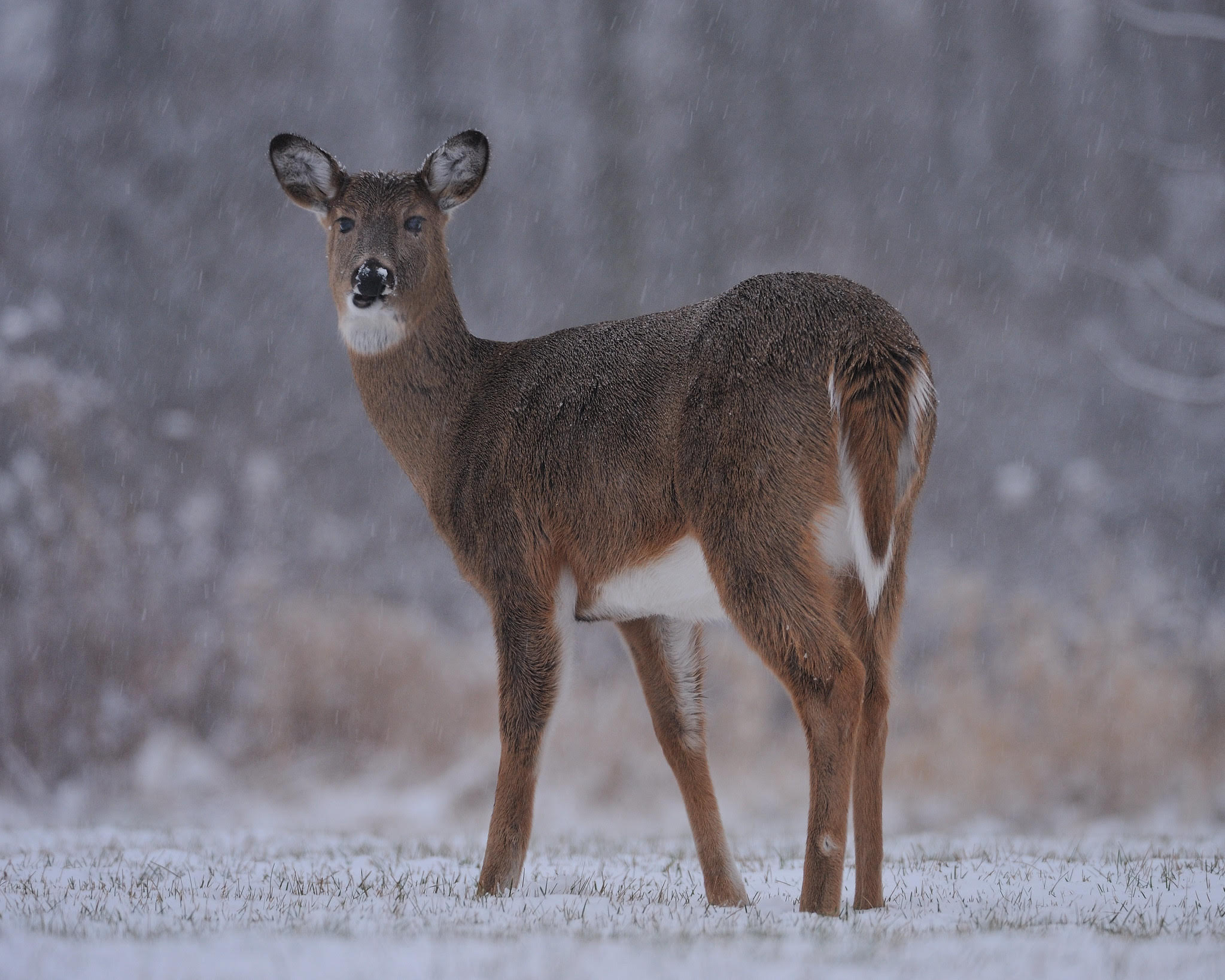
The first detection of chronic wasting disease (CWD) in Clark County, Wisconsin, has triggered an extension of the county’s 2-year deer baiting and feeding ban.
In a press release yesterday, the Wisconsin Department of Natural Resources (DNR) said the free-ranging adult doe was harvested by a hunter. Clark County is in the west-central part of the state.
“Clark County was already under a 2-year baiting and feeding ban prior to this detection,” the DNR said. “That ban will be extended for another three years and will reset following any future detections, as required by state law.”
First cases identified in state in 2002
Because the detection wasn’t within 10 miles of any bordering county, the baiting and feeding ban extension will be limited to Clark County at this time.
Baiting or feeding deer encourages them to congregate unnaturally around a shared food source where infected deer can spread CWD.
The DNR began tracking the state's free-ranging white-tailed deer population for CWD in 1999, with the first positive cases found in 2002. The fatal neurodegenerative disease, which affects cervids such as deer, moose, and elk, is caused by infectious misfolded proteins called prions.
“Baiting or feeding deer encourages them to congregate unnaturally around a shared food source where infected deer can spread CWD through direct contact with healthy deer or indirectly by leaving behind infectious prions in their saliva, blood, feces and urine,” the press release said.