Malaria reintroduction into US is possible: CDC report

News brief

The United States eliminated malaria in the 1950s, but that doesn't mean this parasitic disease is gone for good, warns a new report from the Centers for Disease Control and Prevention (CDC.) 

The report points to a 2023 outbreak in which 10 people across four states—Arkansas, Florida, Maryland, and Texas—were infect

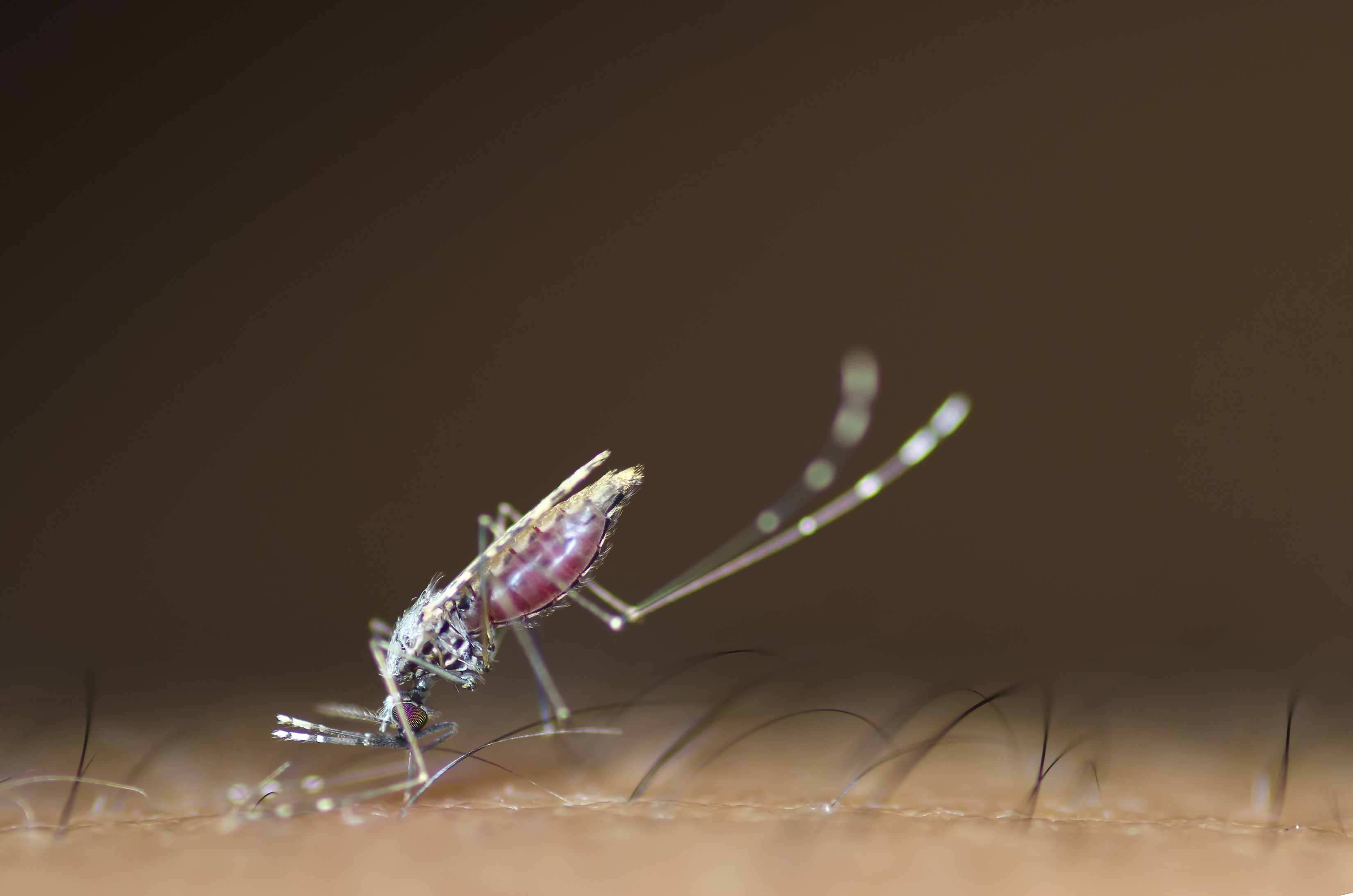
As Anopheles mosquito biting a human.
mrfiza / iStock

ed with locally acquired mosquito-transmitted malaria. These cases were not associated with travel, which poses serious public health implications, as malaria can be a life-threatening or life-altering disease, especially for young children. 
Virtually all US cases are travel-related

There are roughly 2,000 malaria cases in the United States each year. Virtually all are imported, meaning people are bitten by an infected mosquito while abroad. The cases from the 2023 outbreak were the first locally acquired malaria infections that were reported to the CDC in two decades. The report notes these infections coincided with the most imported cases since the United States reached elimination status in 1951. 

The timing suggests that, after acquiring malaria while traveling, the patients were bitten by mosquitoes in the United States. Those newly infected mosquitoes then bit additional people, resulting in local transmission. 

Misdiagnosis may be part of the problem

The report offers updated guidance for public health officials responding to cases of locally acquired malaria. During outbreaks of mosquito-borne diseases, the CDC says health departments should spray insecticides and reduce breeding habitats, such as landscape ponds, birdbaths, and rain barrels. 

Other measures include encouraging clinicians to report suspected and confirmed cases to health departments and distributing nets and topical repellent to high-risk populations, including people experiencing housing instability or homelessness. 

Public health workers should consider searching for additional malaria cases among patients who might have been misdiagnosed, as well as among those who become ill after the initial cases are identified. 

Under a microscope, the malaria parasite can resemble another parasite that causes babesiosis, a tickborne disease that's endemic to the United States. The illnesses cause similar symptoms: fever, chills, headache, body aches, and nausea. The CDC recommends polymerase chain reaction (PCR) testing to ensure accurate diagnosis. 
American cruise ship passengers push for home quarantine after hantavirus exposure

News brief
therm
Andrej Filipovic / iStock

At least two Americans say they received quarantine orders to stay in a Nebraska biocontainment unit following their exposure to hantavirus aboard a Dutch cruise ship. The orders, sent early this week and signed by Jay Bhattacharya, MD, PhD, the head of both the US Centers for Disease Control and Prevention (CDC) and the National Institutes of Health, were issued after the passengers pushed to leave and quarantine at home after receiving negative hantavirus tests. 

The passengers have been told they need to stay in Nebraska until May 31, despite earlier messaging suggesting they could finish the 42-day incubation period at home. The incubation period is the time from exposure to first appearance of symptoms. 

Some of the passengers said they had been in contact with state health departments to draw up details of their home quarantine. A total of 18 Americans are being monitored at the Nebraska facility, the CDC said yesterday.

 “No one here is asking to be released from quarantine,” one anonymous passenger told CNN. “We are asking for the less restrictive alternative of a quarantine at home. That is what everyone was planning until this bombshell on Sunday [May 17].” 

No evidence of asymptomatic transmission 

Yesterday the CDC confirmed that no Americans associated with the cruise have tested positive for the Andes strain of hantavirus, the only hantavirus strain known to involve person-to-person transmission. 

A report from the UK Health Security Agency yesterday showed no evidence of asymptomatic or pre-symptomatic transmission in a systematic evidence summary based on studies conducted on Andes virus. The mean incubation period seen in these studies was 21 to 27 days.

Currently the Andes strain outbreak related to the MV Hondius stands at 11 cases, including 3 deaths. 

Quick takes: Lawsuit over grad-student loan limits; report on COVID vaccines, child deaths; temporary surgeon general appointment

News brief
  • Yesterday, 25 Democrat-led states and Washington, DC, sued the US Department of Education over new graduate-student loan limits, saying that they will worsen the country’s healthcare worker shortage, the Washington Post reports. New York Attorney General Letitia James, who is leading the coalition along with Maryland, Nevada, and Colorado, said in a statement that college is expensive and the healthcare system is already under considerable strain. The lawsuit comes on the heels of education-department finalized rules that limit loans for professional-program students to $50,000 a year and $200,000 in total and those for grad students to $20,500 a year and a total of $100,000.
  • The US Food and Drug Administration’s long-awaited final report on purported child deaths after COVID-19 vaccination has uncovered no definitive link. The report concluded that of nine pediatric deaths allegedly tied to the vaccines, seven were “possibly” and two were “probably” related but acknowledged there could have been alternative causes. The report was prompted by a leaked internal memo in 2025 that claimed that 10 children had died from the vaccines.
  • US Department of Health and Human Services (HSS) Secretary Robert F. Kennedy Jr. has, without Senate approval, named Stephanie Haridopolos, MD, a top staffer in the Office of the Surgeon General (OSG) and wife of Rep. Mike Haridopolos (R-Fla.), to carry out certain duties of the to-be confirmed surgeon general. “Effective immediately, Dr. Haridopolos will take on the honorific title of Director of National Health Communications for the Office of the Surgeon General,” Kennedy said in a letter to HHS staff. “In this capacity, she will promote OSG public health actions, advisories, and guidance until our next Surgeon General is sworn into office.” President Donald Trump’s latest pick for the post is former Fox News contributor and radiologist Nicole Saphier, MD.

This week's top reads

Our underwriters

Unrestricted financial support provided by