
High prevalence of sexually transmitted infections found in prisons globally

News brief
Row of prison cells
txking / iStock

A review and meta-analysis of more than 200 studies shows a “persistently high” prevalence of bacterial sexually transmitted infections (STIs) in prisons, particularly among incarcerated adolescents and women, researchers reported yesterday in The Lancet Public Health.

For the study, a team led by researchers from McGill University analyzed data from 206 studies examining the prevalence of chlamydia, gonorrhea, and syphilis among adolescents aged 10 to 19 and adults older than 19 who were incarcerated. 

The studies included 1.4 million incarcerated individuals in 43 countries, with most conducted in North America (47.1%) and South and Central America (22.3%) and in high-income (64.6%) and middle-income (34.5%) countries. 

The study authors note that the World Health Organization (WHO) has identified people in prison and other closed settings as one of the key populations in the global response to sexually transmitted and bloodborne infections (STBBIs). But previous studies of bacterial STIs among the incarcerated have had limited generalizability.

“Bacterial STIs remain understudied despite their disproportionate burden on people who are incarcerated,” they wrote. “Given the high burden of bacterial STI in prisons and other closed settings, understanding their prevalence is critical for refining global estimates and informing testing and treatment practices, to ultimately advance bacterial STI elimination efforts both within and beyond carceral settings.”

Risky sexual behaviors, poor access to testing

Among female adults, the pooled prevalence of chlamydia, gonorrhea, and syphilis was 6.5%, 1.5%, and 5.9%, respectively; among male adults, the corresponding estimates were 4.7%, 0.4%, and 3.7%. Among female adolescents, the pooled prevalence of chlamydia, gonorrhea, and syphilis was 16.8%, 6.0%, and 1.9%, respectively; among male adolescents, the corresponding estimates were 7.4%, 2.0%, and 1.9%. 

The authors say the findings potentially reflect both sexual behaviors that increase the risk of STIs and poor access to bacterial STI testing and treatment in carceral and community settings.

“Investment is needed to improve sexual health services in the community and reach populations who experience incarceration,” they concluded. “In addition, offering opt-out testing and treatment to all people in prison and other closed settings is likely required to achieve the 2030 STBBI elimination goals set by WHO.”

South Carolina reports 26 more measles cases, 214 total

News brief
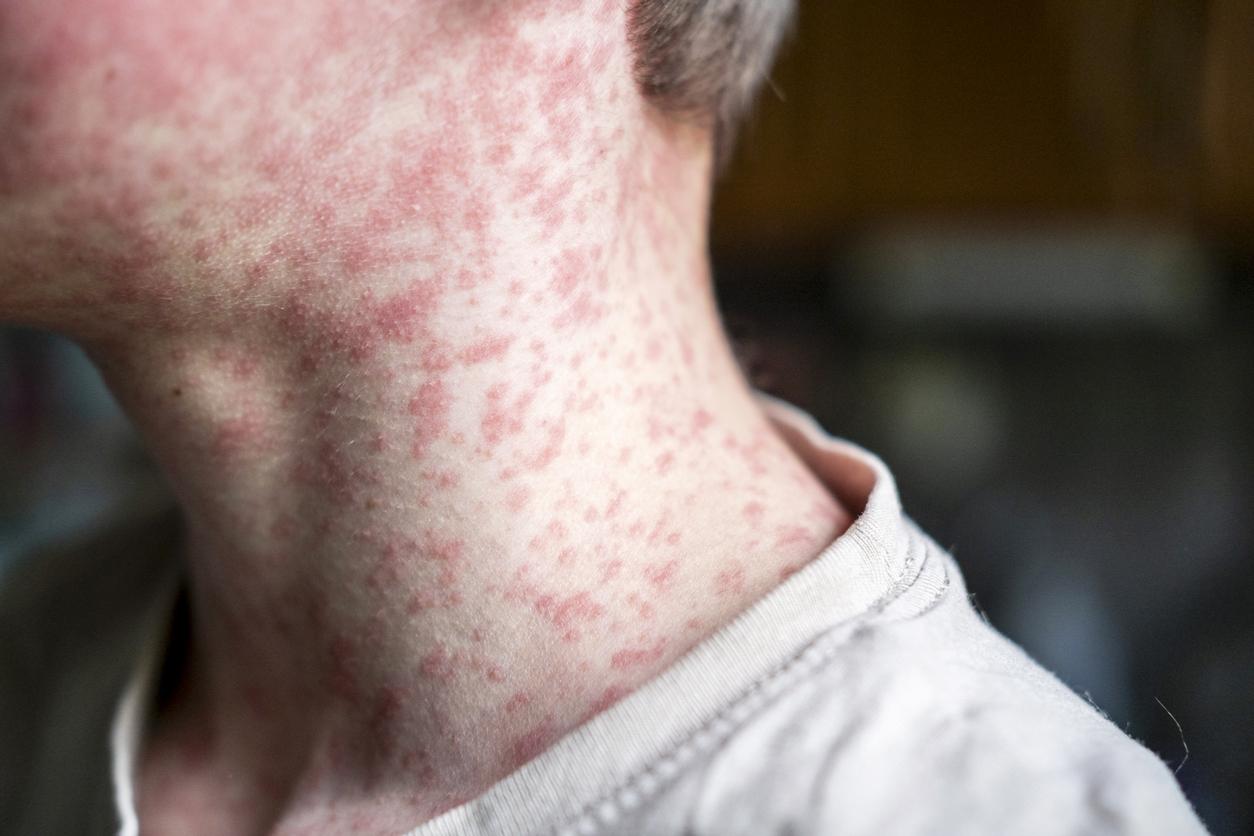
measles rash
Natalya Maisheva / iStock

South Carolina now has 211 measles cases in a growing outbreak in the Upstate region, and 214 statewide, according to officials who confirmed 26 new cases today. The state now has the same case count as Arizona, which confirmed nine new infections today. 

Nineteen of the 26 new cases in South Carolina involved exposures in known households, or previously reported school exposures. Four patients reported an exposure at a church. The department of health said 144 people are in quarantine and seven are in isolation.

Of note, officials said today that four people, adults and children, have required hospitalization during this outbreak. Others required outpatient medical care.

Elimination status hinges on circulating strains

Today Reuters reported that some Centers for Disease Control and Prevention officials are working to prove the current outbreak in South Carolina is not genetically linked to the West Texas outbreak that started last year and sickened almost 800 people. 

Sustained measles transmission from the same strain for 12 months is the main requirement for considering measles elimination status. This month the United States could lose its status, which it gained in 2000, if the current circulating strains can be tied back to the West Texas outbreak.

The United States recorded more than 2,000 measles cases in 2025, the highest activity in more than 30 years. 

Mpox antibodies wane 2 years after infection or vaccination, study finds

News brief
mpox vaccine
ClaudioValdes / iStock

Neutralizing antibodies (NAbs) against mpox decline substantially, often becoming undetectable, within two years of either mpox infection or vaccination with the modified vaccinia Ankara–Bavarian Nordic (Jynneos) vaccine, according to a small new study led by researchers at Vita-Salute San Raffaele University in Milan, Italy. 

The study, published today in The Journal of Infectious Diseases, followed up with 90 men—48 with prior mpox infection and 42 who received Jynneos vaccination—and measured mpox virus (MPXV)–specific neutralizing antibodies more than two years after infection or vaccination. 

At the two-year mark, antibodies were frequently low or undetectable in both previously infected participants and vaccine recipients, though participants with prior infection were more likely than vaccine recipients to retain some detectable antibodies (33 of 48 [68.8%] vs 20/42 [47.6%]). 

Antibody levels measured at six months were also predictive: Participants with higher early titers were more likely to retain detectable antibodies at two years. In multivariate analysis, previous smallpox vaccination was also associated with higher titers at two years or later, while previous mpox infection was only marginally associated.

Protection may extend beyond neutralizing antibodies

Four mpox cases occurred among vaccine recipients during follow-up, but no cases occurred in participants who had a previous mpox infection.

“This trend finds confirmation in real life practice in our open access sexual health clinic, where the majority of new infections are diagnosed in persons with no history of Mpox,” write the researchers. They also note that, “as already reported in literature and as observed in our daily experience,” most mpox cases in vaccinated individuals are self-limiting and low severity.

This trend finds confirmation in real life practice in our open access sexual health clinic, where the majority of new infections are diagnosed in persons with no history of Mpox.

Considering that titers wane in vaccinated people and that mpox cases among vaccinated individuals are generally less severe, immunity to mpox likely extends beyond antibodies, argue the authors. Cellular immune responses and preexisting humoral immunity in people vaccinated against smallpox may confer protection even when antibody levels fall below detectable levels. 

“Future research will need to focus on the complexity of immunological memory against Mpox and address the questions on durability and efficacy of protection after natural occurring infection or vaccination,” the researchers write. 

First case of CWD confirmed in Clark County, Wisconsin, deer

News brief
White-tailed doe in winter
JanetandPhil / Flickr cc

The first detection of chronic wasting disease (CWD) in Clark County, Wisconsin, has triggered an extension of the county’s 2-year deer baiting and feeding ban.

In a press release yesterday, the Wisconsin Department of Natural Resources (DNR) said the free-ranging adult doe was harvested by a hunter. Clark County is in the west-central part of the state.

“Clark County was already under a 2-year baiting and feeding ban prior to this detection,” the DNR said. “That ban will be extended for another three years and will reset following any future detections, as required by state law.”

First cases identified in state in 2002

Because the detection wasn’t within 10 miles of any bordering county, the baiting and feeding ban extension will be limited to Clark County at this time.

Baiting or feeding deer encourages them to congregate unnaturally around a shared food source where infected deer can spread CWD.

The DNR began tracking the state's free-ranging white-tailed deer population for CWD in 1999, with the first positive cases found in 2002. The fatal neurodegenerative disease, which affects cervids such as deer, moose, and elk, is caused by infectious misfolded proteins called prions.

“Baiting or feeding deer encourages them to congregate unnaturally around a shared food source where infected deer can spread CWD through direct contact with healthy deer or indirectly by leaving behind infectious prions in their saliva, blood, feces and urine,” the press release said. 

This week's top reads

Our underwriters